


NORTHERN UGANDA — For nearly three decades, the Environmental Conservation Trust of Uganda (ECOTRUST) has been championing landscape restoration through tree planting. But the organisation says restoring forests requires more than planting seedlings—it also means creating sustainable livelihoods that reduce communities’ dependence on cutting trees for survival.
To achieve this, ECOTRUST has adopted a three-pronged approach that combines environmental conservation with income-generating opportunities, enabling communities to protect forests while improving household incomes.
One of the latest initiatives is unfolding in Northern Uganda, where members of the Acung Kedi Beekeeping Group and Orii United Beekeeping Group are being equipped with the skills needed to build commercially viable beekeeping enterprises.
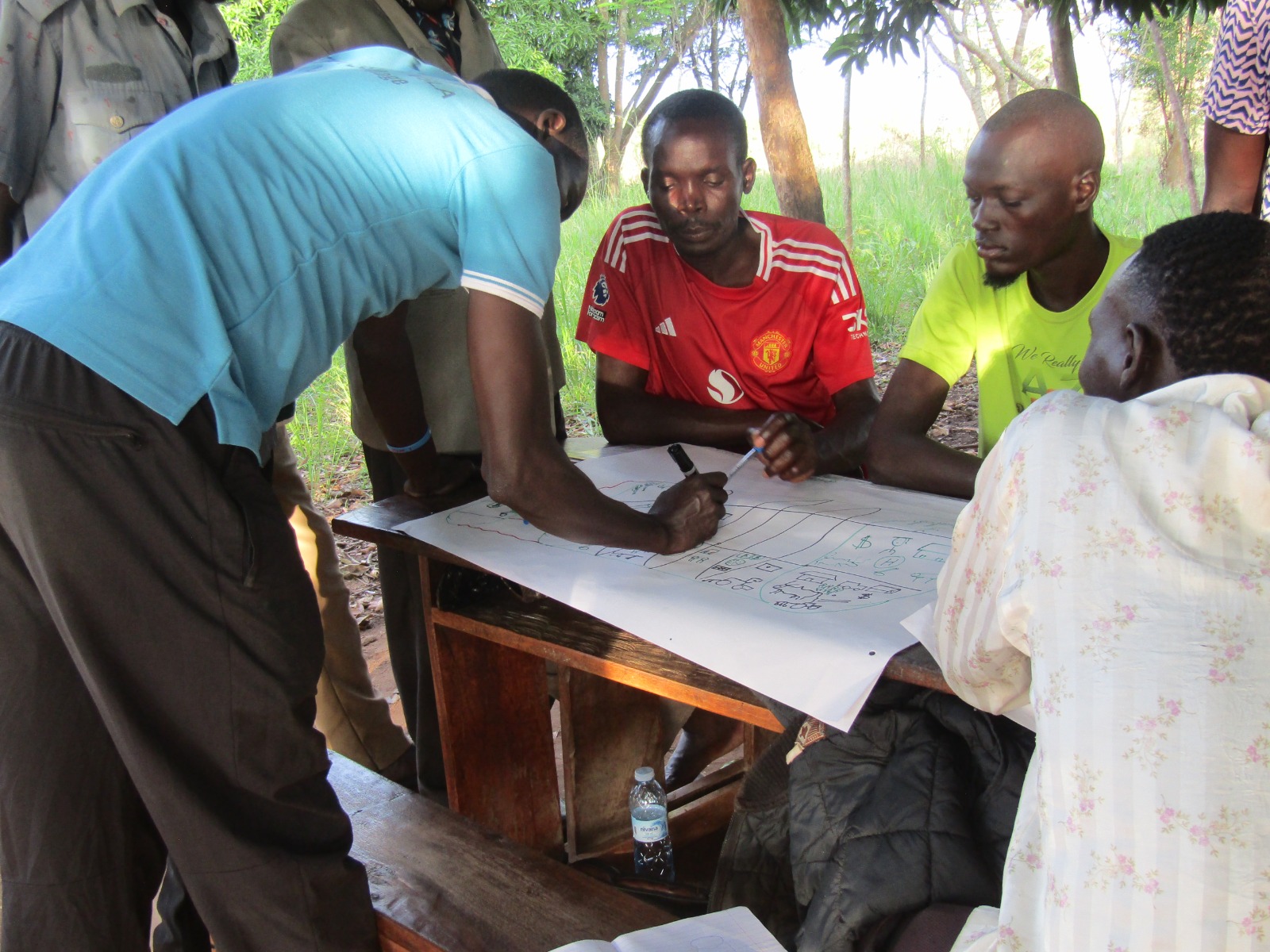
The groups recently underwent training under the Gender Action Learning Systems (GALS) methodology, an approach designed to help participants develop both collective business plans and personal life goals.
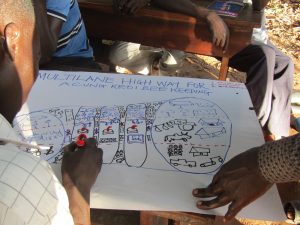
The training enabled members to develop Vision Road Journeys—practical plans that help individuals and groups define long-term aspirations, identify opportunities and challenges, develop locally driven solutions, and monitor their own progress.
ECOTRUST says the approach deliberately ensures that both men and women participate equally in decision-making, helping to address longstanding gender inequalities within traditional beekeeping.
Historically, women have often been excluded from beekeeping because traditional hives are suspended high in trees, making them difficult and sometimes dangerous to manage. By promoting modern beekeeping technologies, the organisation hopes to make the enterprise more accessible to everyone.
According to Priscilla Nabuyemba, Business Development Officer at ECOTRUST, providing alternative sources of income is critical to reducing pressure on forests.
“It is very important for these farmers to have alternative livelihood options because most of them depend on trees for charcoal burning, making traditional beehives and clearing land for commercial farming,” Nabuyemba said.
“But if they have options to obtain income while leaving the trees standing, such as beekeeping, it creates a win-win situation for both the trees and the surrounding ecosystem.”
Northern Uganda’s rich vegetation and flowering plant species provide favourable conditions for apiculture, making beekeeping a viable conservation enterprise.
To unlock this potential, ECOTRUST has partnered with Hive Uganda to support farmers in transitioning from traditional, low-yield beekeeping to modern commercial honey production.
The next phase of the programme will involve practical training through the establishment of model apiaries equipped with both traditional and modern hives.
The demonstration sites will serve as learning centres where farmers will receive hands-on training in hive management, safe honey harvesting, use of protective equipment, post-harvest handling and value addition.
As preparations continue, farmers have been encouraged to collectively identify and allocate land for the apiaries to minimise future land disputes that could disrupt the enterprise.
Members say the training has already begun changing their outlook.
Stephen Ojok, Secretary of the Acung Kedi Beekeeping Group, said the Vision Road Journey exercise inspired him to think beyond subsistence production.
“By learning about the Vision Road Journey, I now have a vision to upgrade from local beehives to modern ones and to build a permanent house to replace my grass-thatched home,” Ojok said.
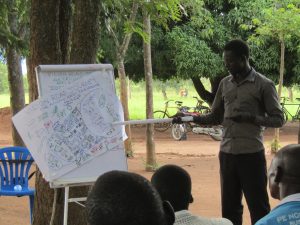
He added that he had volunteered part of his land for the establishment of the group’s apiary.
“The land here is customary, so I do not think we will face disputes. I personally have land that I am willing to provide for the business,” he said.
For Christine Abalo, another member of the group, the training represents an opportunity to improve her family’s economic future.
“The training has given me knowledge that I will apply in the future. I believe I will also be able to establish my own business alongside the group enterprise. This will help reduce poverty in my home,” Abalo said.
The two beekeeping groups were originally organised under ECOTRUST’s Transformative Approach to Sustainable Landscapes and Livelihoods (TASLL) Project, which promotes the restoration of degraded landscapes through the planting of indigenous trees across Northern Uganda.
While members initially participated as tree growers, many have since embraced beekeeping as a complementary enterprise capable of generating income while supporting conservation efforts.
Working collectively is also expected to improve access to markets and strengthen the groups’ bargaining power for premium honey and other bee products.
ECOTRUST says it will continue supporting the groups through technical training, introduction of modern beekeeping technologies and linkages to reliable markets.
The organisation believes that by combining conservation with enterprise development, rural communities can improve their livelihoods while protecting the forests on which both their environment and future prosperity depend.