


KAMPALA — The Ministry of Works and Transport has announced new measures to regulate public service vehicle (PSV) buses and school buses, including mandatory vehicle inspections, stricter driver accreditation, limits on long-distance journeys and the closure of illegal bus parks.
The measures were announced by Works and Transport Minister Fred Byamukama on August 17, 2026, following consultations with bus operators and the Uganda Police Force Directorate of Traffic and Road Safety.
The ministry said the measures are intended to address road safety concerns and operational gaps affecting bus transport across the country.
Existing PSV route charts recalled
All existing PSV bus route charts have been recalled with immediate effect, with the ministry giving itself 30 days to reallocate and issue new route charts.
The new charts will be issued only after verification of bus ownership and legal operational custody. Buses whose ownership or title is in doubt will not receive new route charts.
Operators whose buses break down and require rescue must notify Traffic Police to facilitate movement of the rescue vehicle. Where a replacement is required for more than a day, the operator must seek written permission from the ministry, with temporary replacement allowed for up to three months.
Mandatory inspections
All PSV buses must undergo a full mechanical roadworthiness inspection at the Namanve Vehicle Inspection Centre before receiving a new route chart or operating licence.
The ministry said defective vehicles will be grounded until they are repaired and verified as compliant.
The government is also upgrading its Automated Licensing System to introduce biometric driver log-ins, linking active driver badges to vehicle operations in an effort to prevent unvetted or proxy drivers from operating buses.
New rules for bus drivers
PSV drivers will be vetted and issued renewable badges valid for one year.
A driver seeking renewal must demonstrate compliance with road safety and conduct requirements and must have completed a refresher course at a licensed driving school within the previous 24 months.
The ministry has also introduced new limits for drivers operating long-distance routes.
Buses travelling more than 450 kilometres must have at least two accredited drivers, while all interstate and transit buses must also be operated by two accredited drivers.
For routes exceeding 300 kilometres, a bus making a return journey must use a different driver. Operators must demonstrate that they have enough accredited drivers to provide two drivers for every bus in their operating fleet before receiving route charts allowing return journeys.
For routes of up to 300 kilometres, a driver making a return trip must take at least eight consecutive hours of rest before driving again.
The mandatory night-stop period has been set at 10 pm to 6 am.
Illegal bus parks ordered closed
The ministry has also ordered the immediate closure of illegal bus parks, unauthorised roadside stages and makeshift loading points.
Passenger pick-ups, drop-offs and departures must instead take place at gazetted bus parks under the supervision of the Kampala Capital City Authority (KCCA), local governments and police.
Enforcement will be conducted jointly by the Ministry of Works and Transport, Uganda Police Force, KCCA and local authorities.
Restrictions on transporting schoolchildren
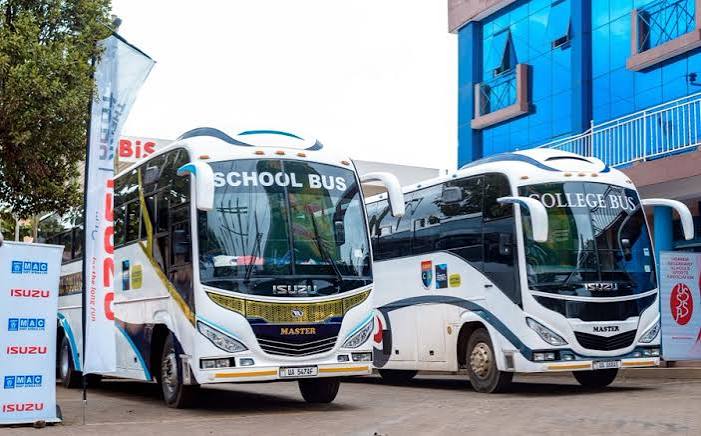
The ministry has also maintained restrictions on the transportation of learners following the nationwide suspension of school study tours and excursions.
School buses and chartered PSVs cannot transport students on unauthorised long-distance excursions or at night.
Special or essential school trips will require written clearance from the Ministry of Education and Sports.
Operators transporting children under authorised arrangements must provide details of the bus, driver, school and destination to the Ministry of Works and Transport and obtain permission before the journey.
Children must not be transported between 6 pm and 6 am.
School buses face stricter requirements
All school buses, vans and contracted learner-transport vehicles must have valid comprehensive insurance and appropriate licences or operating authorisations.
They must also pass mandatory mechanical roadworthiness inspections before carrying learners.
School bus drivers will be subjected to background checks, medical and vision assessments and certification, and must hold valid driver badges issued by the Ministry of Works and Transport.
The ministry has also ordered zero overloading and requires school transport vehicles to have functional seatbelts for all seats, first-aid kits, serviced fire extinguishers and unobstructed emergency exits.
Byamukama said the Commissioner for Transport Regulation and Safety and the Chief Licensing Officer, working with the Director of Traffic and Road Safety, would oversee implementation of the measures.
The new rules come as the government seeks to tighten regulation of passenger transport and reduce risks associated with vehicle defects, driver fatigue, illegal loading points and unsafe school transport.