


KAMPALA — The African CSOs Biodiversity Alliance (ACBA) has officially launched the ACBA Biodiversity Academy (ABA), a continent-wide learning platform aimed at strengthening knowledge exchange, capacity building and innovation among biodiversity practitioners, researchers, community leaders and conservation organizations across Africa.
The launch marks a new effort to promote African-led solutions to biodiversity loss and climate change by creating a dedicated space for practitioners to share experiences, lessons and practical approaches drawn from the continent’s diverse conservation landscapes.
Speaking at the launch, ACBA Executive Director Yemi Katerere said the Academy was established to harness and amplify the wealth of conservation knowledge that already exists across Africa.
“Across the continent, there is a wealth of knowledge, innovation and experience in biodiversity conservation. The Biodiversity Academy seeks to bring these voices together, creating a space where African practitioners can learn from one another and build a shared vision for a sustainable future,” Katerere said.
The Academy will deliver its programmes through webinars, peer-learning exchanges, case studies and practical training sessions, with a focus on ensuring that local experiences and community-led conservation initiatives remain central to discussions on biodiversity management.
ECOTRUST Takes Centre Stage
At the heart of the Academy’s inaugural programme is the Environmental Conservation Trust of Uganda (ECOTRUST), one of ACBA’s founding members and a pioneer in conservation finance and landscape restoration.
For more than two decades, ECOTRUST has developed and implemented conservation models that combine environmental restoration with economic incentives for local communities. The organization’s work has attracted regional attention for demonstrating how conservation can generate both ecological and financial returns.
Following the Academy’s launch, ECOTRUST has begun leading a three-part webinar series designed to share lessons from its conservation finance journey and landscape restoration programmes in Uganda.
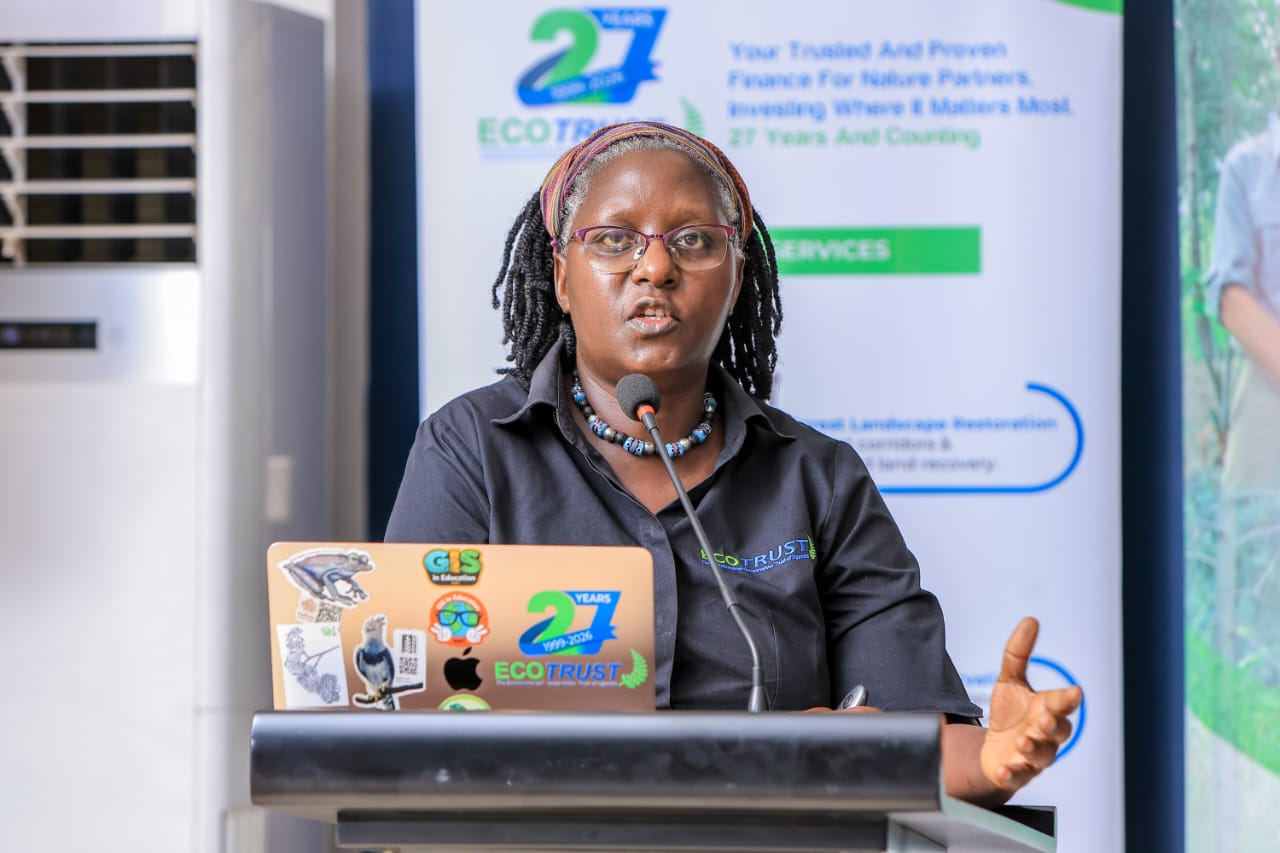
The first session was led by Pauline Nantongo, Executive Director of ECOTRUST, who traced the organization’s evolution and explained how conservation finance mechanisms have been used to support environmental restoration while creating income opportunities for rural households.
The webinar examined how biodiversity and climate-related challenges can be transformed into investable opportunities capable of delivering long-term environmental, social and financial benefits.
“ECOTRUST treats every participating household as an individual economic unit,” Nantongo said. “The financial incentives from carbon and biodiversity credits allow families to safely shift their financial planning away from short-term, degrading cycles such as sugarcane or maize production toward long-term, sustainable forestry.”
Conservation as an Economic Opportunity
A key feature of ECOTRUST’s approach is its “Landscape Restoration as a Business” model, which encourages communities to view restoration efforts not only as an environmental responsibility but also as a viable economic activity.
The model supports investments in tree planting, forest restoration, sustainable agriculture and nature-based enterprises capable of generating income while restoring degraded ecosystems.
As global interest in carbon markets and biodiversity financing grows, conservation practitioners are increasingly exploring approaches that align environmental objectives with economic incentives for local communities.
The remaining sessions in the webinar series are expected to delve deeper into conservation financing tools, nature markets and community-owned investment models. Participants will also be exposed to practical case studies highlighting how restoration programmes have improved livelihoods while strengthening environmental protection.
According to ACBA, the Academy is intended to serve as a long-term platform for sharing African experiences and scaling successful conservation models across the continent.
With biodiversity loss, land degradation and climate change continuing to pose significant challenges across Africa, organizers believe that greater collaboration and knowledge sharing among conservation actors will be critical in developing locally relevant and sustainable solutions.
The launch of the ACBA Biodiversity Academy positions African practitioners at the centre of these conversations, while ECOTRUST’s inaugural leadership role highlights the growing recognition of home-grown conservation finance models as a tool for achieving both environmental and development goals.