


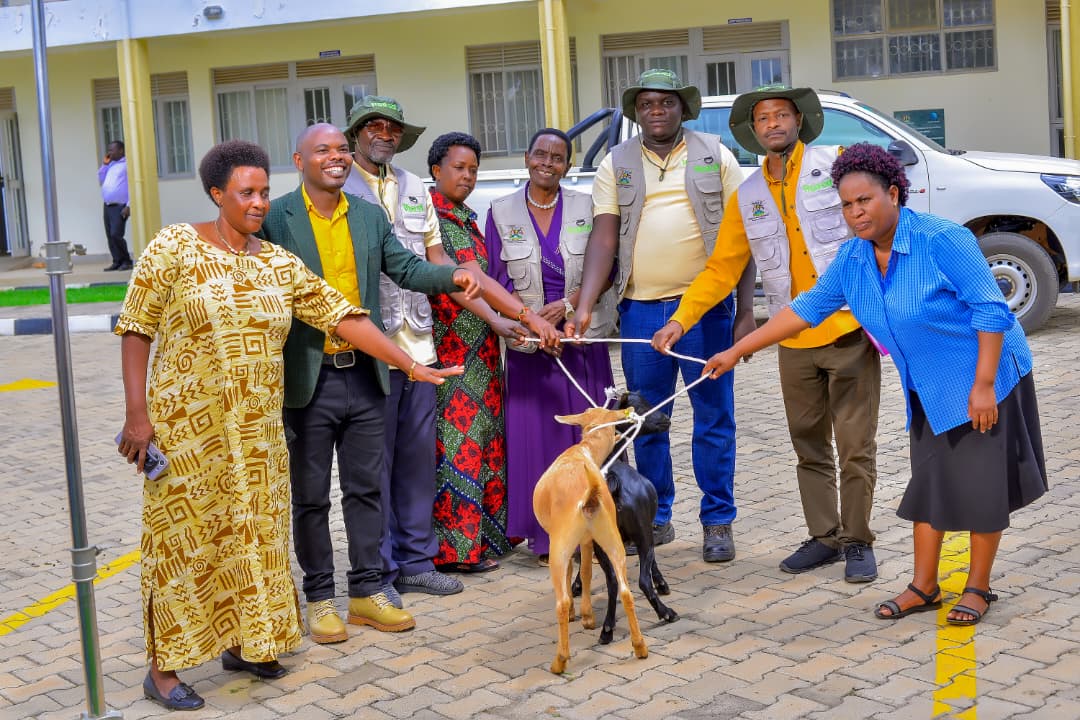
KAMWENGE — Fourteen outstanding agroforestry farmers in Kamwenge District have received improved goats and vegetable seedlings from the Environmental Conservation Trust of Uganda (ECOTRUST) in recognition of their commitment to tree planting and sustainable farming practices under a World Bank-funded climate-smart agriculture project.
The beneficiaries, drawn from 14 parishes across the sub-counties of Kamwenge, Nkoma, Bwizi, and Kahunge, were recognised during a close-out activity of the Investing in Forests and Protected Areas for Climate-Smart Development (IFPA-CD) Project, a two-year initiative implemented by the Ministry of Water and Environment with support from the World Bank.
The project was implemented by Catholic Relief Services (CRS) in partnership with the International Centre for Research in Agroforestry (ICRAF) and ECOTRUST, which managed activities in five refugee-hosting districts, including Kamwenge.
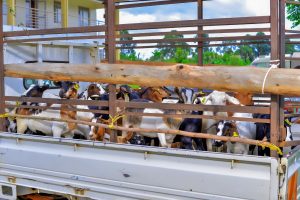
Each of the model farmers had previously received more than 5,000 tree seedlings of various species for planting and nurturing on their farms. In recognition of their efforts, each farmer was recently awarded two improved goats and vegetable seedlings aimed at strengthening household incomes and improving livelihoods.
Speaking during the ceremony, Kamwenge District LCV Chairperson Joseph Karungi praised the farmers for their dedication to environmental conservation and sustainable agriculture.
“The tree planting initiative has contributed to environmental conservation by protecting water sources, improving rainfall patterns, and supporting sustainable livelihoods, while the distribution of improved goats is expected to boost household incomes through breeding and livestock production,” Karungi said.
“We encourage the beneficiaries to multiply the goats and share the benefits within their groups so that more families can benefit from this valuable initiative,” he added.
The IFPA-CD project was designed to promote intensive mixed-use agroforestry systems on household plots by integrating trees, crops, and livestock. It sought to increase agroforestry adoption among refugee-hosting communities while addressing environmental degradation, food insecurity, and declining land productivity.
Across the 19 targeted districts in Northern and Western Uganda, the project aimed to reach 87,782 households and restore 17,550 hectares of degraded land. According to project implementers, 25,314 farmers were reached against a target of 25,807.
Kamwenge emerged as the best-performing district, reaching 7,935 farmers compared to a target of 5,165, exceeding expectations by 2,770 farmers.
The district also surpassed its land restoration targets, restoring 1,629 hectares of degraded land against a target of 1,030 hectares. Officials say the achievement has contributed to increased tree cover, watershed protection, and improved ecosystem services.
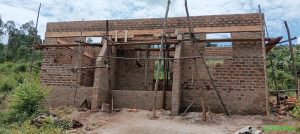
Beyond tree planting, the project invested in income-generating enterprises. At Kyakaitaba, a honey collection centre was established, complete with a processing room, storage facility, meeting gazebo, and sanitation facilities. A modern apiary equipped with 50 beehives and beekeeping equipment was also set up to support honey production and boost household incomes.
The initiative further strengthened farmer engagement through the Farmers’ Voice Radio platform, which provided agricultural information in local languages. Project implementers also used the Free and Prior Informed Consent (FPIC) approach and the Gender Action Learning System (GALS) to support household land-use planning and decision-making.
One of the beneficiaries, Isidoro Ndyabwe from Ganyenda-Kinoni Parish, said the project had transformed his farming practices.
“Before ECOTRUST came, I had a coffee garden but lacked knowledge about the importance of shade trees. Through the project’s training, I learned how integrating trees into my farm could improve coffee production and protect the environment,” Ndyabwe said.
“ECOTRUST provided me with 837 tree seedlings, including mahogany, grevillea, musizi and avocado trees, and I am proud that all of them are growing well. Today, I have been recognised as one of the best-performing farmers and awarded two goats, which will further support my family’s livelihood.”
Kamwenge Assistant Forest Officer Mugabirwe Novenci said the project had equipped communities with practical knowledge and alternative sources of income, reducing pressure on natural forests.
“Farmers now have alternative income sources while contributing to forest conservation and environmental protection,” Novenci said.
Resident District Commissioner Namara Loy Batuuze commended ECOTRUST for supporting government efforts to increase tree cover and restore degraded landscapes.
She noted that many farmers had embraced President Museveni’s “plant five, cut one” approach to environmental conservation and were already witnessing positive results.
“Government offices, including the CAO, RDC and LC5, will continue to monitor and support these initiatives to ensure the gains achieved are sustained and expanded for the benefit of communities,” Batuuze said.
As the IFPA-CD project concludes after two years, officials say its achievements in Kamwenge demonstrate how climate-smart agriculture, agroforestry, and community participation can improve livelihoods while restoring degraded ecosystems and building resilience to climate change.