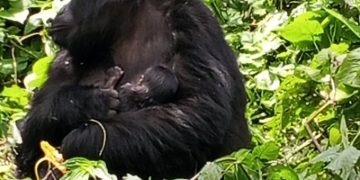



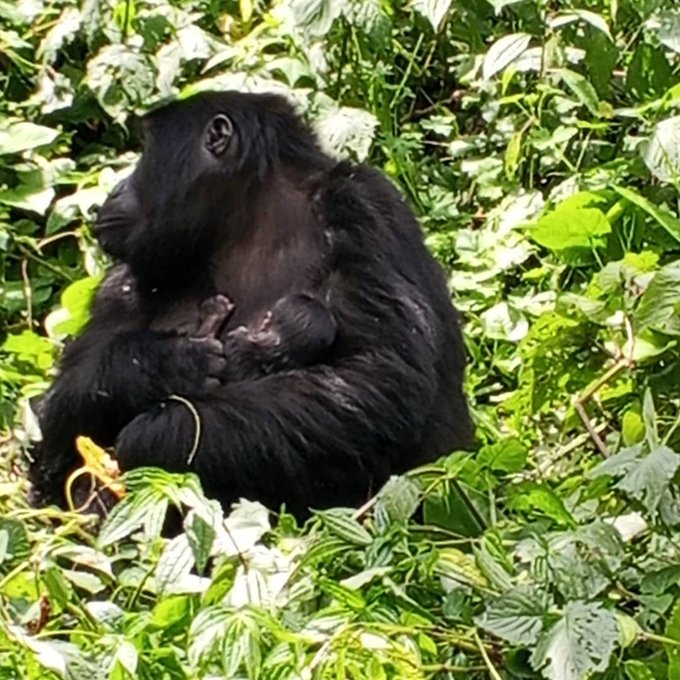
KANUNGU — Conservationists are celebrating the birth of a new mountain gorilla in Bwindi Impenetrable National Park, a development that has added fresh optimism to ongoing efforts to protect the endangered species.
The Uganda Wildlife Authority (UWA) announced that the Mishaya Gorilla Family, which inhabits the Rushaga sector of the park, recently welcomed a newborn baby, increasing the group’s membership from nine to ten individuals.
According to UWA, the infant’s mother is Bashekura, an adult female within the family group.
“Good news from Bwindi Impenetrable National Park. The Mishaya Gorilla Family in Rushaga has welcomed a newborn baby, increasing the group’s membership from nine to ten individuals,” the wildlife authority said in a statement.
The birth marks another milestone for Uganda’s mountain gorilla conservation programme and adds to a growing number of births recorded in recent years.
Commenting on the development, UWA Communications Manager Bashir Hangi said the latest birth is part of an encouraging trend that points to the success of long-term conservation efforts.
“While we cannot yet conclusively state that the mountain gorilla population has increased, the signs are certainly encouraging,” Hangi said.
He revealed that approximately 110 mountain gorilla births have been recorded in Bwindi over the past five years, describing it as a remarkable baby boom for one of the world’s most endangered primate species.
“The latest mountain gorilla census data is currently being analysed, and we are optimistic that the results will bring good, if not excellent, news for conservation,” Hangi noted.
He added that every new birth demonstrates the effectiveness of wildlife protection measures, community participation and continued investment in conservation.
“Every birth is a testament to the success of long-term protection efforts, community support and the resilience of nature,” he said.
Mountain gorillas are found only in a few protected areas in Uganda, Rwanda and the Democratic Republic of Congo. Uganda hosts more than half of the world’s remaining mountain gorilla population, with the majority living in Bwindi Impenetrable National Park.
The species remains a major tourism attraction, drawing thousands of visitors annually and generating significant revenue for conservation and local communities.
Conservationists say continued protection of gorilla habitats, anti-poaching efforts and community engagement remain critical to ensuring the survival and growth of the species for future generations.
The results of the latest mountain gorilla census are expected to provide a clearer picture of population trends and the impact of ongoing conservation interventions across the region.