


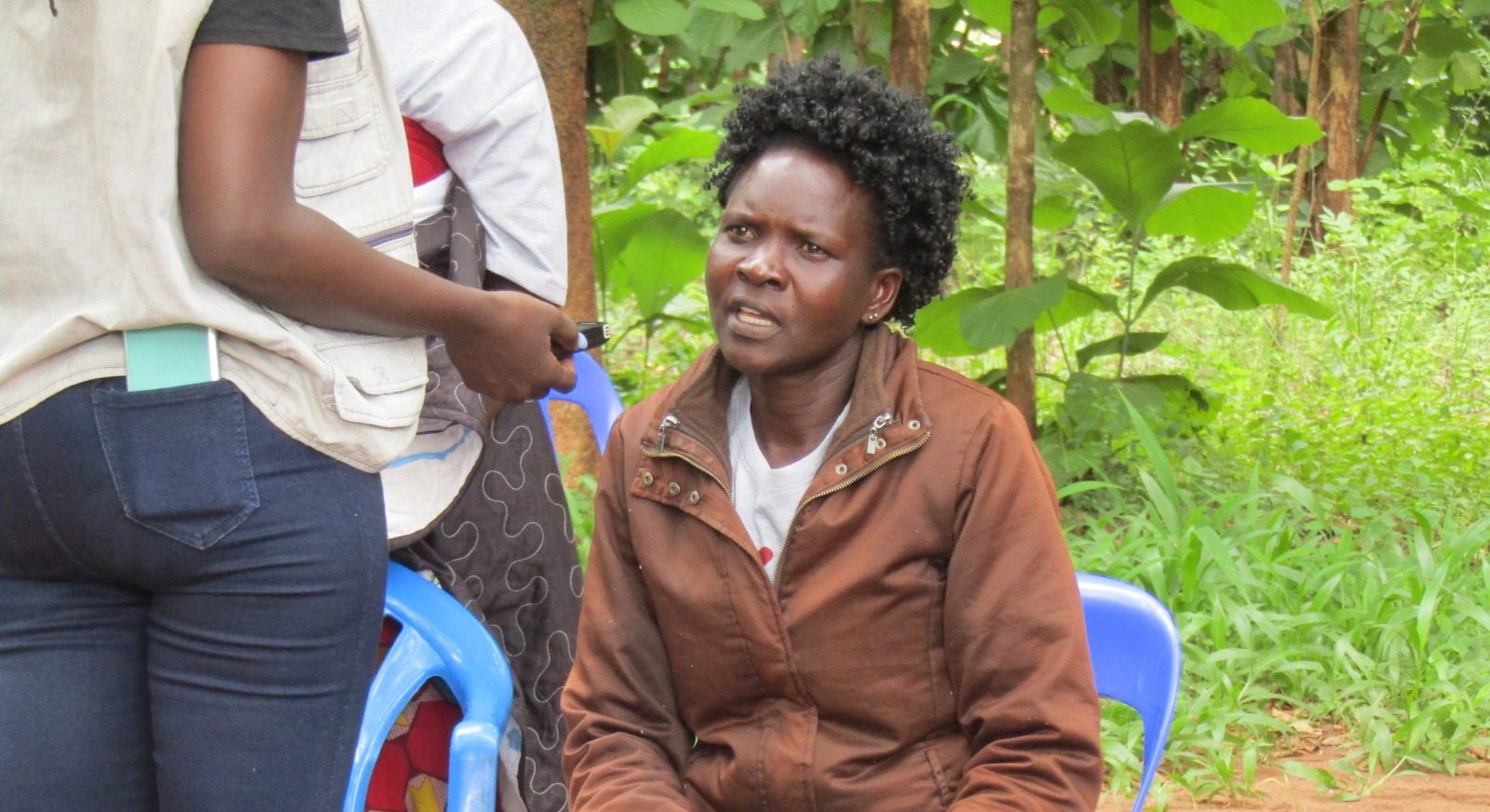
Every Tuesday and Friday, a familiar ritual unfolds in Aciro Stella’s home in Lamwo District. As the signature tune of Farmer’s Voice Radio (FVR) comes on through Tembo FM, household activities momentarily pause.
For Stella, the programme is more than a radio broadcast—it is a classroom, business mentor, and agricultural extension officer rolled into one.
As deputy chairperson and women’s representative of the Mar-Lonyo Radio Listener Group, Stella ensures she never listens alone. She invites family members, neighbours, and fellow farmers to tune in with her before they meet every month to discuss the lessons they have learned and how to apply them on their farms.
Today, Stella is one of the district’s leading examples of how knowledge can transform livelihoods.
From Traditional Farming to Modern Agriculture
Just a few years ago, Stella’s farming practices reflected the traditional methods common across many rural communities. Maize, sorghum and other crops were planted together in the same holes without spacing or proper field planning. The result was poor crop growth, declining soil fertility and disappointing harvests.
Everything changed after she began listening to Farmer’s Voice Radio.
The programme introduced her to sustainable land management practices, proper crop spacing, row planting and improved agronomic techniques. As she gradually implemented what she learned, her once-disorganised gardens became productive, well-managed fields that consistently produced higher yields.
“I realised that simple changes in the way I planted could make a very big difference,” Stella says.
Turning Groundnuts into Profit
The biggest breakthrough, however, came when Farmer’s Voice Radio introduced farmers to the concept of value addition.
Previously, Stella sold her groundnuts immediately after harvesting, like most farmers in her community. During harvest season, however, the market becomes flooded, forcing prices down and leaving farmers with minimal profits.
The programme encouraged farmers to process their produce before selling it.
Stella began grinding her groundnuts into high-quality paste, significantly increasing their market value.
The results exceeded her expectations.
Within a single season, she earned more than UGX 1 million in net profit—an income that transformed her family’s standard of living.
The additional earnings enabled her to provide regular meals at home, access quality healthcare whenever family members fell sick, and consistently pay school fees for her children.
Growing Wealth Through Financial Discipline
Improved earnings also prompted Stella to rethink how she managed money.
Farmer’s Voice Radio’s financial literacy programmes encouraged farmers to embrace saving instead of spending impulsively. Stella opened a savings account and began setting aside part of every harvest.
Rather than depending solely on groundnuts, she reinvested part of her profits into coffee production, creating another long-term source of household income.
The diversification has strengthened her family’s financial resilience and reduced the risks associated with relying on a single crop.
Empowering Women Through Knowledge
For Stella, the programme has done more than improve farming—it has strengthened the position of women within their families and communities.
As women’s representative of the Mar-Lonyo Group, she has witnessed growing respect for women’s contributions to household decision-making.
“I believe women now participate more in decision-making within their families,” she says.
“This is because they know sustainable land management and modern farming. When the information they share leads to better harvests and more income, families begin to value their contributions.”
Knowledge, she believes, has become the great equaliser.
Strength in Collective Action
The lessons from Farmer’s Voice Radio have also inspired the Mar-Lonyo Group to work together economically.
Instead of selling produce individually to middlemen, members are embracing collective farming and bulk marketing.
Pooling their harvests allows them to negotiate better prices, access larger markets and reduce exploitation by traders who often take advantage of small-scale farmers with limited bargaining power.
The approach is gradually improving incomes across the group.
Investing in Climate Resilience
Beyond increasing crop production, Stella has embraced environmental conservation as a long-term investment.
Through the Transformative Approach to Sustainable Landscapes and Livelihoods (TASLL) Project, implemented by ECOTRUST with support from UK International Development, she has planted 3,465 trees on her land.
Her woodlot includes indigenous species such as Milicia excelsa (Muvule), Markhamia (Musambya), Khaya grandifoliola (Tido), White Tick and Black Tick, alongside fruit trees including jackfruit.
The trees are expected to serve multiple purposes—restoring degraded landscapes, improving biodiversity, supplying household firewood, and generating future income through the sale of timber and poles.
To Stella, the plantation represents a retirement plan rooted in environmental stewardship.
As the trees mature, they will provide both ecological benefits and financial security for her family.
A Radio That Changed a Life
Aciro Stella’s journey—from managing an unstructured garden to becoming a successful agribusiness entrepreneur and environmental champion—illustrates the transformative power of accessible agricultural information.
What began as a simple habit of tuning in to Farmer’s Voice Radio has evolved into a pathway toward financial independence, climate resilience and women’s empowerment.
Today, her thriving farms, diversified businesses and growing woodlot stand as living proof that when farmers have access to practical knowledge, they are better equipped to transform not only their own lives but also the future of their communities.