


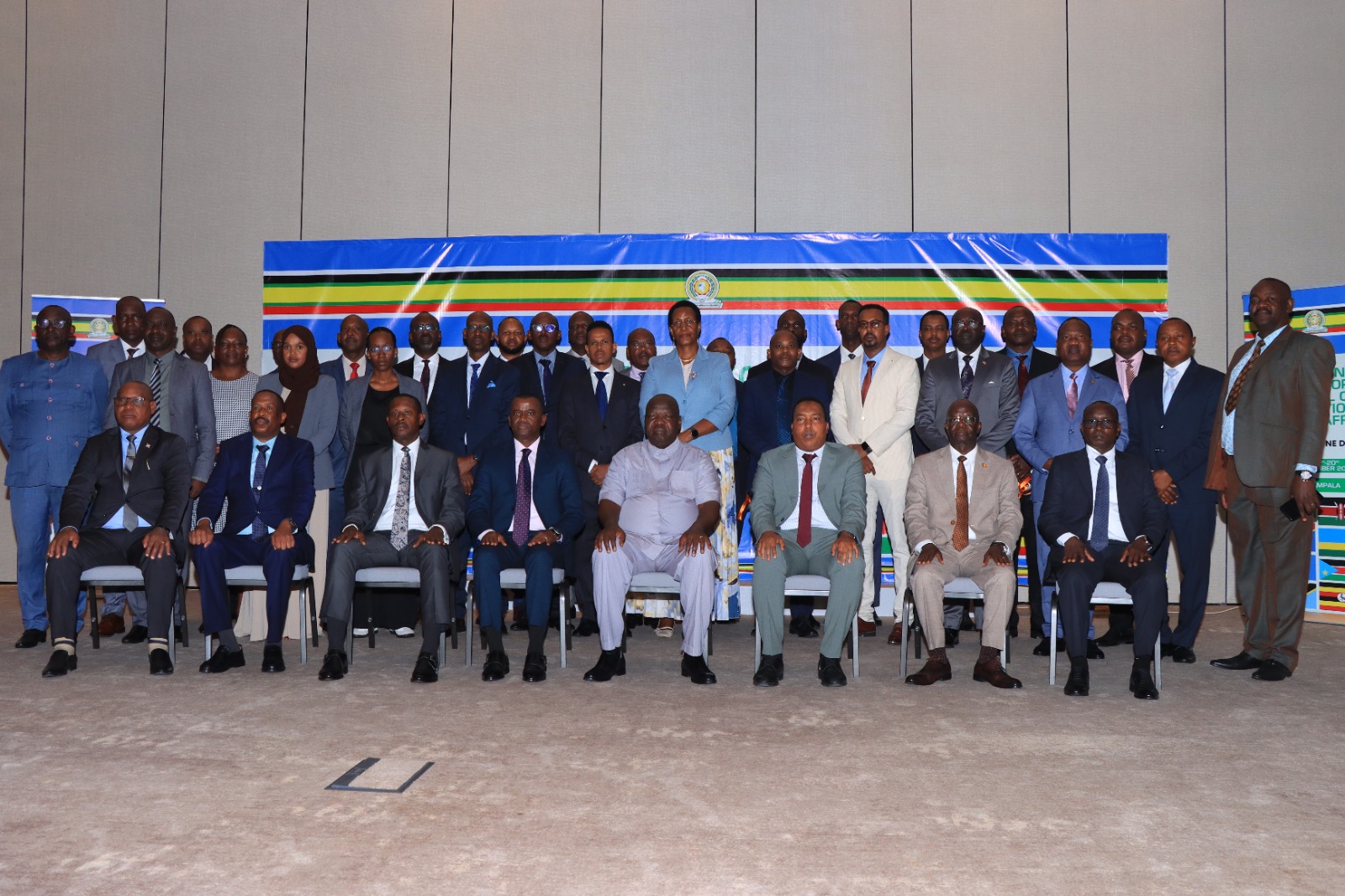
KAMPALA — Defence leaders from East African Community (EAC) partner states have called for stronger military coordination, intelligence sharing and joint training to address security threats that increasingly cross national borders.
The call was made during the 43rd Meeting of the EAC Sectoral Council on Cooperation in Defence Affairs, held in Kampala, where regional officials reviewed existing defence arrangements and considered recommendations on military cooperation, a proposed Mutual Defence Pact and civil-military relations.
Uganda’s Deputy Chief of Defence Forces and Inspector General of the Uganda Peoples’ Defence Forces (UPDF), Lt Gen Sam Okiding, said the meeting was expected to refine recommendations prepared by the sectoral committee before they were submitted to the Sectoral Council for consideration.
Okiding chaired the Consultative Committee on Cooperation in Defence Affairs on behalf of the Chief of Defence Forces, Gen Muhoozi Kainerugaba, on Thursday.
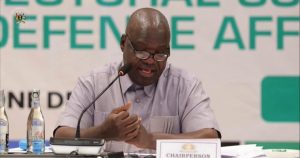
He said the committee had a responsibility to examine the work already done by technical officials and ensure that the resulting recommendations reflected the security realities facing the region.
“Our responsibility is to look at those observations and recommendations. It is also our responsibility to fine-tune them and present them to the Sectoral Council,” Okiding said.
He identified the training of defence forces, the proposed Mutual Defence Pact and civil-military relations among the issues under consideration.
Okiding warned that the security environment in East Africa was changing rapidly, requiring partner states to regularly review how their armed forces cooperate.
“As managers of defence and security, we need to realise that the operating environment in our region is always changing rapidly,” he said. “Our observations and recommendations need to align with that dynamic environment so that our defence forces can work together to overcome those security challenges,” he added.
The meeting brought together defence representatives from Uganda, Kenya, Tanzania, Rwanda, Burundi, Somalia, South Sudan and the Democratic Republic of Congo.
Speaking on behalf of EAC Secretary General Ambassador Stephen Patrick Mbundi, Brig Mathew Gureme said no partner state could effectively address regional security challenges by acting alone.
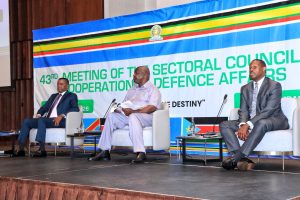
“None of the countries can afford to look at peace and security in isolation,” Gureme said. “Whether we are dealing with cross-border security threats, protecting our shared trade corridors, or responding to emerging humanitarian challenges, our strength lies in our unity.”
He assured delegates that the EAC Secretariat would support the proceedings and follow up on decisions reached by the regional defence bodies.
However, he challenged the participating countries to move beyond formal resolutions and ensure that agreements produced measurable security improvements.
“Decisions made in the conference rooms only matter when they translate into real impact on the ground,” he said.
Gureme said the Secretariat remained committed to supporting both the deliberations and the implementation work that would follow the meeting.
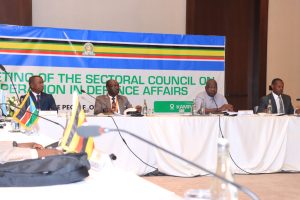
Uganda’s chairmanship of the 43rd Sectoral Council was also presented as an opportunity to strengthen practical cooperation among partner states.
Brig Flavia Byekwaso, Chief of Staff at the Uganda Rapid Deployment Capability Centre, said the chairmanship provided an opening to advance cooperation through military training, joint operations, information sharing, technical assistance and social integration, in line with the EAC Protocol on Cooperation in Defence Affairs.
The regional consultation process is conducted through four stages: the Defence Experts Working Group, the Sectoral Committee, the Consultative Committee and the Sectoral Council. Recommendations are progressively reviewed before being submitted to the responsible ministers for consideration.
The meeting also established a quarterly review mechanism through which defence experts, sectoral committees and ministers will assess the implementation of directives, reports and policy developments.
The discussions take place amid persistent security challenges in the region, including armed conflict in eastern Democratic Republic of Congo, instability in South Sudan and the continuing threat posed by armed groups and terrorism in Somalia.
The gathering was held under the EAC theme, One People, One Destiny, and in accordance with Article 10 of the Protocol on Cooperation in Defence Affairs.