


KAMPALA — Finance Minister Hon. Henry Musasizi has urged accountants to embrace Artificial Intelligence (AI) and automation, strengthen their digital skills and uphold professional integrity as technology transforms the finance profession.
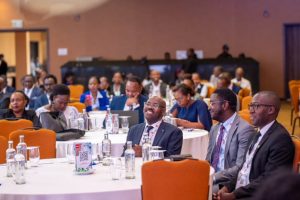
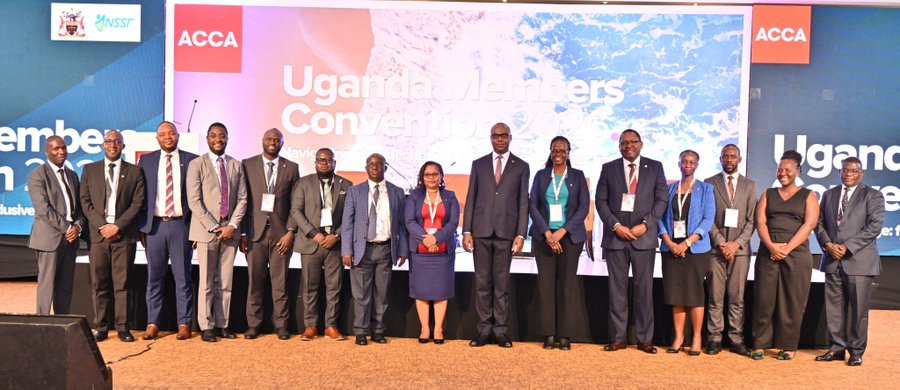
He was speaking at a two-day convention, which opened on Thursday at Speke Resort Munyonyo, and brought together finance professionals, policymakers and business leaders to discuss the changing role of accountants, public financial management, technology and emerging career opportunities.
Musasizi said accountants remained critical to economic development through their contribution to financial transparency, public accountability and investor confidence.
“The accounting profession drives economic development in several ways. It provides evidence to guide decision-making, ensures financial transparency and integrity, builds public trust, improves public resource management and increases investor confidence,” Musasizi said.
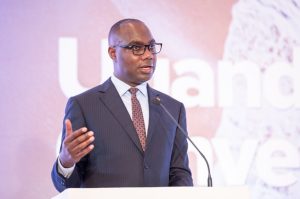
He urged professionals to embrace technology while strengthening ethical judgement, experience and continuous learning.
“As the profession continues to evolve, particularly with the emergence of artificial intelligence and automation, flexibility and inclusivity — the theme of this convention — will become increasingly critical,” he said.
Musasizi said internationally recognised accounting standards would support the government’s Tenfold Growth Strategy, which seeks to build a US$500 billion economy by 2040, by improving financial reporting and helping businesses attract investment and access credit.
He also called for merit-based appointments to government boards and public institutions, saying competence should take precedence over personal connections.

“Being a board member should not simply mean having a seat at the table. It should mean having the competence and commitment to contribute to the work of that institution,” he said.
“Allow people to compete. Allow people to feel that merit still exists in this country. We need to create systems where people are appointed based on their qualifications, competence and ability to deliver.”
The minister challenged accountants to work with government to strengthen accountability, asking whether public funds were reaching their intended beneficiaries and being used for their allocated purposes.
“Accountability requires us to ask fundamental questions: Is public money reaching the people for whom it was intended? Is it being used for the purposes for which it was allocated?” he said.

Charlotte Kukunda, ACCA Uganda Country Manager, said ACCA wanted to strengthen the evolving role of accountants as policy shapers and contributors to public interest, while preparing them for opportunities in technology, sustainability and public service.
Kukunda also announced a digital-first approach to future conventions, saying the organisation had stopped providing conventional conference merchandise as part of efforts to reduce its carbon footprint.
“Our sustainability commitment is reflected in our digital-first approach. We have embraced virtual registration and technology to minimise waste associated with printed materials,” she said.
She urged professional bodies to collaborate rather than operate in isolation, noting that they faced similar challenges and served the same businesses and markets.
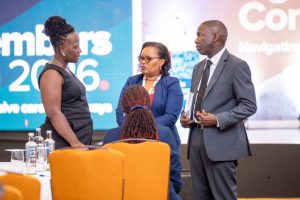
In his keynote address, Joseph Owolabi, Chief Executive Officer of Rubicola Consulting and immediate past ACCA President, said AI was rapidly changing finance operations, with routine tasks increasingly moving towards automation.
Titled From Bookkeepers to Intelligent Partners, his presentation examined how accountants could use AI to improve efficiency while retaining responsibility for the accuracy and integrity of their work.
“The expectation is that professional roles will change rather than disappear. Your role will remain relevant, but some of the repetitive manual tasks we perform today will become obsolete,” Owolabi said.
He said AI could improve reconciliations, forecasting, fraud detection, taxation and continuous auditing, while reducing the time businesses spend preparing monthly financial accounts.

However, he warned that AI-generated information could contain fabricated references and inaccuracies, making professional scepticism increasingly important.
“AI will automate tasks, not accountability,” he said. “You remain responsible for the work and products you generate using AI.”
Owolabi urged accountants to develop data literacy and learn how to apply AI tools in their respective fields. He challenged delegates to use ChatGPT to create personal 12-month learning roadmaps and take advantage of free online training programmes.
Aiden Rujumba, Commissioner for Financial Management Systems at the Ministry of Finance, said AI could improve public financial management through better data analysis and real-time decision-making.
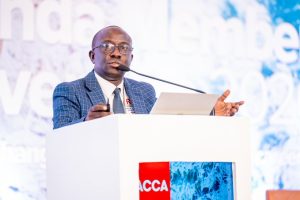
“If other [AI] agents are running through [the budget], which I’m trained to scan through market prices, these things can be checked more quickly and fixed, so that our allocation is more optimal,” Rujumba said.
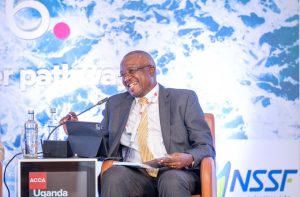
During a panel discussion on the digital transformation of finance, David Masiko, National Social Security Fund (NSSF) Senior Manager for Planning and Analytics, said technology investments should be linked to institutional objectives to gain support from boards.
“If you go to the board and say, ‘I want to buy an AI assistant,’ most likely, that decision will be thrown out,” Masiko said. “But if you link it to a strategic objective of the organisation, for example, in the case of NSSF, we want to grow membership. That’s a language that the board really understands.”
Jackson Ndyabanawe, Flutterwave Uganda Country General Manager, said human judgement remained necessary in handling customer disputes.

“If you have a customer dispute transaction, this AI cannot resolve it efficiently, as compared to when there is human judgement in this,” he said.
Micheal Babu, Senior Manager for Internal Audit at Absa Bank Uganda, said auditing AI should include checking the accuracy of the decisions generated by the systems.
“Can we ensure that we are actually testing the accuracy of those decisions that are coming out of the AI tool, because at the end of the day, that is what the end users will see,” Babu said.
The convention also examined generational differences in the workplace. Joyce Nakalema, Head of Human Resources at Uganda Electricity Generation Company Limited, urged employers to use surveys, focus group discussions and confidential interviews to understand staff dissatisfaction.

“Usually, this information that comes in is so brutal that feedback sometimes shakes the core. But as leaders and HR professionals, we shouldn’t shy away from this,” she said.
Prof. Samuel Sejjaaka, Principal and Country Team Leader at MAT Abacus School, said younger employees increasingly expected faster career progression.
“We all expect progress. We have ambition, so we expect progress. But we want it very quickly because today business is at the speed of thought,” he said.
“So if you are in a workplace where things don’t move, the young people are impatient, and they’re not going to wait for you.”
Other sessions addressed sustainability reporting, mental health, professional wellbeing, estate and succession planning, coaching and mentorship.