


Kasanje, Wakiso — Silence. A low haze. A paddle. Hands gripping a paddle. Water dripping from the blade. Ripples. A canoe makes way. An engine revs and roars.
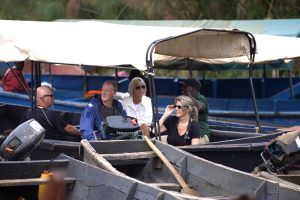
The canoe slowly glides through Mabamba’s papyrus channels where fishermen once hunted shoebills but are now protecting them.
The engine roars louder as the boat emerges from the papyrus and enters a clearing. Francis Odwori, 28, a Mabamba tour guide, suddenly exclaims and points to the right. We all turn to follow a pointing finger. Stop.
The boat operator kills the engine. Paddles stop. Fishermen nearby also go into silent mode. There is only water. Papyrus. Mist. Then stillness.
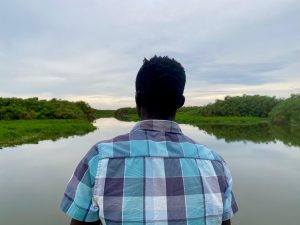
“There she is,” Odwori says, lowering his voice.
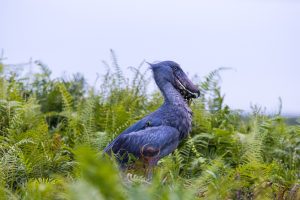
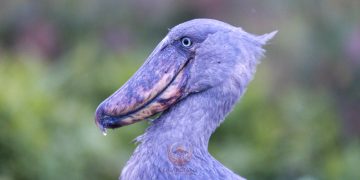
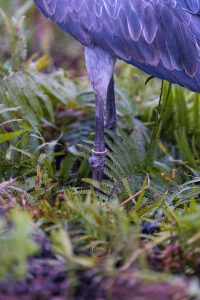
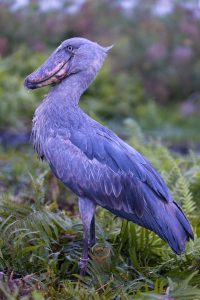
And on the water’s edge, a Shoebill stork is watching. Motionless. Stilt-like legs firmly planted in the mud; its piercing eyes gazing into the water, unblinking.
“The shoebill is a very patient bird. It can stand still in one position for over three hours as long as it is not disturbed,” Odwori whispers. We wait.
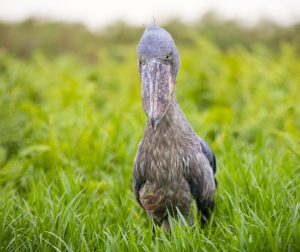
A ripple breaks the silence. The waiting ends.
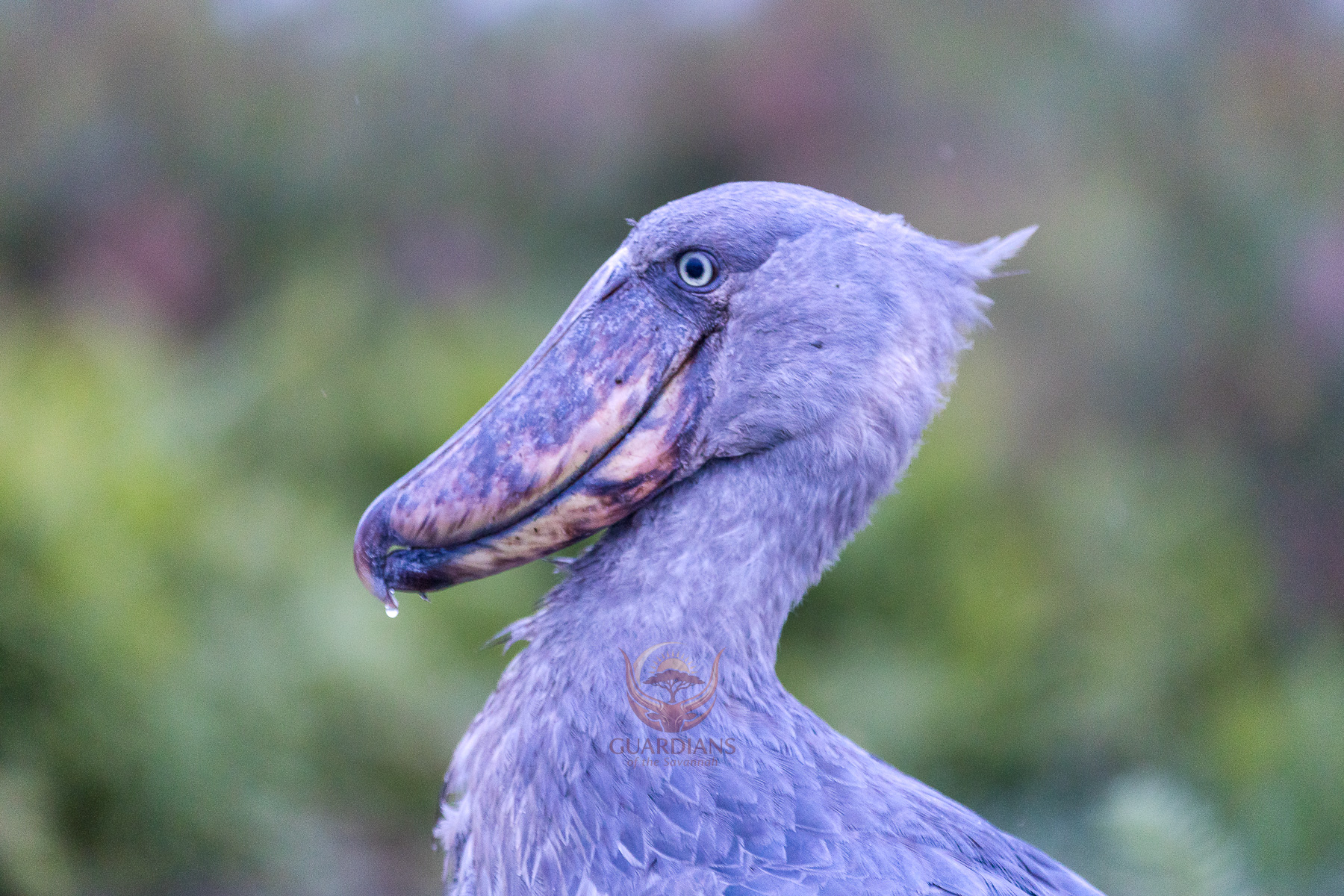
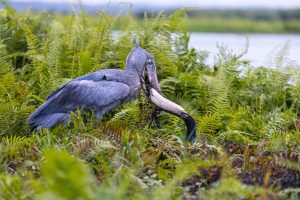
Then, in a fraction of a second, the shoebill strikes. A splash of water and a huge lungfish dangles from its massive, shoe-shaped bill. We exclaim. Fishermen clap as if to congratulate the bird on a successful hunt.
This patience drives the strange economy of Mabamba Bay, a vast papyrus wetland on the northern shores of Lake Victoria in Kasanje sub-county, Wakiso district.
The Bill — The bird that makes people wait
Tourists come looking for Balaeniceps rex, the shoebill, an iconic, prehistoric-looking giant renowned for its massive, shoe-shaped bill and statue-like hunting posture in the freshwater papyrus marshes of East Africa.
Julian Namubiru, 24, a tour guide, first saw a shoebill in 2022. A town girl with little knowledge about nature, she wondered: “Is this the bird people travel thousands of kilometres to come and see? There is nothing special about it.”
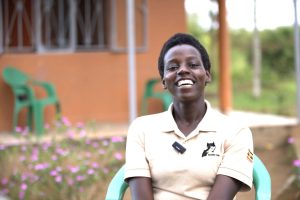
But for Yonatan, an Israeli DJ, electronic music producer and drummer, visiting Uganda with his family, the shoebill was unlike anything he had seen before.
“We were in shock at first because it’s a really big bird. We don’t have this kind of bird in Israel, so it was our first time seeing one.”
Although it was a fun experience for Yonatan, he expected to see the bird hunt. “Unfortunately, we didn’t get to see it hunt.”
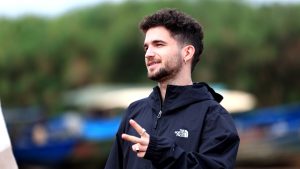
Israeli tourist Yanivu, visiting Uganda with his family for his wife’s birthday, described the experience as peaceful and relaxing.
“It is very peaceful on the river,” he says. “We saw a very special bird. It was called, I think, the shoebill. It was wonderful to watch it and to be there.”
This large solitary wetland bird is classified as Vulnerable globally. Uganda Wildlife Authority (UWA)’s 2026 State of Wildlife Resources Report estimates the national population at between 1,000 and 1,500 individuals, with Mabamba Bay among its main habitats.
However, the story of Mabamba moves beyond this rare bird to people who once depended on the swamp for fishing, discovering another way of benefiting from it by preserving instead of taking.
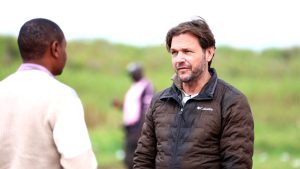
Yanivu wanted more than wildlife photographs. He wanted a cultural experience: to see how the people live in the villages and their markets.
The Neck — Before the bird became gold
The old Mabamba was a fishing community.
Francis Luzzi, 78, came to Mabamba in the 1970s. His father was a fisherman. The area was covered in forests and papyrus. The main business was fishing lungfish, locally called Mmamba, Tilapia (ngege) and Nile Perch (empuuta).
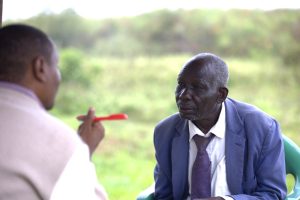
“I first saw a shoebill in 1970. It was just another bird,” recalls Luzzi.
But he remembers some people hunting shoebills, especially traders dealing in black market coffee husks, who caught the birds and took them to Kenya. “They believed the bird could bring luck in business.”
Ismail Katumba, 50s, who heads local guides and has been around Mabamba since childhood, says fishermen once saw a shoebill as competition because it ate the same fish they were trying to catch.
“The name ‘Mabamba’ was coined by fishermen from the Mmamba (lungfish). There were many and big Mmamba here, hence the name Ma-bamba meaning a place of lungfish.”
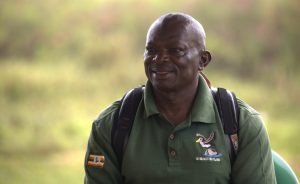
Gerald David Ntuumwa, 36, a fisherman turned guide, says locals feared the bird and associated it with bad luck.
“The shoebill has an intimidating appearance. It also produces a loud machine-gun-like rattling sound by clattering its bill. So, fishermen believed that was meant to scare them away so the shoebill could eat their fish. And whenever they failed to catch fish, they blamed the shoebill for cursing them.”
This started slowly changing around the turn of the century. According to Katumba, Nature Uganda and Uganda Bird Guides Club trained community members between 1999 and 2000. They learned the importance of the wetland, the shoebill and tourism.
“We didn’t know white people could come here. We got jobs as boat operators. We earned money. We loved it,” notes Katumba.
The Body — When fishermen became guides
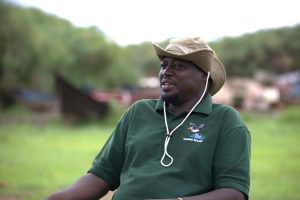
For Hannington Kasasa, 52, the chairperson of Mabamba Wetland Eco-Tourism Association (MWETA), the transformation started as far back as 1983.
He was still a young boy when foreign visitors arrived in Mabamba searching for a shoebill. “Where are these people going? What are they looking for?” he wondered.
In 1984, a Dutch visitor named Scott returned and showed Kasasa the bird and explained that people in Europe wanted to see it. “They told us they would pay us if we took them to where the birds were.”
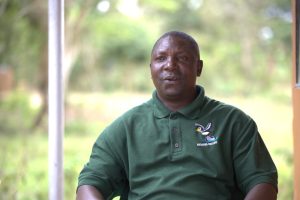
Kasasa, along with a local boat operator, took the tourists into the wetland where they searched for the shoebill for days. “Scott was very excited when he saw the bird. He photographed it repeatedly and thanked us.”
Kasasa was paid about four dollars, his first-ever payment for guiding services. “It was a lot of money at the time, but the boatman didn’t understand its value. He threw the dollars away, saying, ‘These people didn’t pay us’.”
When the visitors returned the next time, Kasasa became a guide. And eventually, tourism paid for his education. Kasasa would later start a Shoebill Support Group involving women, fishermen and boat operators.
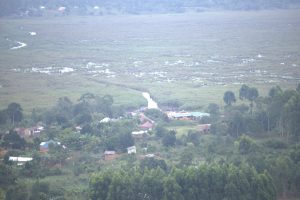
Katumba remembers the transition from four boats transporting traders to Bussi Island to buy pineapples and bananas to now more than 50 boat operators.
For Eric Byakatonda, 27, who operates tourist boats, protecting the shoebill is protecting his job. “I pay school fees for my siblings and feed my family thanks to this bird. I plan to buy land and build a two-roomed house.”
A tourist boat costs about Shs150,000 for a trip. Byakatonda receives about Shs50,000 as a boat operator. During good months, he earns up to Shs1.5m. In March 2026, he bought his own boat and engine.
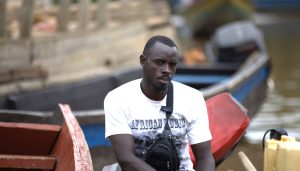
Tony Mukoli, 32, also bought his own boat and is now self-employed. He educates his children and has bought plots of land where he hopes to build rentals and a home.
“We call a shoebill Bulwe,” he revealed. “This bird is my father and my mother because everything I own, I got it because of this bird.”
For fisherman Gerald Lugalambi, 55, the transformation is even more surprising. His kind has moved from hunter to protector. “I love it,” he says. “I don’t compete with the shoebill. It brings tourists who bring money.”
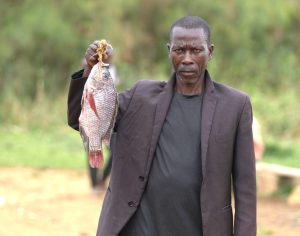
According to Lugalambi, the fishermen no longer see a reason to scare away the bird. “Instead, we protect it so it can bring tourists who buy our fish.”
Ntuumwa, a former fisherman, states it directly: “This is not just a bird; it is the gold of Mabamba.”
Left Wing — The bird cannot survive without the swamp
Mabamba is functioning as a living wetland ecosystem. But it is still under pressure from habitat degradation, fires, sand mining, pollution, fishing activity and changing rainfall patterns.
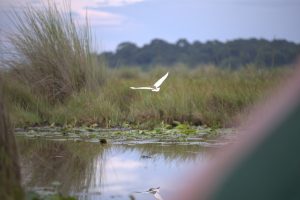
In a short documentary about Mabamba, Achilles Byaruhanga, a veteran conservationist and executive director of Nature Uganda, said Uganda’s understanding of wetlands has changed dramatically. “Historically, wetlands were called wastelands. They were not protected.”
Byaruhanga was part of the team that conducted Uganda’s first wetland survey between 1994 and 1995. Sixteen sites were identified, and 10 have since been designated Ramsar sites— wetlands recognised as being of international importance.
“But designating an area without putting in place protection doesn’t actively protect the wetland,” Byaruhanga stated. That is why he resolved to work with communities living around these ecosystems.
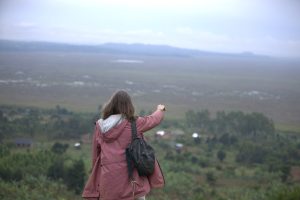
According to Nature Uganda’s site profile, Mabamba Bay covers 17,000 hectares of papyrus marshland supporting over 300 bird species, including the globally threatened shoebill and blue swallow. It also supports fishing, ecotourism and other livelihoods.
But the ecosystem is under pressure.
Peter Asiike, 23, a UWA intern working on wildlife research and biodiversity monitoring, cites changing rainfall patterns as part of the problems. “The climate is changing, and nowadays, the rainfall is decreasing.”
Wildfires, hunting and sand mining also continue to threaten the wetland.
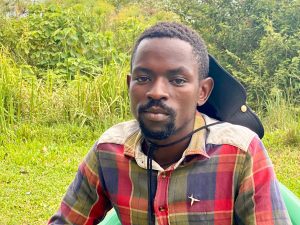
According to Immeldah Nakato, a young female guide, fires sometimes destroy the wetland and damage shoebill eggs.
She says protection is also enforced by members of MWETA. One such rule is restricting access to nesting areas.
“If you go there by mistake and take a picture, you are fined, or sometimes you can lose your job,” Nakato explains.
Guides also patrol to check on the health of the birds and report on injured birds or people who violate wetland rules.
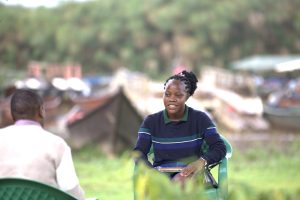
The most intriguing part is the plastic bottles. Ordinarily, a bottle floating in the swamp would be considered rubbish, but in Mabamba, such a bottle is sometimes tied to a fishing net to keep it afloat.
The wetland is both a habitat and a workplace, complicating the idea of pollution versus livelihood.
Right Wing — A bird becomes livelihood
This is where Sazzi gives meaning to the phrase “the gold of Mabamba”.
In 2018, a shoebill swallowed a fish that became lodged in its oesophagus. The bird could no longer swallow properly and remained in one place for days.
A fisherman called Sazzi noticed and reported it to the guides. The guides contacted UWA, and the bird was taken to the Uganda Wildlife Conservation Education Centre (UWEC) for treatment.
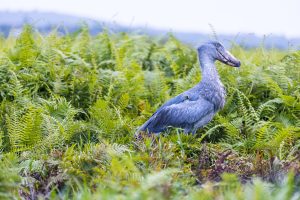
Ntuumwa and Odwori remember a community celebration when the bird returned in good condition. “The bird was named Sazzi after the fisherman who reported it,” says Ntuumwa.
“Sazzi carries a ring on her left leg. She has produced a chick which is now three and a half months old,” adds Odwori.
Mabamba now supports an economy of boat operators, boda boda and taxi operators, guides, restaurants, shops and accommodation.
Benna Nabunya, 28, runs a restaurant serving guides, fishermen, boat operators and travellers. She can make a profit of Shs20,000 on a good day. “The existence of the bird is important to me because I feed those who depend on it,” she explains.
The shoebill economy has changed the lives of women. They now run businesses, restaurants, tea shops, craft shops and have become guides.
Sharon, aka Mama Naluganda, 30, runs a small retail shop she started with a loan from the association. “I know the bird brings money because what brings people here is tourism.”
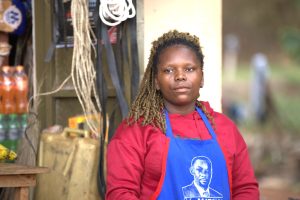
For Nakato, guiding gave her independence. “Before, I was staying home. Right now, I have a stable family.” She earns Shs50,000 from a boat trip. She owns property now. “I can stand on my own.”
For Judith Nanono, 20, who grew up in Mabamba, guiding wasn’t an easy choice. Her father is a boatman, and some people made negative comments about a young unmarried woman becoming a guide.
She ignored them. “I believed in myself and continued with what I wanted to do.”
Her first guiding payment was five dollars, which she hid because she feared people would assume she was rich and rob her.
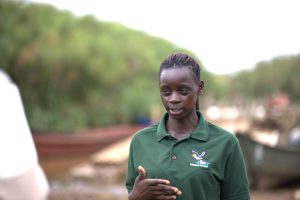
“Tourism has now become like a loved family,” she points out. “Even when you are stressed, you can look at nature and feel relaxed.”
For Namubiru, seeing tourists become silent when they approached the shoebill was at first confusing.
She once asked a client why they treated the bird with such reverence. The tourist told her: “Julian, this is like a god.”
She disagreed. But she understood the silence. “The silence gives you a moment to reconcile with yourself.”
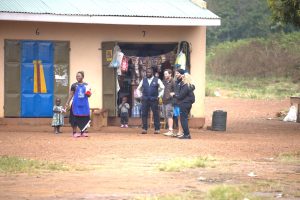
Left Leg — Does the model work?
The community model appears to have changed behaviour.
According to Kasasa, residents were trained to see conservation not as a restriction but as an income-generating opportunity.
Asiike, the UWA intern, acknowledged that the community model was helping with monitoring. “The model is working. The guides help with monitoring and have more information about the bird that researchers can use,” Asiike noted.
But the strongest evidence is Sazzi, the shoebill.
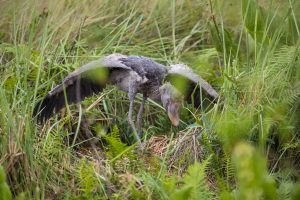
A fisherman who once saw a shoebill as a competitor chanced upon a sick bird. He didn’t kill it. He reported it to the guides who alerted UWA. The bird was treated and has now produced a chick.
A 2026 Uganda Shoebill Survey puts Mabamba’s population at 6-10 birds while guides estimate about 16.
Elaine Roberts, proprietor of Nkima Forest Lodge, sees a wider chain. Her lodge employs 16 people directly, while fishermen, electricians, builders, fruit sellers and tailors benefit indirectly.
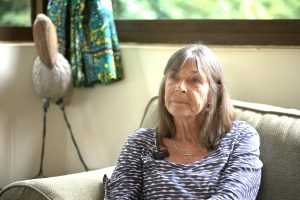
“I also benefit because if the shoebill was not here, many of the visitors would not come,” she stated, adding, “Women have benefited a lot from income-generating activities.”
According to Elaine, conservation doesn’t stop at the shoebill.
She built her lodge around existing trees instead of clearing them. She uses solar power and biogas from kitchen waste. Her forest is rich with biodiversity.
Right Leg — Where the model begins to crack
According to Elaine, tourism creates more rubbish, although MWETA is solving this problem through its monthly cleaning exercises.
“Too many boats crowding around one bird could spoil the experience and disturb the bird,” she notes, adding that electric boats could replace petrol and diesel engines, although these are expensive.
Nakato observes that tourism itself is seasonal. “June, July and August are the good months. April can be difficult,” she noted.
When tourists disappear, the economic engine shifts into reverse gear.
Sand mining in other parts of the wetland remains a concern; fires destroy nests and hunters are still poaching sitatungas, bushbucks and duikers.
Nakato says some migratory bird species that once came to Mabamba are disappearing from the wetland. “Which means there is somewhere, somehow, we are failing.”
Feet — What happens next?
For Yonatan, it’s a start: “It’s our first time and definitely not the last time. We’ll be back.” “I recommend everyone do it,” added his father, Yanivu.
In August 2026, the National Environment Management Authority (NEMA), together with the United Nations Development Programme (UNDP), Wakiso District Local Government and MWETA launched the construction site for the Mabamba community-managed ecotourism facility.
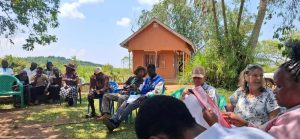
The facility, being supported under the second phase of the Biodiversity Finance Initiative (BIOFIN II), will promote sustainable tourism while creating opportunities for the local communities around Mabamba Wetland.
Elaine believes the wetland could attract even more visitors, especially Ugandans. The young generation is even more hopeful.
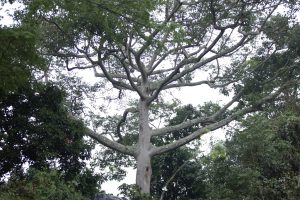
Namubiru hopes for more trees, better accommodation and facilities for workers. “I want Mabamba to be recognised internationally.”
Nanono wants the natural environment preserved for the next generation. “I want the young people to see the swamp and the shoebill.”
Nakato wants future visitors to still see the traditional boats and experience paddling. Yanatan, the Israeli visitor, calls it “a fun experience with the boats.”
For Byaruhanga, the wetland has to be defended by institutions and by the people whose lives depend on it. That is how the shoebill became valuable when the community realised the bird was tied to their very survival.
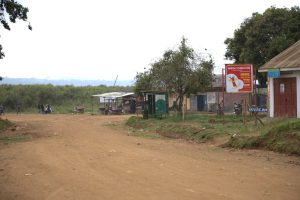
But when the tourists leave, the boats return to the landing site, and cameras go away.
However, the papyrus remains, and somewhere inside the wetland, a shoebill stands motionless.
Waiting.