



The National Identification and Registration Authority (NIRA) has clarified that Ugandans are not required to pay to correct mistakes made by the authority during national Identity card registration.
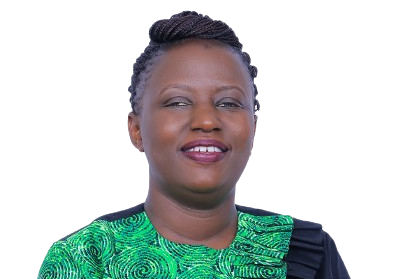
NIRA Executive Director Rosemary Kisembo said applicants are charged Shs200,000 only when they want to change information that was correctly captured during their original registration.
“An error made by NIRA is rectified free of charge. The ones paying Shs200,000 are those seeking to make their own changes,” Kisembo said during the “My Identity Expo and Symposium 2026” at Kololo Ceremonial Grounds.
The clarification comes as hundreds of Ugandans attending the three-day expo seek help with national identification and civil registration issues.
Kisembo said NIRA checks its original registration records before determining whether a correction is necessary and who is responsible for the error. The distinction is between rectification and a change of particulars.
Rectification means correcting information that NIRA recorded or processed incorrectly. A change of particulars, on the other hand, involves an applicant seeking to alter information that was originally captured correctly.
Kisembo’s remarks were aimed at clarifying the circumstances under which the Shs200,000 fee applies.
The NIRA executive director also highlighted the role of biometric identification in protecting the integrity of the national register. A biometric is a unique physical characteristic that can be used to identify a person, such as a fingerprint or iris pattern.
Kisembo said a person’s National Identification Number (NIN) is backed by immutable biometric information, meaning the physical characteristics used to verify identity cannot simply be changed like a name or address.
She explained that even when someone loses a physical national ID card, their identity can still be verified through biometric information stored in NIRA’s records. “If you have lost your card, you still have your fingerprint or you still have your iris,” Kisembo said.
She described the system as relying on two elements: “what you have”, referring to the physical card, and “who you are”, referring to the biometric identifier.
NIRA is targeting universal registration by 2030.
Kisembo also announced a new NIRA mobile application intended to give members of the public another way to report problems and follow up on complaints about identity services. “If someone keeps tossing you up and down, you will download the NIRA app from PlayStore or from Apple Store,” she said.
The app is intended to improve feedback between citizens and the authority, particularly where people experience delays or difficulties accessing services.
The My Identity Expo, which ran from September 29 to October 1, brought together NIRA, Uganda Revenue Authority (URA), Kampala Capital City Authority (KCCA), National Information Technology Authority – Uganda (NITA-U), telecom companies and other institutions.
The event is designed partly as a public service clinic, allowing citizens to address problems involving national IDs, birth and death certificates and other civil registration services.
NIRA Communications Officer Claire Ollama said the expo was organised to bring officials closer to citizens and hear directly about problems affecting them. The authority has also announced a localised registration drive planned for December.