




KAMPALA — The Minister for Science, Technology and Innovation, Eng. Jonard Asiimwe, has called for a shift from research conducted solely for academic publication to innovation that delivers commercially viable products, creates jobs and drives Uganda’s journey towards a US$500 billion economy.
The minister made the remarks during the second and final day of his technical and scientific mission at Makerere University, where he toured research facilities, innovation hubs and laboratories while engaging scientists, students, faculty leaders and industry partners on strengthening Uganda’s science, technology and innovation ecosystem.
According to the Science, Technology and Innovation Secretariat, the visit focused on advancing research, innovation, commercialisation and strategic partnerships that support Uganda’s industrialisation agenda.
Throughout the day, Eng. Asiimwe held discussions with researchers and innovators on practical pathways for transforming scientific discoveries into market-ready products, enterprises and technologies capable of accelerating socio-economic transformation.
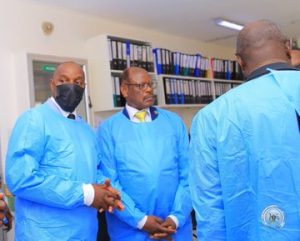
“Our focus will be on biomedical research, genomics, diagnostics, infectious diseases, One Health, medical technologies, technology translation and enterprise development because a nation cannot secure its future by perpetually importing answers to problems its own scientists have the capacity to solve,” the minister said in a statement shared on X.
He added that as Uganda pursues its national transformation agenda, universities must become centres of innovation and enterprise rather than institutions detached from the country’s productive economy.
“They must be laboratories of discovery, engines of technological sovereignty and launchpads for enterprises built on home-grown intellectual capital,” he said.
“I am here to challenge, connect and catalyse the ecosystem so that research does not end in journals, but crosses the threshold into laboratories, clinics, industries and markets, where knowledge becomes innovation, innovation becomes enterprise, and enterprise becomes national prosperity.”
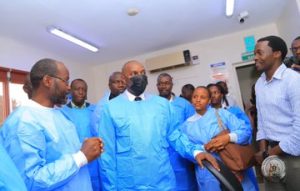
Speaking to journalists during the visit, Eng. Asiimwe said his nationwide engagements with universities, research institutions and innovation centres are intended to understand the work being undertaken by Ugandan scientists and align it with the country’s economic priorities.
“As the Minister for Science, Technology and Innovation, my role is to understand what our scientists, innovators and researchers are doing on the ground. You cannot sit in an office and expect to appreciate the innovations taking place across the country. You have to go where the work is happening,” he said.
The minister revealed that President Yoweri Museveni had tasked him with helping drive Uganda’s ambition of growing the economy to US$500 billion, with science, technology and innovation expected to play a central role.
He noted that universities remain the country’s primary source of research and innovation but stressed that many promising projects never progress beyond academic publication.

“For many years, we have seen research conducted mainly for academic publication, without enough attention to how it can transform the economy. President Museveni has consistently emphasised that research must lead to innovation, commercialisation and wealth creation,” Eng. Asiimwe said.
He explained that this was why he spends much of his time visiting laboratories, innovation hubs, factories and universities rather than remaining in his office.
“My responsibility is to assess what our country is designing, inventing and researching, and determine whether it can contribute to national development.”
The minister said government would place particular emphasis on supporting young innovators whose university research projects often fail to reach the marketplace.

He said the ministry would work with institutions to evaluate commercially viable innovations, strengthen intellectual property protection and connect researchers with private investors capable of scaling up promising technologies.
“For the next five years, commercialisation will be one of our key priorities,” he said.
“Science should not exist simply for its own sake. We want scientists to demonstrate how their research solves real problems facing Ugandans.”
Eng. Asiimwe said researchers should focus on identifying market problems and developing practical solutions that address Uganda’s needs in sectors such as healthcare, agriculture, energy and manufacturing.
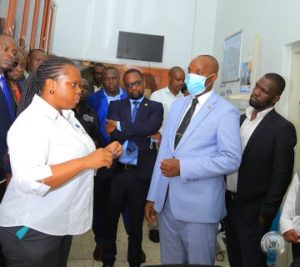
He also emphasised that innovation should not be viewed as the preserve of scientists alone.
“Innovation is not limited to those who studied physics, chemistry or biology. Innovation is about creating better ways of doing things. Anyone with an idea that improves people’s lives and helps solve national challenges is an innovator.”
During the second day of the visit, the minister toured the Makerere University Biomedical Research Centre, genomics, molecular biology and immunology laboratories, biobanks, medical device research facilities and diagnostic laboratories.
He also visited the Makerere University School of Public Health, where he reviewed public health research infrastructure, disease surveillance systems and health data platforms supporting national policy.

At the Infectious Diseases Institute (IDI), Eng. Asiimwe received briefings on biotechnology platforms, advanced diagnostics, artificial intelligence and computing capacity supporting infectious disease research, as well as partnerships aimed at translating research into local technologies and enterprises.
The tour further took him to the College of Veterinary Medicine, Animal Resources and Biosecurity, where he inspected vaccine, diagnostics and therapeutics research facilities, including laboratories supporting One Health, vector control and biosecurity programmes.
The visit concluded with a strategic dialogue on translating research into commercially viable products and strengthening collaboration between academia, industry and government.

Makerere University Vice Chancellor Prof. Barnabas Nawangwe described the visit as successful, saying the minister toured hundreds of innovations and encouraged researchers and students to continue developing solutions capable of addressing national challenges.
The engagement forms part of the Ministry of Science, Technology and Innovation’s broader effort to strengthen collaboration with universities, research institutions and the private sector as Uganda seeks to expand industrialisation through science-led innovation and commercialisation.