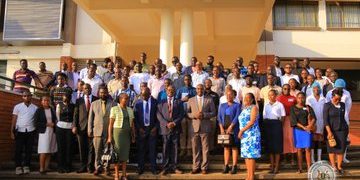



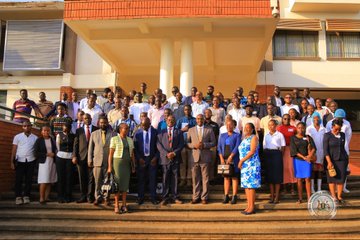
KAMPALA, Uganda — The Minister for Science, Technology and Innovation, Hon. Eng. Jonard Asiimwe Akiiki, has called for stronger collaboration between government, universities and industry to accelerate the transformation of research discoveries into commercial products, enterprises and jobs.
The Minister made the remarks during a two-day strategic engagement with Makerere University leadership, researchers, innovators and students aimed at assessing the institution’s contribution to Uganda’s science, technology and innovation (STI) ecosystem.
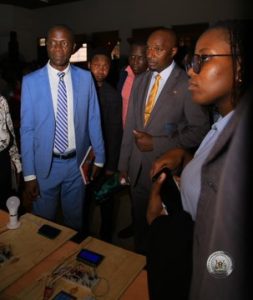
During the engagement, Eng. Asiimwe toured several research facilities, innovation hubs and laboratories at Makerere University, including the Makerere University Innovation Hub, where he interacted with young innovators developing solutions in creative arts, music and film production, textile design, woodcraft, product design, software development, blockchain technology, 3D printing and electric mobility.

He said innovation must extend beyond traditional laboratory research to include creative industries, digital technologies, engineering and advanced manufacturing, where ideas can be transformed into businesses and contribute to national wealth creation.
“Today, I begin my two-day engagement with Makerere University, a pillar of Uganda’s STI ecosystem and a reservoir of intellectual capital,” the Minister said.
“From the Kiira EV project and green mobility to biotechnology, health research, AI and digital innovation, Makerere continues to demonstrate how knowledge can generate solutions, enterprises and national value.”
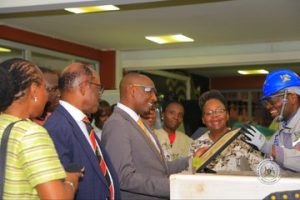
Eng. Asiimwe said Uganda’s ambition of achieving a USD 500 billion economy by 2040 will require universities to become central drivers of scientific discovery, technological advancement and innovation-led productivity.
“Our prosperity will depend on the quality of knowledge we create, the ingenuity with which we apply it, and our resolve to transform Uganda’s intellectual strength into national power,” he said.
The Minister’s tour included engagements with faculties and research platforms focused on engineering, manufacturing, digital technologies, artificial intelligence, agriculture, natural sciences and enterprise development.
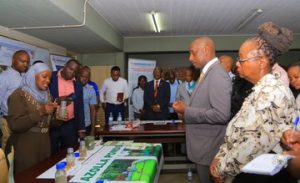
At the College of Engineering, Design, Art and Technology (CEDAT), he inspected mechanical and manufacturing workshops, electrical and electronics laboratories, renewable energy facilities and product-development infrastructure.
He also visited the Marconi Research and Innovation Laboratory, materials-characterisation facilities at MAPRONANO, and reviewed technologies linked to mobility, agro-processing, infrastructure and industrial production.
The Minister further engaged researchers working in artificial intelligence and digital technologies at the National AI Research Cloud hosted by the Regional Universities Forum for Capacity Building in Agriculture (RENU) and CoCIS Artificial Intelligence and Data Science laboratories.

Discussions focused on the use of artificial intelligence in sectors including health, agriculture, climate, cybersecurity and public service delivery, as well as issues of data access, governance and sustainability.
The visit also covered agro-industrialisation and food technology platforms, including the Food Technology and Business Incubation Centre, agricultural engineering fabrication facilities, mechanisation technologies and post-harvest innovations.
The Minister interacted with researchers developing technologies targeting priority value chains such as coffee, bananas, dairy, cereals and fruits.

At the UniPod and Makerere University Technology and Innovation Centre (MUTIC), Eng. Asiimwe met student innovators and start-ups developing prototypes with potential for commercialisation.
He emphasised the need to strengthen pathways linking research, patents, investment and market access.
“Uganda must move decisively from research to innovation, innovation to patents, patents to commercially viable products, and products to scalable enterprises,” he said.
“Our task is to build the institutional, financial and industrial pathways that enable knowledge to improve lives, create quality jobs and power competitive industries.”
Makerere Calls for Innovation Partnerships
Makerere University Vice Chancellor Prof. Barnabas Nawangwe welcomed the engagement, saying universities must move beyond classroom teaching and focus on developing solutions that respond to societal challenges.
Prof. Nawangwe said Africa has institutions capable of driving transformation but requires greater investment in research, partnerships and commercialisation of innovations.

“Universities must go beyond classroom learning. We have to equip our graduates with the ability to create solutions, develop technologies and contribute meaningfully to economic transformation,” he said.
He noted that many students and researchers are developing promising innovations, but the major challenge remains moving these ideas from prototypes into products that can serve communities and support economic growth.
“The challenge now is how we support them beyond graduation so that these ideas can become successful enterprises,” Prof. Nawangwe said.

He called for stronger systems to provide mentorship, financing and industry linkages for young innovators. “Graduates should not only look for employment; they should also be equipped to create opportunities for themselves and others,” he said.
Prof. Nawangwe highlighted electric mobility, affordable energy solutions, agriculture and digital technologies as areas where universities can make a significant contribution to Africa’s development.
He said research should not remain confined to laboratories but must translate into businesses, products and improved livelihoods.
The Minister concluded the first day of engagements by reaffirming government’s commitment to strengthening partnerships between academia, industry and research institutions to position innovation as a driver of industrialisation and socio-economic transformation.
He said Makerere’s scientific capacity and intellectual resources represent strategic national assets that must be harnessed as Uganda pursues a science-led and technology-driven economy.