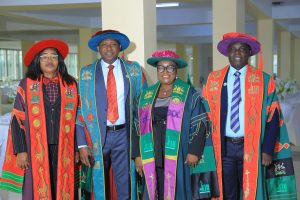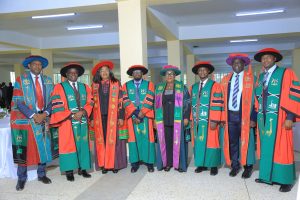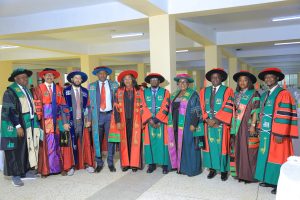



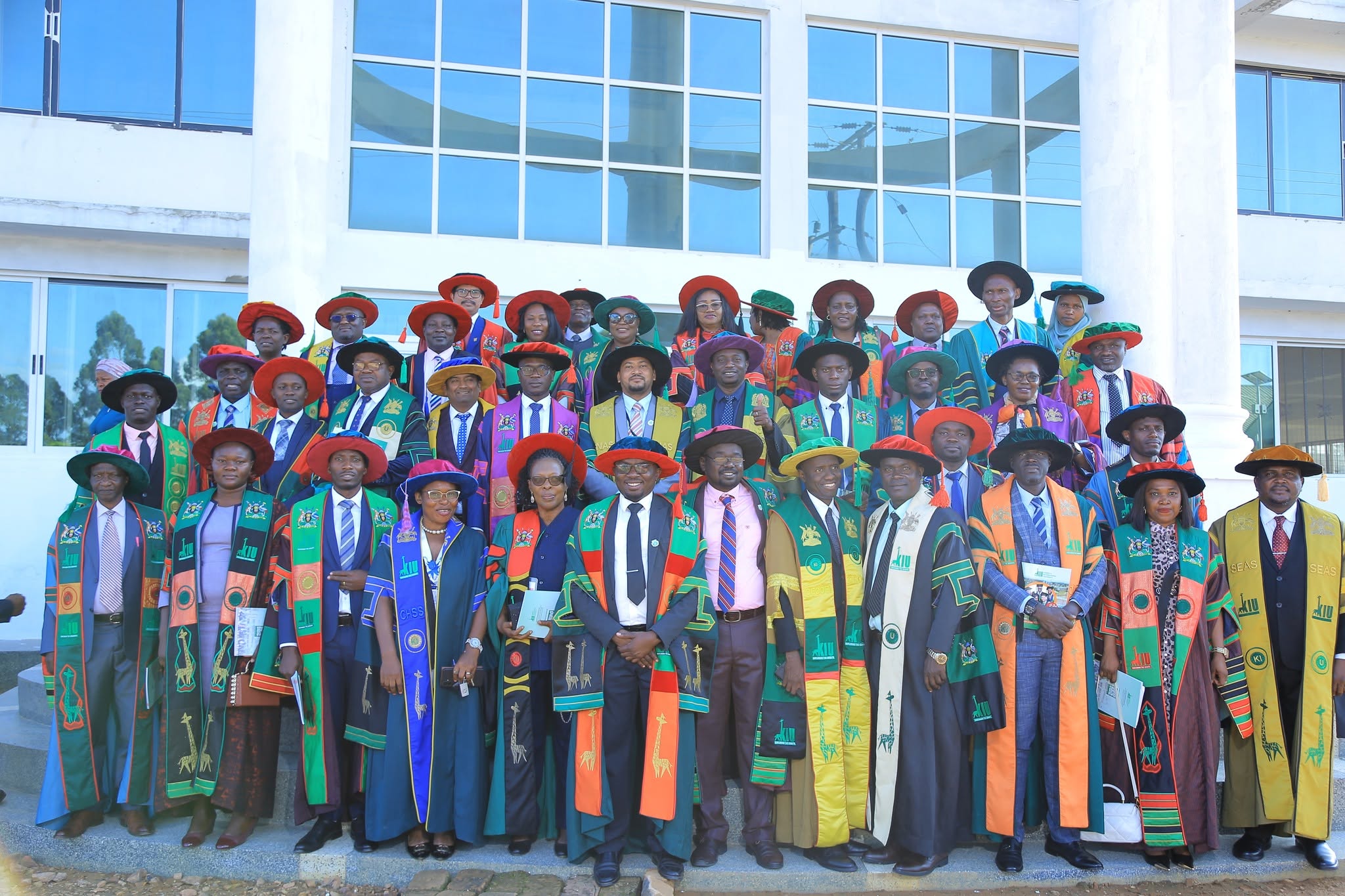
ISHAKA, BUSHENYI — Kampala International University (KIU) has set its sights on joining Africa’s top 10 universities within the next decade, unveiling an ambitious strategy centred on research excellence, postgraduate training, innovation, and competence-based education as it graduated 1,844 students at its 33rd Graduation Ceremony.
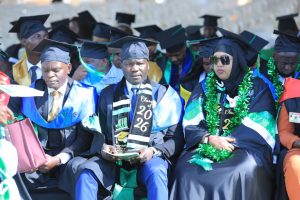
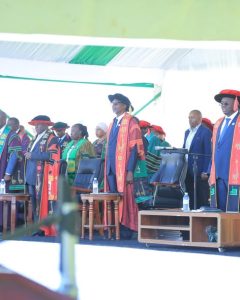
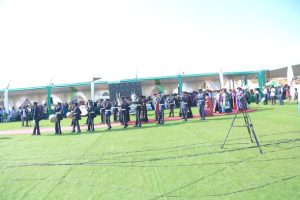
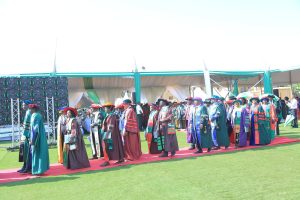
The graduation, held at the university’s Western Campus in Ishaka under the theme “Fostering Sustainable Innovations and Future-Ready Graduates through Competence-Based Education,” brought together government leaders, diplomats, academics, parents, development partners and alumni.
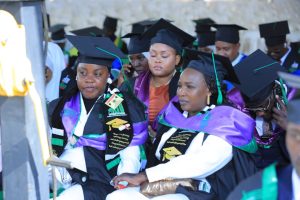
Among the graduates were 100 First Class degree holders, while 52.6 percent completed programmes in Science, Technology, Engineering and Mathematics (STEM), reflecting the university’s alignment with Uganda’s science-led development agenda.
Representing President Yoweri Kaguta Museveni, Second Deputy Prime Minister Dr Crispus Kiyonga urged graduates to embrace discipline, professionalism and innovation as they enter the world of work.
“The future belongs to those who are prepared to embrace innovation, technology, entrepreneurship, and lifelong learning,” Dr Kiyonga said in a speech delivered on behalf of the President.
He encouraged students to pursue careers aligned with the demands of the modern economy, citing growing opportunities in artificial intelligence, machine learning, data science, cybersecurity, engineering and information technology.
“One of the major causes of unemployment among graduates is the pursuit of academic programmes that do not adequately match current market demands,” he said.
Dr Kiyonga also cautioned graduates against destructive lifestyles. “Stay away from drunkenness, sexual promiscuity, extravagant spending, and other behaviours that may undermine your future,” he advised.
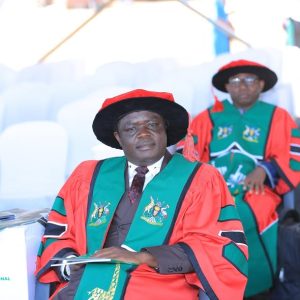
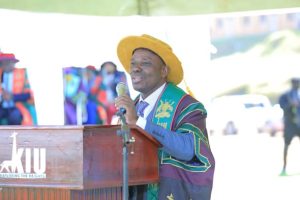
Speaking at the ceremony, KIU Chancellor, Prof. Yunus Mgaya, urged the new graduands to embrace continuous learning and resilience as they step into a rapidly changing global landscape.
“This year’s graduation theme reflects the direction in which higher education must evolve to remain relevant in a rapidly changing world. To our graduands, the world you are entering today presents both opportunities and challenges. The future will demand continuous learning, adaptability, and resilience.”
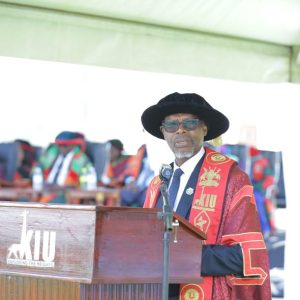
KIU Vice Chancellor Prof. Muhammed Ngoma declared that the university’s long-term ambition is to compete with the continent’s leading institutions. “Our ambition, Mr Chancellor and distinguished guests, is to be among the top 10 universities in Africa within the next ten years,” Prof. Ngoma said.
He noted that KIU remains the leading private university in the region and the second-ranked university in Uganda according to the 2026 Webometrics Rankings. “Our research output and impact have doubled in the past two years, which explains why we have maintained our position as the leading private university in the region,” he said.
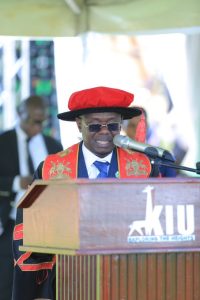
Prof. Ngoma said the university is implementing Competence-Based Education and Training (CBET) to ensure graduates possess both academic knowledge and practical skills.
“We have strengthened the implementation of competence-based education and training to ensure our graduates are not only academically sound but also innovative and industry-ready,” he said.
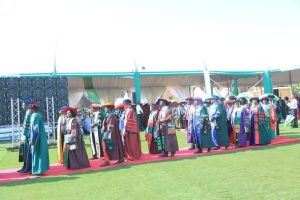
He added that KIU’s educational philosophy is built around what he described as the “four Cs.” “At KIU, we believe our graduates must be competent, confident, and competitive in the marketplace while possessing strong character.”
The Vice Chancellor revealed that KIU hosts students from more than 40 countries and continues to invest heavily in digital learning, research, innovation and international partnerships.
Among the flagship projects underway are a four-storey pharmacy complex expected to be the largest in East Africa, new staff accommodation, student hostels, sports facilities, a modern moot court, and plans for a pharmaceutical manufacturing plant, aquaculture complex and precision dairy farming projects.
The Chairperson of the Board of Trustees, Dr Hassan Basajjabalaba, used the occasion to unveil a major postgraduate scholarship programme aimed at expanding Uganda’s pool of highly skilled professionals and researchers.
“As a university, we are embarking on an ambitious programme to provide over 1,000 scholarships annually to Ugandans,” Dr Basajjabalaba announced.
He said the initiative will focus primarily on postgraduate education, including support for approximately 100 PhD candidates every year. “Beginning this year, we aim to support approximately 100 PhD students annually while also expanding support for Master’s degree students,” he said.
Dr Basajjabalaba revealed that KIU currently employs more than 400 staff members with doctoral qualifications and plans to double that number by 2030.
“Currently, KIU has over 400 staff members with PhDs. By 2030 and beyond, our objective is to double this number and continue building one of the strongest academic teams in the region,” he said.
The university’s growing research credentials were also highlighted during the ceremony. “This year, KIU has recorded more than 3,500 research publications, with approximately half appearing in high-impact journals,” Dr Basajjabalaba said.
He credited the university’s management and researchers for strengthening KIU’s international standing and called on the government to increase support for higher education, research and innovation.
Among his appeals were the establishment of a robust national research fund, increased postgraduate scholarships, tax incentives for educational and medical institutions, preservation of internship opportunities for medical graduates, and government support for highly specialised medical training.
The ceremony was co-hosted by Shawn Kimuli, Director of Public Relations and Communications, and Joel Isabirye, Head of the Department of Mass Communication and Journalism.
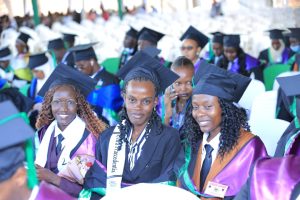
The graduation also celebrated academic excellence, with 13 candidates graduating with PhDs. Choda Raphael Daniel emerged as the best science student with a CGPA of 4.85, while Karamira Julius was recognised as the best humanities student with a CGPA of 4.87.
Prof. Ngoma said the university’s growth extends beyond academics to healthcare and community service through its teaching and research hospital in Ishaka.
“Our teaching and research hospital in Ishaka has made significant contributions to the health sector through patient care, disease prevention, medical training, research, innovation, rehabilitation, public health surveillance, community outreach, and specialised referral services,” he said.