


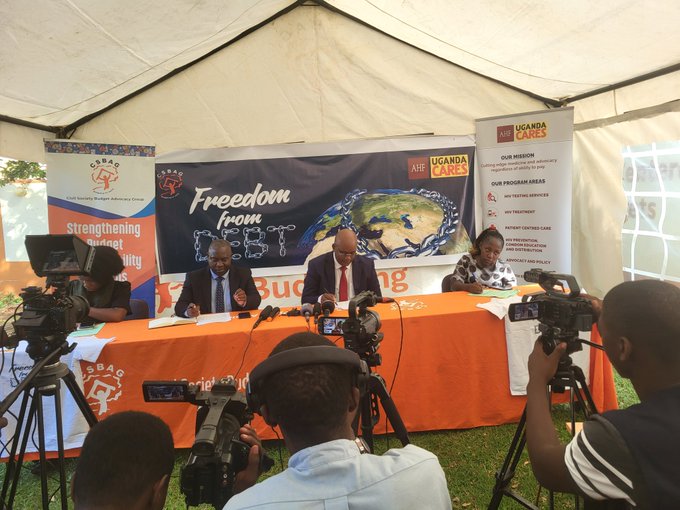
KAMPALA – Civil society organisations have launched the “Freedom from Debt Campaign” in Uganda, warning that the country’s growing debt burden is increasingly crowding out spending on essential services such as health, education, agriculture and social protection.
The campaign, spearheaded by the Civil Society Budget Advocacy Group (CSBAG), in partnership with AHF Uganda Cares, SEATINI Uganda, and the Uganda Debt Network, seeks to elevate national and global conversations on debt justice, fiscal accountability and reforms to the global financial system.
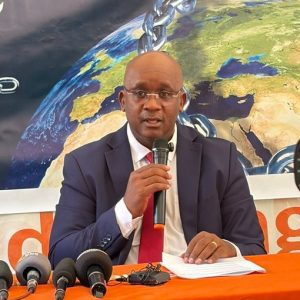
Speaking during the launch in Ntinda on Tuesday, CSBAG Executive Director Julius Mukunda said Uganda can reduce its reliance on borrowing by addressing inefficiencies in public expenditure and ensuring that borrowed funds generate meaningful returns.
“Uganda can reduce its dependence on borrowing by addressing inefficiencies in public spending. Every shilling spent on non-critical expenditures is a missed opportunity to invest in essential services and development priorities,” Mukunda said.
Mukunda argued that Africa’s debt challenges are rooted in a global financial architecture that remains unfair to developing countries.
“The first question we need to ask ourselves is why we are in this debt crisis in the first place. We are in this situation because the architecture governing debt acquisition and debt management remains structurally unfair,” he said.
According to Mukunda, while developed countries often borrow at interest rates below 2 percent, African countries typically pay between 8 and 15 percent, making capital significantly more expensive.
He also criticized the role of international credit rating agencies, saying lower ratings assigned to African economies increase borrowing costs. “The market is already stacked against us before we even access the funds,” he noted.
Mukunda further highlighted what he described as hidden costs in loan agreements, citing commitment fees charged on undisbursed loans.
“In the next financial year alone, Uganda has budgeted approximately Shs185 billion in commitment fees. Essentially, this is a penalty for not utilizing the Shs14 trillion that was borrowed. At that point, debt begins to look more like a profit-making enterprise than a tool for supporting development and helping poor people,” he said.
He added that Africa contributes only about 4 percent of global carbon emissions but is increasingly borrowing money to address climate-related challenges. “We are paying for a problem we did not create, and in many cases we are borrowing even more money to do so.”
Mukunda warned that debt restructuring remains a lengthy and complex process for many African countries. “Today, Africa pays more than US$650 billion annually in debt servicing and interest-related obligations. At the same time, about 54 percent of low-income countries are either already in debt distress or at high risk of falling into debt distress.”
Debt as a Human Rights Issue
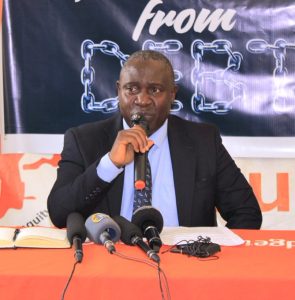
Henry Magara, Country Programmes Director at AHF Uganda Cares, described the debt crisis as both a financial and human rights concern.
“Debt is not just an economic issue; it is a human rights issue. When countries spend more on debt servicing than on health and education, essential services suffer and millions are left behind,” Magara said.
He noted that globally, an estimated 3.4 billion people live in countries where debt repayments exceed investments in health and education.
“The consequence is that resources that should be invested in social services are instead diverted toward debt repayments. In effect, we are witnessing a flow of resources from countries that have very little to countries and institutions that already have a great deal.”
Magara said the current situation represents a form of debt injustice. “It should be the rich supporting the poor, not the other way around.”
Concerns Over Debt-Funded Development
Hildah Tumuhe of SEATINI Uganda argued that while borrowing is intended to finance development and stimulate economic growth, poor project implementation often undermines the expected returns.
“The 2021 audit report revealed that only 66 percent of projects included in the Public Investment Plan had undergone feasibility studies. Poor project preparation contributes to costly delays, budget overruns and rising public debt,” she said.
Tumuhe pointed to inefficiencies in major infrastructure projects as a key challenge. “If you’ve borrowed money and it has not yielded the right returns within a given period, it automatically affects how you’re going to invest in trade and manufacturing to drive the economy forward.”
She noted that Uganda has invested heavily in projects such as the Karuma Hydropower Dam, the Entebbe Expressway and road infrastructure using borrowed funds, but delays and cost overruns have reduced their effectiveness.
“We believe that Uganda can trade its way out of debt if there is a favourable environment for both government and the private sector to flourish.”
Tumuhe also warned that increased domestic borrowing by government is making credit more expensive for businesses.
“There is no way the private sector is going to flourish in trade if interest rates are high, averaging about 18 percent, which is much higher than those in our regional counterparts.”
Nearly 40 Percent of Budget Going to Debt Servicing
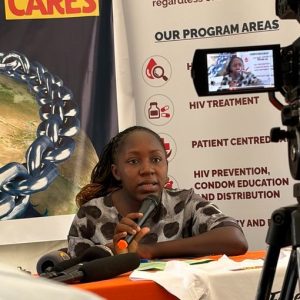
Meanwhile, Peninah Naiga from the Uganda Debt Network expressed concern over the growing share of the national budget being allocated to debt repayment.
“Looking at the budget that will be presented tomorrow, close to 40 percent of the national budget is expected to go towards debt servicing and interest payments. This has significant implications for public service delivery, particularly in critical sectors such as health, education and social protection,” Naiga said.
She warned that rising debt obligations are shrinking the government’s fiscal space and limiting investment in social services.
“When nearly 40 percent of the budget is already committed to debt repayment, it reduces the fiscal space available for investments in essential public services.”
Naiga also raised concerns about growing refinancing and rollover risks. “Rather than reducing the debt burden, we continue to see debt obligations being rolled over and extended. This means debt continues to accumulate over time, creating additional pressure on future budgets.”
She cautioned that Uganda’s youthful population could ultimately bear the burden of today’s borrowing decisions. “Many young people will inherit these debt commitments and will be expected to shoulder the costs in the years ahead.”
The Freedom from Debt Campaign seeks to advocate for responsible borrowing, greater transparency in debt management, stronger citizen participation in debt governance and reforms to what organizers describe as an unjust global financial system.
The campaign also aims to push for international reforms, including automatic debt-service pauses during public health emergencies and climate disasters, greater debt transparency, and fairer financing terms for developing countries.