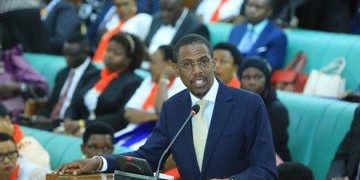



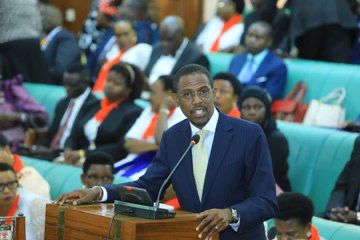
Kampala — Uganda’s Attorney General Kiwanuka Kiryowa has tabled fresh amendments to the controversial Protection of Sovereignty Bill, 2026, following intense public and institutional backlash over its initial provisions.
Appearing before Parliament’s joint committees on Legal and Parliamentary Affairs and Defence and Internal Affairs on April 30, Kiryowa acknowledged that the changes were prompted by widespread criticism.
“We have listened to the concerns raised by the public,” he told lawmakers, adding that the revised proposals are intended to clarify the law and address fears that it could disrupt key sectors of the economy.
Among the proposed changes is the exemption of financial institutions regulated by the central bank, as well as medical, educational, and religious institutions, from restrictions on foreign funding. Kiryowa explained that legitimate financial flows and licensed activities should not fall under the law’s punitive scope.
“For example, a bank… is licensed to do lending. So, if it receives money from a foreigner, it is not for those activities… it is for lending,” he said. “We are saying this for avoidance of doubt because we have heard what their concerns are.”
The Attorney General also clarified that the bill would not apply to lawful inflows such as foreign direct investment, diaspora remittances, trade finance, humanitarian assistance, and development aid. Instead, he emphasised that the law is narrowly targeted at foreign involvement in domestic political processes.
“The activities that will be regulated… are strictly political activities aimed at influencing the enactment of law, formulation of policy or decision-making of government,” Kiryowa said.
Despite the revisions, Members of Parliament remained unconvinced, arguing that the bill’s core provisions are still too broad and could undermine democratic freedoms.
Asuman Basalirwa warned that the definition of political activity could stifle multiparty democracy. “You are in effect killing activities of political parties,” Basalirwa said. “What is wrong with influencing the enactment of legislation? What is criminal with influencing policy or decision-making?”
He also criticised vague clauses in the bill, particularly those dealing with “false information” and “economic sabotage.” “Who determines what is false or not?… The imprecision, the broadness, makes it very problematic,” he added.
Jonathan Odur questioned whether adequate consultations had been conducted before introducing both the original bill and the amendments.
“It appeared to me that in drafting this bill, there was no consultation, even within government,” Odur said, pointing to concerns previously raised by key institutions. “Did you consult… so that even these amendments… have addressed their concern?”
Other legislators echoed concerns about ambiguity and potential enforcement challenges. Bosco Okiror noted that unclear provisions could complicate court proceedings. “This provision creates a lot of uncertainty… it would create difficulty in the court system,” he said.
Shadow Attorney General Wilfred Niwagaba questioned the bill’s framing, arguing it focuses more on state control than citizen sovereignty. “What this bill is actually about is the protection of the state,” Niwagaba said, suggesting it be renamed accordingly.
Meanwhile, Betty Nambooze called for renewed public consultations in light of the significant changes. “Wouldn’t it be proper that we reopen the public hearing… to get to know what the stakeholders think about these changes?” she asked.
The Protection of Sovereignty Bill has sparked nationwide debate, with supporters arguing it is necessary to guard against undue foreign influence, while critics warn it risks restricting civic space and political engagement.