


The Parliament of Uganda passed the Income Tax (Amendment) Bill, 2026, raising the monthly PAYE tax-free threshold for employees from Shs235,000 to Shs335,000.
The bill deletes Clause 8 on minimum tax for businesses with carried-forward losses and adds institutions such as the Arab Bank for Economic Development in Africa and Uganda Red Cross Society to the tax-exempt list.
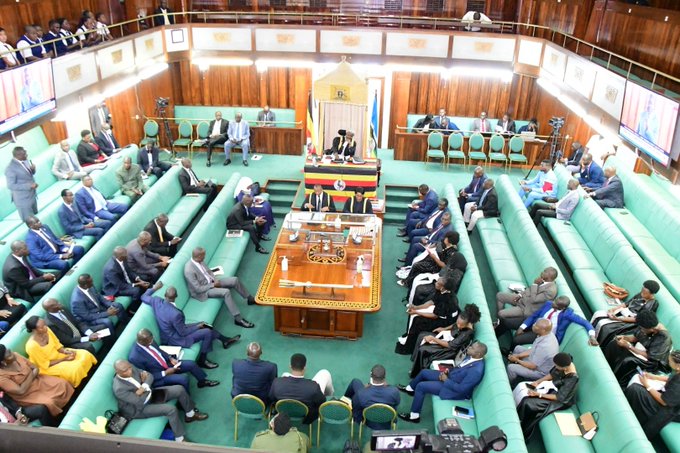
The Bill was passed at Third Reading after lawmakers resumed from the Committee of the Whole House, with the Minister reporting that it had been adopted with amendments.
One of the most contested provisions, Clause 8, which proposed a minimum tax of 0.5 percent on gross income for companies declaring losses for more than seven years, was dropped after concerns from legislators.
Sheema Municipality MP Dicksons Kateshumbwa warned that the clause could undermine Uganda’s investment climate.
“Clause 8 sends the wrong signal to investors by taxing gross income after seven years, even where a business is still making losses,” Kateshumbwa said, adding that “such a measure could make Uganda a less competitive destination for investment.”
During the debate, Speaker Anita Annet Among also questioned the rationale behind taxing companies that are not profitable. “After seven years of losses, what exactly are you taxing?” she asked.
The Minister eventually conceded, and the House voted to delete Clause 8.
In a similar move, Clause 3 of the Bill was also removed after the government indicated it would return with a clearer proposal.
“The government will come back with the proposal next year after clearly distinguishing between sales made for profit and those made for other purposes,” the Minister said.
Parliament also adopted a one-year tax exemption extension for the Bujagali Hydropower Project under Clause 4(a)(i), following debate on the appropriate timeline.
Erute South MP Jonathan Odur opposed a longer exemption period, cautioning against binding future legislatures. “Exceeding a five-year parliamentary term is suicidal for this House,” Odur said.
Speaker Among echoed similar concerns, warning lawmakers against legislating beyond their mandate. “Parliament should not legislate for those who will come after it,” she said.
Meanwhile, Kiboga East MP Amos Kankunda defended the exemption, linking it to existing contractual obligations. “The cost challenges around Bujagali stem from the Power Purchase Agreement, which Parliament cannot alter,” he said, warning that rejecting the exemption could increase electricity tariffs and hurt manufacturers.
In a related development, Parliament also passed the Lotteries and Gaming (Amendment) Bill, 2026, which introduces a 30 percent tax on gross gaming revenue in a bid to streamline taxation in the sector.
The House further passed the National Teachers Bill, 2024, after resolving earlier concerns raised during its consideration.
The passage of the Income Tax (Amendment) Bill marks a significant step in Uganda’s fiscal policy reforms, balancing revenue mobilisation with the need to maintain a competitive environment for businesses and investors.