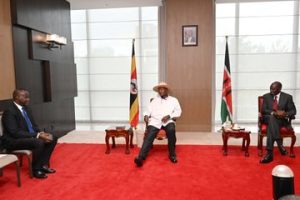



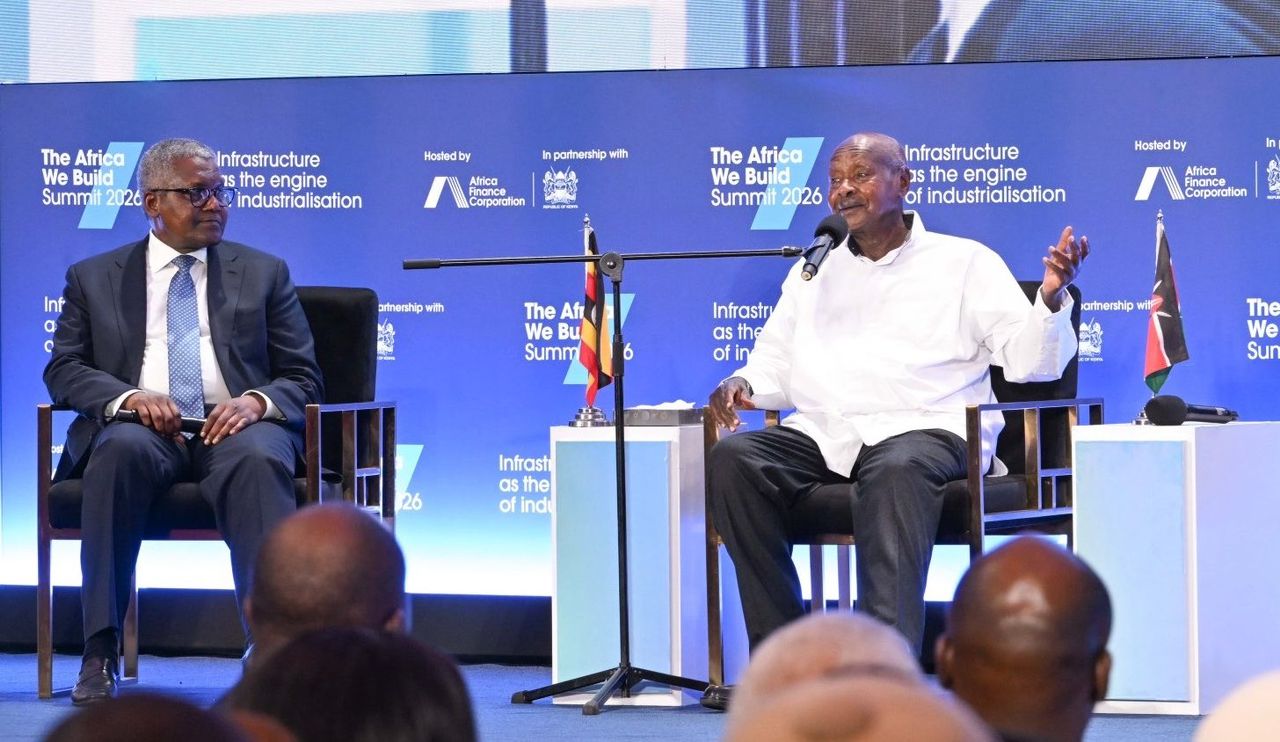
Africa’s richest man, Aliko Dangote, is seeking the support of East African governments to replicate his Nigeria-scale refinery in the region in a move that could reshape fuel supply, deepen regional integration, and accelerate the continent’s push toward industrial self-sufficiency.
Speaking at a presidential panel at the Africa We Build Summit, organised by Africa Finance Corporation (AFC), in Nairobi, Dangote said his group is ready to build a refinery comparable to the 650,000 barrels-per-day facility developed in Nigeria, provided there is strong policy backing and alignment from governments across East Africa.
“If we agree with the governments here about the refinery, we will lead and make sure that the refinery is built within the next four or five years,” he said, offering a firm commitment that signals growing confidence in Africa-led mega infrastructure projects.
The proposal comes amid ongoing discussions between regional leaders on establishing a joint refinery in Tanga, Tanzania, designed to serve multiple countries, including Kenya, Uganda, South Sudan and the Democratic Republic of Congo. The facility is expected to process crude from across the region, supported by shared pipeline infrastructure to improve efficiency and reduce costs.
Dangote’s push underscores a broader shift among African policymakers and investors toward reducing dependence on imported refined products and building domestic industrial capacity. Africa remains heavily reliant on fuel imports despite being a major crude oil producer, a structural imbalance that leaders at the summit repeatedly described as unsustainable.
What we lack in Africa is quite a lot,” Dangote said. “We are a continent of imports, and we are not really exporting much. When you export raw materials, you are exporting jobs. When you import, you are importing poverty.”
He stressed that consistency in government policy and strong institutional support would be critical to unlocking such large-scale investments. According to him, uncertainty and reversals in policy have historically discouraged long-term capital deployment across the continent.
The Dangote Group is already embarking on an aggressive expansion strategy, with plans to invest $40 billion across sectors including refining, petrochemicals, fertiliser and manufacturing by 2030. The proposed East African refinery would form a central part of that vision, extending the group’s industrial footprint beyond West Africa.
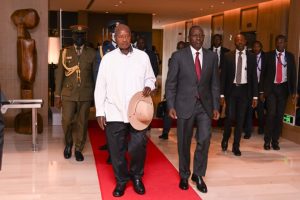
Regional leaders signalled strong alignment with Dangote’s position, framing the refinery initiative as part of a wider economic transformation agenda anchored on value addition and regional cooperation.
Kenyan President William Ruto said Africa can no longer afford to export raw materials while importing finished products, describing the practice as a drain on jobs and long-term prosperity.
“Why would we fail?” Ruto said. “We have the raw materials, we have the market, we have the capital, and we have the industrialists to run these projects.”
Ruto confirmed that discussions are already underway for a regional refinery model that pools resources and demand across borders, rather than duplicating infrastructure in individual countries. He said such collaboration would allow Africa to fully utilise its assets while building economies of scale.
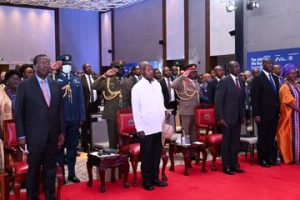
Ugandan President Yoweri Museveni reinforced the argument, pointing to the significant value lost when raw materials are exported without processing. He cited gold as an example, noting that refining it locally can nearly double its value while creating jobs and supporting downstream industries.
“We cannot continue exporting raw materials,” Museveni said. “It is near criminal to export unprocessed resources when we have the capacity to add value.”
Beyond refining, leaders at the summit emphasised the need to build integrated industrial ecosystems, linking energy, mining, manufacturing and logistics across the region. The proposed refinery is expected to serve as a catalyst for such development, particularly in petrochemicals and related industries.
Dangote also called for deeper regional integration to support industrial growth, including the removal of barriers to the movement of goods, services and people. He criticised the current system, where non-Africans often find it easier to move across the continent than Africans themselves.
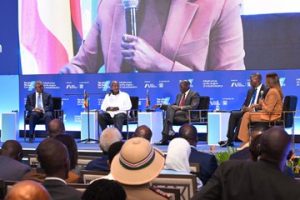
“If you don’t allow free movement, it will be difficult to trade,” he said, urging governments to adopt visa-free policies to unlock intra-African commerce.
The refinery push is taking place alongside a broader conversation about mobilising Africa’s own capital to fund development. Samaila Zubairu, Africa Finance Corporation CEO, noted that the continent holds trillions of dollars in pension and insurance assets, much of which is currently invested in low-yield instruments rather than infrastructure.
He called for regulatory reforms and risk-sharing mechanisms to channel this capital into large-scale projects, arguing that Africa must move beyond small-ticket investments to financing projects in the tens of billions of dollars.
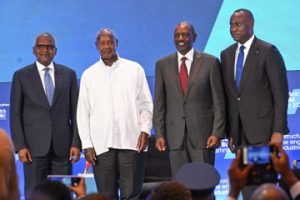
For Dangote, the message was clear: Africa now has the financial institutions, technical capacity and entrepreneurial drive to execute projects of global scale. What is needed, he said, is the political will and policy consistency to match that ambition.
“We have big financial institutions now, we have big entrepreneurs,” he said. “There is nothing we cannot do in Africa.”