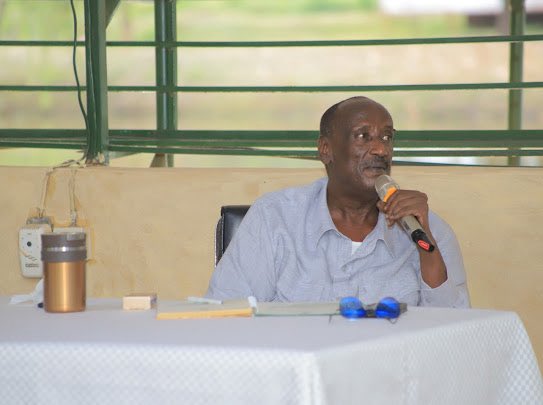
Kapeeka — Gen Salim Saleh (Caleb Akandwanaho), the Chief Coordinator of Operation Wealth Creation (OWC), the Chief Coordinator of Operation Wealth Creation (OWC), has warned that Uganda’s land policies and laws are struggling to keep pace with rapid development, cautioning that unresolved land challenges continue to fuel conflict, inequality, and insecurity across the country.
Speaking while closing the three-day National Land Policy Review, Validation and Research Workshop in Kapeeka, Gen Saleh said land remains one of Uganda’s most persistent and complex problems, cutting across communities and regions.
“When we were in the field, we realised that land remains a major problem, isn’t it? Wherever you go, land issues keep coming up,” Gen. Saleh said. “We must put our ideas into action. What we are seeing is that development is moving much faster than the policies and laws that govern landlords and tenants.”
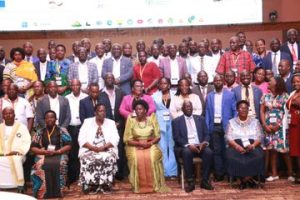
The workshop, convened by the Ministry of Lands, Housing and Urban Development (MLHUD), brought together government officials, policymakers, researchers, and other stakeholders to review findings aimed at strengthening Uganda’s land governance framework.
Participants highlighted growing concerns over land theft, ownership disputes, and the mismanagement of public land, calling for urgent, coordinated interventions.
Gen Saleh stressed that the imbalance between economic growth and outdated land laws is creating real challenges for both landowners and tenants. “There is a real challenge there,” he noted. “For example, if I own land and we are generating up to 300 million shillings from it, then there must be clear and practical arrangements to ensure that everyone benefits.”
He urged the Ministry of Lands and sector stakeholders to move beyond dialogue and deliver actionable reforms that protect all parties involved in land use and ownership. “I hope you have made concrete recommendations that can guide us going forward,” he said.
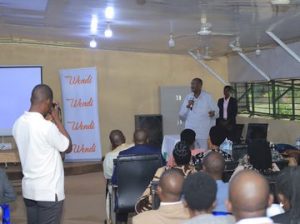
The Kapeeka meeting marked the conclusion of a broader national process that included earlier engagements, such as a similar three-day workshop held at Speke Resort Munyonyo, where the government reaffirmed its commitment to reforming the land sector.
Opening that session, Lands Minister Hon Judith Nabakooba underscored the need for a modern, people-centred land policy that guarantees tenure security, reduces conflict, attracts investment, and supports national transformation.
According to the Ministry, implementation of the 2013 National Land Policy delivered notable gains, including the rollout of the National Land Information System (NLIS) across 22 Ministry Zonal Offices, issuance of nearly 300,000 freehold titles, and registration of more than 909 Communal Land Associations. Digital land services have also generated over UGX 1.031 trillion in non-tax revenue.
However, assessments revealed persistent challenges such as land conflicts, outdated laws, institutional fragmentation, environmental degradation, and chronic underfunding of the land subsector. These gaps have informed the proposed revised National Land Policy (2025), which seeks to reposition land as a driver of economic transformation aligned with the National Development Plan IV and Uganda Vision 2040.
Concluding the Kapeeka workshop, Gen Saleh warned that land theft, fraud, corruption, and landlord–tenant imbalances remain daily realities for many Ugandans, urging faster implementation of reforms so that policy does not continue to lag behind development.
The Ministry of Lands says the outcomes of the validation process will guide final adjustments to the revised policy before its submission for approval, with the aim of improving equity, accountability, and efficiency in land administration nationwide.