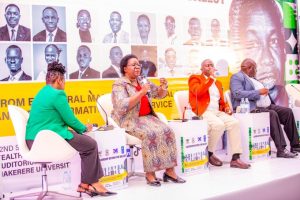




Newly elected youth leaders have been urged to view electoral victory as the beginning of their leadership journey rather than an end in itself, with speakers at a leadership symposium stressing accountability, integrity, competence and service.
The call was made during the Leadership Beyond the Ballot Symposium held at Makerere University’s Health Sciences Auditorium on September 22 under the theme, “From Electoral Mandate to Ethical Leadership and Transformative Public Service.”
The symposium, organised by the Julius Nyerere Leadership Centre (JNLC), brought together newly elected youth leaders, experienced leaders and other stakeholders for intergenerational dialogue on leadership, governance and public service.
Dr Nansozi K. Muwanga, the Executive Director of the Julius Nyerere Leadership Centre (JNLC), who addressed the newly elected leaders, said winning an election comes with a responsibility to represent constituents and contribute to the country’s future.

“For those of you who have recently been elected, this is an important moment. Your election has entrusted you with the responsibility to represent your constituents and to contribute to shaping the future of our country,” Muwanga said.
She urged the leaders to use their new positions to reflect on the kind of leaders they want to become. “At the JNLC, we believe that leadership is ultimately about service, integrity and responsibility to others. As Mwalimu Julius Nyerere reminded us, leadership should enable people to participate in shaping their own future,” she said.

Muwanga also acknowledged the partnership between JNLC and UNDP Uganda, saying it had enabled leadership training for young people in different parts of the country and allowed the centre to maintain contact with participants after their training. “This symposium is part of that continuing journey,” she said.
UNDP urges leaders to embrace technology
UNDP Uganda Resident Representative Nwanne Vwede-Obahor urged young leaders to take their responsibilities seriously, particularly by remaining accountable to the communities they represent. “Trust and commitment remain the most valuable currency in public leadership,” she said.

She also challenged emerging leaders to use technology, data and artificial intelligence to address public problems and improve service delivery. “The future of governance is increasingly digital, and it must not be left behind,” Vwede-Obahor said.
Former Minister and public servant Victoria Sekitoleko told the leaders that assuming office marked the beginning of a learning process rather than its completion.
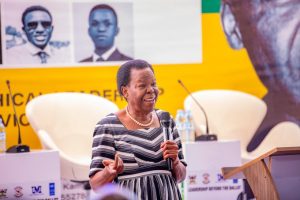
“In leadership, you are at the beginning. You are at the bottom of the hill,” she said, drawing on her experience in public service.
Leaders urged to build records
Mukono South MP Maseruka Robert reflected on his progression from student leadership to national politics, urging young people not to wait until they have money or other resources before pursuing leadership. “I decided that for this time round, I will be a leader of conviction rather than convenience,” Maseruka said.

Arua City Mayor Alionzi Lawrence said leaders need a record of service to give them credibility and confidence when taking on greater responsibilities.
“It’s not lost on me that all of us have to start somewhere, but I think it’s important for a leader to have track record, not just to wow the crowd, but even to give you confidence that things can be done because you have done them before,” he said.

Solomon Serwanja, LC1 chairman of Bamutakudde Village, similarly argued that grassroots leadership should not be dismissed as a minor responsibility.
He said village leaders play a role in monitoring government programmes, identifying projects intended for their communities and raising concerns when implementation fails. “If we strengthen the LC1 system, we will strengthen accountability at the grassroots,” Serwanja said.

He encouraged young leaders with experience and skills to engage with their communities through strategic planning, networking and resource mobilisation.
Mentorship and resilience
Fort Portal Female Youth Councillor Gorret Karungi highlighted mentorship as an important part of the leadership journey, particularly for young women facing resistance when seeking leadership positions.

“As young people, we need to have mentors as we are growing up,” Karungi said.
She also urged young leaders to develop clear visions and values to guide their work.
Natasha Ahereza, NRM National General Secretary, challenged young leaders to remain focused when confronted with resistance and difficult circumstances. “We must be resilient. We must focus. We must learn. We must solve our problems for our people,” she said.

Emmanuel Lumala Dombo, the NRM Director of Information, Publicity, PR & Spokesperson, said young leaders must have a big vision, build trust, and be inclusive.
He encouraged them to pay courtesy calls on those who came before them to learn different leadership styles.
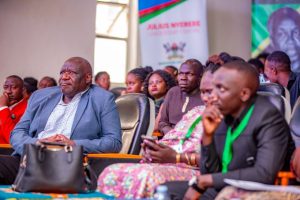
Former UNDP Resident Representative in Tanzania Christine Musisi urged young leaders to look beyond the possession of office and consider the influence they build through their work and relationships.
“Leadership is not about you. Leadership is influence, and influence is leadership,” Musisi said.

She encouraged young leaders to seek mentorship and focus on building lasting significance. “As Young Leaders, always seek out Mentors to help you through your journey of moving from success to significance,” she said.
Character, competence and consistency
Broadcast journalist, communications specialist, and digital strategist Mildred Tuhaise identified character, competence and consistency as key elements of leadership credibility.

She said character is reflected in how leaders conduct themselves even outside formal office, while competence requires leaders to understand issues well enough to speak from knowledge and facts.
Consistency, she added, requires leaders to maintain a clear area of expertise and contribution over time. “Get an expertise. Get something that you’re passionate about. Read about it,” Tuhaise advised.

Meanwhile, Aggrey David Kibenge, the Permanent Secretary of the Ministry of Gender, Labour and Social Development (MGLSD), highlighted Government’s national apprenticeship and graduate volunteer platform as part of efforts to ease the transition from education to employment.
He said the digital platform allows graduates to upload their skills, competencies and CVs so that employers can identify potential candidates, while participants receive a monthly stipend during the one-year programme.

“We have set in place a national apprenticeship and graduate volunteer platform,” Kibenge said, adding that 75% of participants under the digital matching programme have transitioned into employment.
The symposium brought together current and former youth leaders, public officials and development-sector practitioners as JNLC sought to connect electoral leadership with continued mentorship, ethical conduct and public service.