


Mungu Feni Foundation has officially launched the Weaving Hope Project, a comprehensive youth and women empowerment initiative in the West Nile region aimed at equipping beneficiaries with practical vocational skills and creating pathways to sustainable livelihoods.
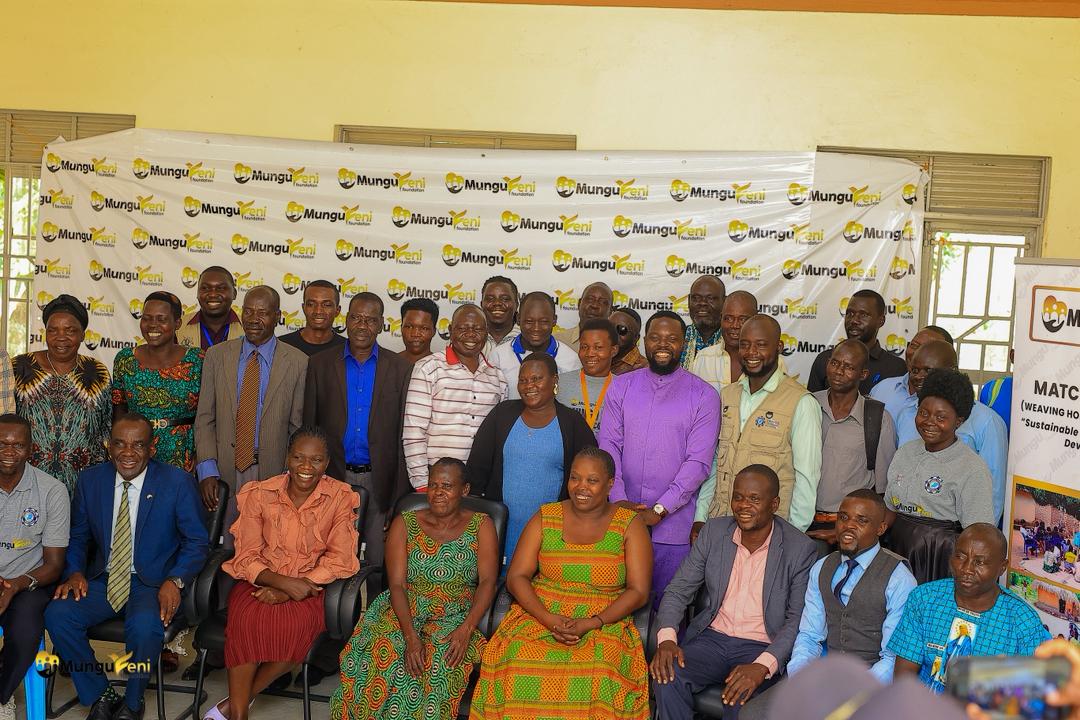
The project was launched in Arua District, where community leaders, and development partners, gathered to witness the milestone. The initiative places a strong emphasis on advocacy, vocational skills training, inclusion, networking, and fostering growth opportunities as central pillars for community empowerment.
The Weaving Hope Project will be implemented in Anzu Parish, Arua District, targeting over 360 direct beneficiaries. Of these, 70% are women and 30% are male, aged between 16 and 48 years.
The outreach prioritises widows, school dropouts, unemployed youths, orphans, vulnerable children, persons with disabilities, and other marginalised groups in West Nile.
According to Benard Feni, founder of Mungu Feni Foundation, the project was developed following extensive community consultations in Anju and Nyio Parishes, facilitated under the UNNGOF Change the Game Program match funding framework.
Feni emphasised that the initiative is designed to address both immediate and long-term barriers to economic inclusion.
“We are committed to lifting our community through skills that lead to livelihoods, dignity, and self-sufficiency,” Feni said at the launch.
The project will be executed over a 12-month phased period, including Inception and Mobilisation, Capacity Building, Advocacy and Civic Engagement, and concluding with Sustainability and Exit strategies.
The Weaving Hope Project’s focus on practical skills aligns with national priorities about skilling and employment.
Government and education officials have repeatedly emphasised the importance of technical and vocational education and training (TVET) as a strategic driver of employment and economic growth in Uganda.
Officials highlight that TVET is designed to produce market-relevant, competency-based skills that meet industry needs and help close national unemployment gaps.
TVET reforms codified in the TVET Act 2025 further strengthen the sector’s quality assurance, trainer standards, and linkages with industry, ensuring graduates are workforce-ready.
At the policy level, Uganda has hosted high-level dialogues prioritising employer-led TVET systems to ensure training aligns with labour market demands.
Meanwhile, the government is fast-tracking a TVET Qualifications Framework to provide structured career pathways and recognise both formal and informal skills development nationwide.
These shifts reinforce that skills training—especially for youth and women, is not just a development objective but a national imperative for transforming livelihoods, reducing unemployment, and driving inclusive growth.
At the launch, Alfred Okuonzi, Arua District LC V Chairman, welcomed the foundation’s efforts and pledged full support from both the political and technical arms of the district leadership.
Other dignitaries present included Asubo Juliet (Community Development Officer, Vurra Sub-county), Pario Joel (LC III Chair, Vurra), Okumu Collins Smart (Assistant RDC, Arua), Alli Jimmy (Assistant CAO, Arua District), Babra (CDO, Arua District), development partners, faith leaders, community representatives.
Feni urged community members to embrace the project and participate actively, noting that this is one of several programs the foundation plans to scale across West Nile.
Mungu Feni Foundation has already established itself as a credible and impactful social development actor in the region.
In 2025, the foundation won key honours at the West Nile Quality Brand Awards, including the Quality Excellence Award – Platinum, Best Community Development NGO, and Best Local NGO, in recognition of its sustained work in youth and vulnerable group empowerment.
The foundation also gained regional recognition as the “Best Community Transformation Organisation in East Africa” at the East Africa Brand Quality Awards, highlighting its broader influence in community development beyond Uganda’s borders.
Under Feni’s leadership, the foundation has implemented education support programs, vocational training in fashion and design, community health campaigns, road safety training, and the Mungufeni Talent Search initiative, showcasing a holistic approach to empowerment that blends skills with community cohesion.
Mungu Feni Foundation is a faith-based indigenous non-profit NGO, registered in 2021 and based in Arua City.
It operates with a mission to uplift vulnerable communities through charity, sustainable development, and empowerment, grounded in Christian values of compassion, service, and community.