


Uganda’s small and medium enterprises (SMEs), have continued to remain on the fringes of digital transformation due to low digital literacy, high device costs, and restrictive policies.
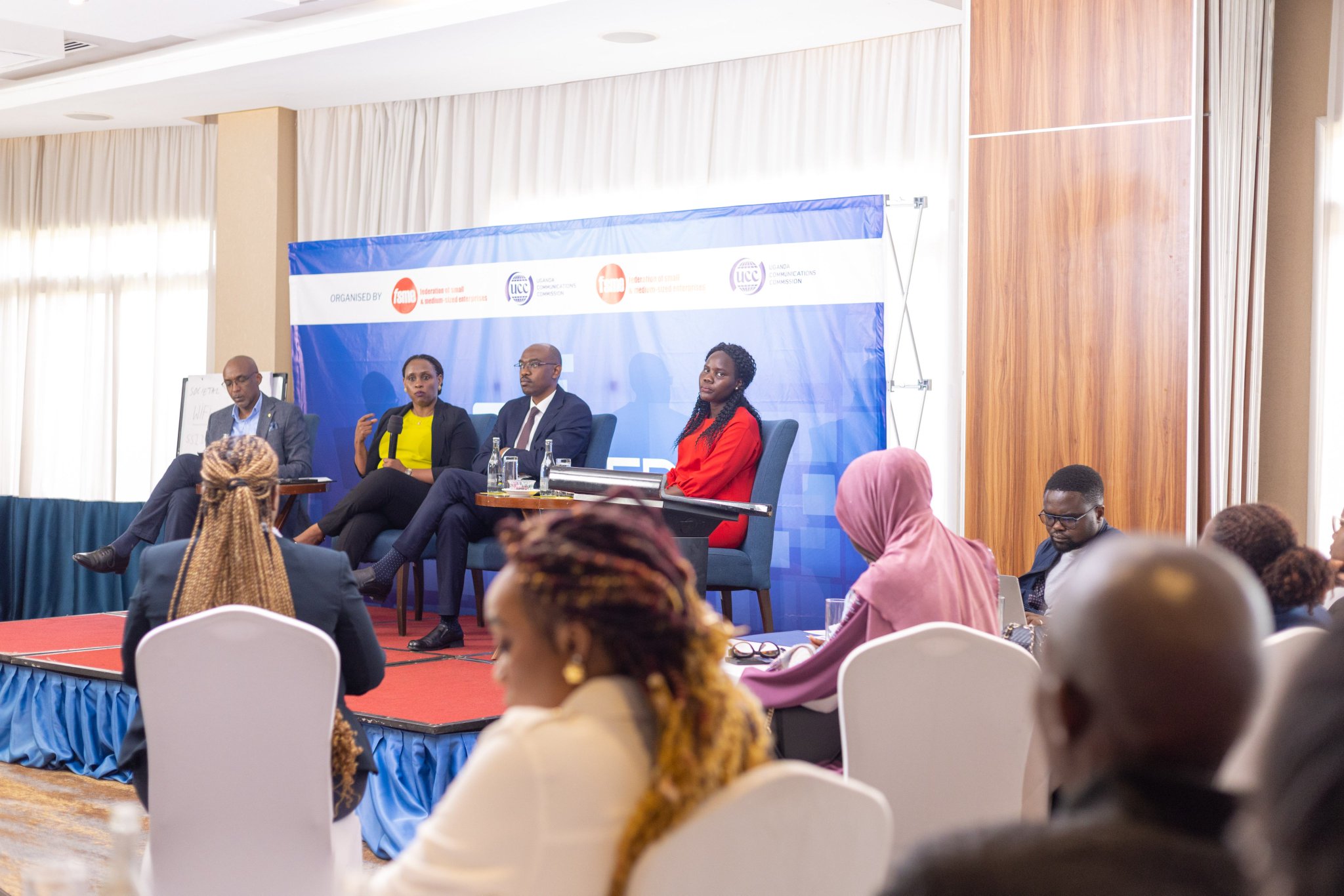
During a high-level MSME Digital Economy Dialogue convened by the Federation of Small and Medium-Sized Enterprises–Uganda (FSME), stakeholders assessed current gaps and reforms that will accelerate digital adoption among small businesses.
FSME Executive Director John Walugembe said that despite Uganda’s strong infrastructure, digital adoption remains low, with only 1 in 5 Ugandans actively using mobile internet.
A 2023 federation study also found MSME digitalisation rates stagnating between 32 and 33 per cent. Many business owners, he said, own smartphones but use only basic functions.
“The biggest challenge facing MSMEs is the low level of digital literacy,” Walugembe said. “Digital transformation can improve transparency, boost efficiency, and open up new markets, but most MSMEs cannot take advantage because they lack the necessary skills.”
Walugembe identified three key barriers: limited digital skills and awareness, poor network and electricity coverage in rural areas, and the high cost of smartphones and tablets.
He urged the government to take bolder action—starting with scrapping excise duty on mobile phones, reopening Facebook to support online trade, and reviewing mobile money charges that discourage digital payments.
“The digital economy cannot grow while entry barriers remain high. Smartphones must be allowed into the country tax-free,” he said.
He added that inconsistencies in Uganda’s policy environment are “self-defeating,” arguing that digital transformation requires coherent and well-implemented reforms rather than more policy documents.
Richard Ndahiro, Regional Technical Specialist at the United Nations Capital Development Fund (UNCDF), said MSMEs need digital solutions that directly increase income or improve operations.
“People only pay attention to something they find useful,” Ndahiro noted. “If a digital solution helps a business access finance or reach more customers, they will adopt it. The real issue is whether the tools we are offering are meaningful for them.”
He cautioned that even as devices slowly become more accessible through subsidies and financing schemes, capability gaps may widen. “If we do not train MSMEs now, it will be too late in five years,” he said.
The UCC’s Universal Service and Access Fund (UCUSAF) emphasised skills as the cornerstone of digital inclusion. UCUSAF Director James Beronda said infrastructure and devices alone will not transform MSMEs.
“You must provide access, provide infrastructure, provide devices—but most importantly, provide digital skills. Without them, MSMEs cannot fully utilise the solutions the government is putting in place,” Beronda said.
Beronda also urged collaboration among institutions to avoid duplication of digital skilling programmes. “If UCC is training small businesses and FSME is doing the same, why should we work in silos?” he asked, calling for coordinated efforts to maximise impact.
Walugembe warned that Uganda risks missing out on an estimated UGX 14.6 trillion in additional economic value and nearly 1.8 million new jobs by 2030 if MSMEs remain digitally excluded.
He noted that while advanced technologies like artificial intelligence and blockchain are reshaping global business, most Ugandan MSMEs still struggle with basic digital tools.