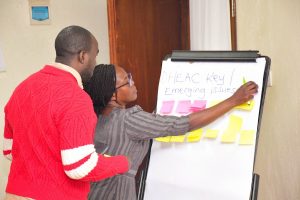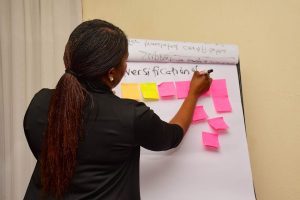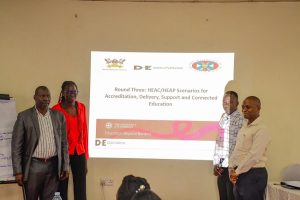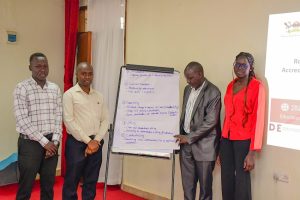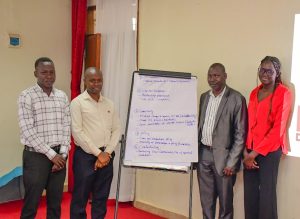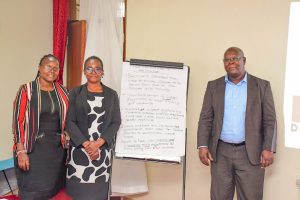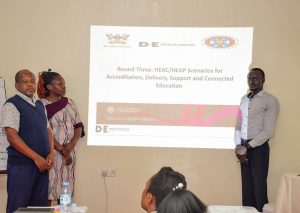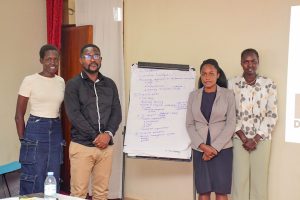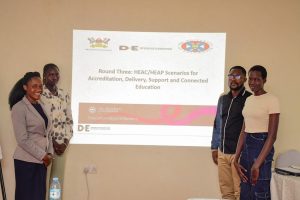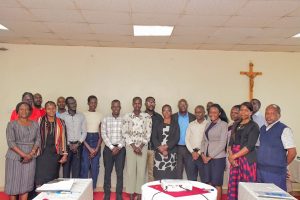



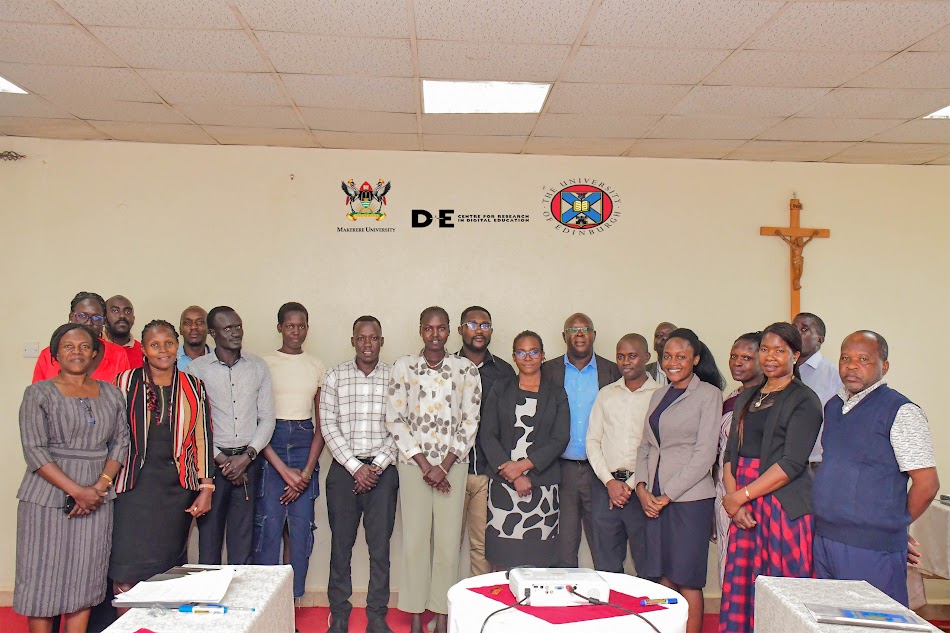
Kampala — Leading academics from Uganda gathered at Kampala Kolping Hotel on Wednesday to discuss ways to improve access to higher education, particularly for students from refugee and marginalised backgrounds.
The workshop, titled “Facilitating Access and Participation through Higher Education Access Programmes and Connected Education for Students with Refugee Backgrounds: A Global South Delphi Study”, brought together participants from public and private universities, education policymakers, and students.
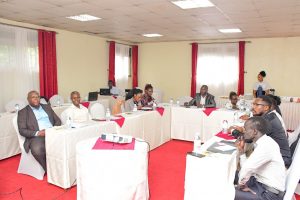
Dr Rovincer Najjuma, Lecturer in Digital Education and the Global South at the University of Edinburgh, opened the discussions by highlighting the potential of digital education in expanding higher education access.
“Currently, access to higher education in Uganda remains limited. Nationally, access stands at about seven percent, although this has improved to roughly eighteen percent in recent years,” Dr Najjuma said. “Despite this progress, many young people—especially refugees and learners from disadvantaged backgrounds—continue to face significant barriers.”
Dr Najjuma explained that universities are increasingly exploring digital approaches to design and deliver access programmes. “When universities invest in well-designed access programmes—particularly those that integrate digital education—they are better positioned to address key challenges faced by learners, including difficulties in accessing programmes, progressing through them, and transitioning successfully into mainstream degree studies,” she noted.
Dr Rebecca Nambi, Senior Lecturer at Makerere University and co-Principal Investigator of the project, emphasised the importance of understanding the experiences of students navigating access pathways. “One issue that stands out is that international education challenges go far beyond a focus on Ugandan students alone,” Dr Nambi said.
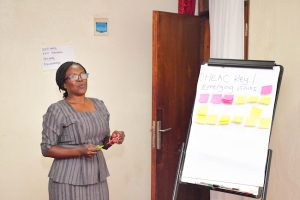
She explained that private universities often offer more flexible access pathways compared to public universities, and stressed the importance of standardising programmes across institutions. “We want to document lived experiences, analyse what is working and what is not, and generate evidence that can inform policy and institutional practice,” she added.
The workshop also featured presentations from Kampala International University leaders, who shared experiences with the Higher Education Access Program (HEAP), which replaced the previous Higher Education Access Certificate (HEAC).
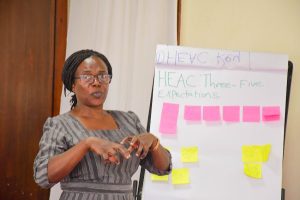
Dr Gidraf Joseph Wanjala, Principal of the College of Education, Open and Distance Learning at Kampala International University, said HEAP is designed to provide structured access for students transitioning to degree programs, including refugees.
“This program provides holistic support, from extended orientation and mental health training to reproductive health education and gender-responsive learning environments,” he said. “HEAP is not just about academic access; it also contributes to long-term productive lifestyles for marginalised youth.”
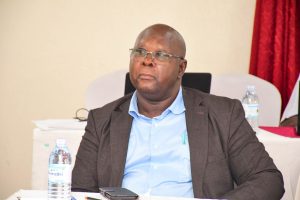
Dr Derrick Ssekajugo, Chair of the Special Purpose Committee on Academics and Acting Principal of the College of Economics and Management at Kampala International University, addressed misconceptions about HEAP’s value.
“Some assume it is only for students who could not succeed in formal secondary education, which is not the case,” Dr Ssekajugo said.
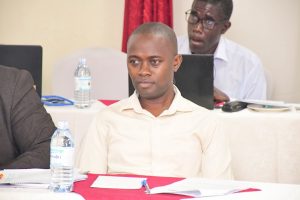
He gave examples of students who transitioned from unrelated subjects to professional fields, including medicine, through HEAP. “These experiences show that HEAP provides the skills and competence needed to succeed professionally, regardless of initial academic background,” he emphasised.
He also highlighted the pedagogical shift from teacher-centred to learner-centred approaches in secondary education and the need for universities to adapt. “Students entering HEAP come with diverse learning experiences, and universities must adjust to integrate them effectively into competency-based programs,” he noted.
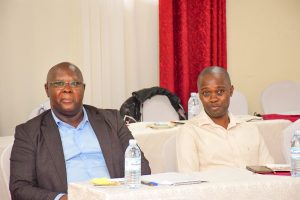
Key outcomes from the workshop included a call for universities and the government to standardise HEAC and Connected Education curricula, procedures, and modules. Participants also stressed the importance of mental health support, gender-responsive policies, and digital education solutions to expand access.
Dr Najjuma concluded, “What we are seeing is encouraging. Interest in access programmes is growing, certification pathways are improving, and institutions are beginning to recognise the value of flexible, digitally supported models. While this remains a work in progress, the momentum is clear.”
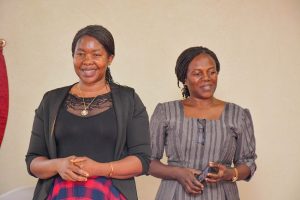
The project, a collaboration between Makerere University and the University of Edinburgh and funded by the Edinburgh Global initiative, will run until February 2026. Its goals include harmonising access frameworks, strengthening professional accreditation, diversifying learner support systems, and improving the use of digital education in higher education access programmes.