


Frankfurt — Uganda’s diplomatic missions abroad are set to be assessed more on their contribution to economic growth than on traditional protocol functions, Permanent Secretary at the Ministry of Foreign Affairs, Vincent Bagiire Waiswa, has said.
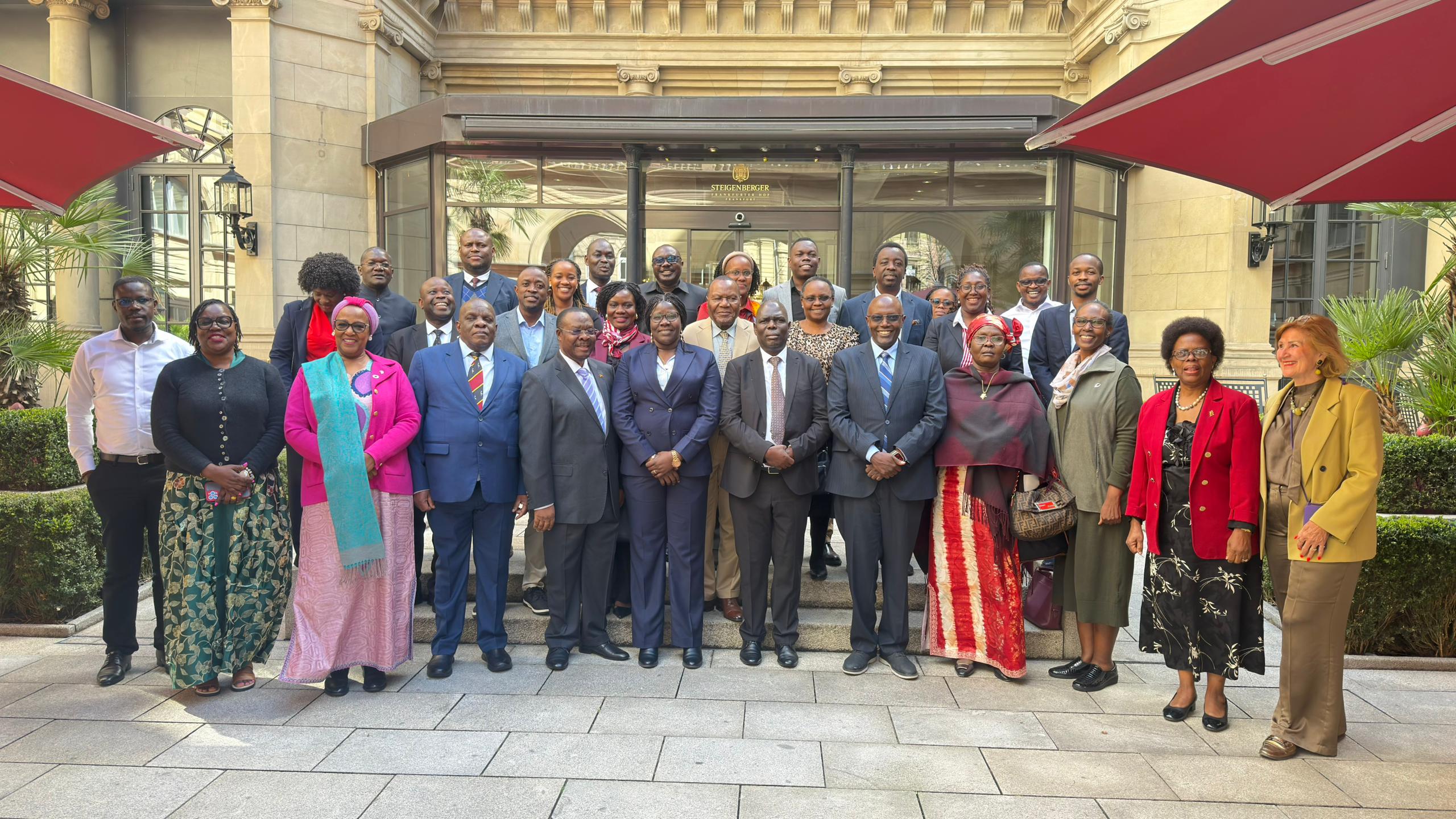
Speaking during a mid-term review retreat for Uganda’s 13 missions in Europe and the Americas held from March 29 to April 3 in Frankfurt, Germany, Bagiire emphasised the need for a results-driven approach to diplomacy. The retreat was organised in collaboration with the Ministry of Finance, Planning and Economic Development under the theme “Unlocking Africa’s trade and investment potential from the interventions of ECD.”
Bagiire noted that in the 2025/26 financial year, 34 Ugandan missions received a combined UGX 113.25 billion in funding, adding that future allocations will be tied to measurable outcomes.
“Uganda is at a moment where diplomacy must be felt not only in communiqués and meetings, but in factories opened, tourists received, exports increased, and jobs created back home,” he said.
He stressed that missions must move beyond routine representation and focus on delivering tangible economic benefits.
“The work of our Missions in Europe and the Americas can no longer be seen as routine representation alone,” Bagiire told Heads of Mission. “You are posted in some of the world’s most influential markets, financial centres, innovation hubs, and tourism source countries. That means your work matters directly to the farmer in Kabale, the coffee exporter in Masaka, the tour operator in Kasese, the miner in Karamoja, and the young innovator in Kampala.”
He added, “Our task is to turn diplomatic presence into economic value. We must become more intentional, more commercially alert, and more practical in how we pursue the four pillars of Economic and Commercial Diplomacy (ECD).”
Uganda’s Economic and Commercial Diplomacy (ECD) Strategy for FY2025/26 to FY2029/30, launched in August 2025 in Gulu, positions diplomatic missions as key drivers of exports, foreign direct investment, tourism, science and technology partnerships, and climate finance. The strategy aligns with Uganda Vision 2040, the Fourth National Development Plan (NDP IV), and the Tenfold Growth Strategy.
The review highlighted progress and areas requiring urgent action. Uganda attracted US$3.5 billion in foreign direct investment in 2025, while tourism earnings reached US$1.5 billion from 1.64 million international visitors. Heads of Mission also shared operational challenges and proposed solutions.
Among the key outcomes of the retreat were the development of a comprehensive ECD reporting framework with standardised indicators and timelines, a progress report detailing achievements and challenges, and an impact assessment measuring ECD’s contribution to economic growth. Participants also agreed on a capacity-building plan to strengthen diplomats’ skills and validated harmonised work plans for the 2026/27 financial year aligned with national priorities.
Ambassador Richard Kabonero, Head of the Economic and Commercial Diplomacy Hub, said the review aimed to ensure that missions operate in line with agreed strategic plans and deliver value for money.
“The Missions were informed that Economic and Commercial Diplomacy (ECD) funding for FY 2026/27 will be based on a strategic and evidence-based assessment, which includes a tiered decision matrix evaluating each mission against weighted criteria, including previous ECD performance, capacity to deliver, political and strategic factors, economic potential, and diaspora engagement,” Kabonero said.
“This approach has ensured that funding supports Missions that drive maximum economic returns and advance the country’s interests.”