


KAMPALA — Uganda is targeting electricity generation capacity of 20,000 megawatts (MW) by 2040 and has called on European investors to increase financing for renewable energy, hydropower and other projects needed to support industrialisation and economic growth.
Finance Minister Henry Musasizi said increased investment in the energy sector would be critical to achieving the Government’s ambition of growing the economy to US$500 billion by 2040 under the Tenfold Growth Strategy.
“Reliable and adequate electricity supply is critical to implementing the Government’s Tenfold Growth Strategy,” Musasizi said while closing the first day of the two-day Uganda-EU Business Forum at Serena Hotel in Kampala.
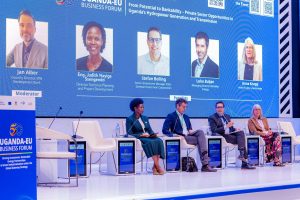
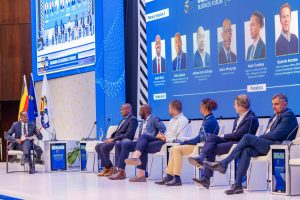
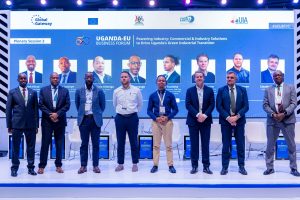
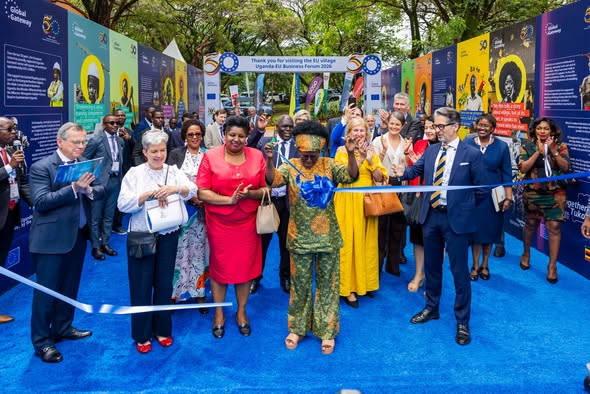
The forum, held under the theme “Driving Investment, Renewable Energy Partnership and Green Industrialisation under the Global Gateway Strategy,” brought together government officials, European and Ugandan businesses, investors and development partners to explore investment opportunities in the energy sector.
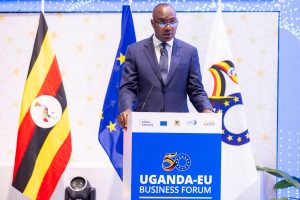
Musasizi said the Government had allocated Shs2.1 trillion to energy development in the 2026/27 financial year, with priorities including hydropower, solar generation and transmission infrastructure to serve industrial parks and export processing zones.
Among the projects highlighted were the proposed 380MW Kiba hydropower project, a 10MW floating solar plant at Isimba and at least 500MW of utility-scale solar projects in the Elgon and Acholi regions.
The Minister also pointed to opportunities in geothermal, wind and nuclear energy, as well as technology transfer and local manufacturing.
He said Uganda had identified 27 geothermal sites with an estimated potential of 1,500MW, presenting opportunities for investors seeking to diversify the country’s energy mix.

Musasizi said expanding electricity generation and transmission would help manufacturers increase production, improve export competitiveness and process more of Uganda’s raw materials into higher-value products.
EU investment and trade
The call for investment comes as Uganda and the European Union mark 50 years of relations, with both sides seeking to deepen commercial ties and expand cooperation in energy, trade and industrial development.
Musasizi said Uganda’s exports to the EU had increased from approximately €500 million in 2019 to €1.8 billion in 2025, while exports of goods and services reached US$18.4 billion in the 2025/26 financial year.
He urged European businesses to explore joint ventures, public-private partnerships and technology acquisition to strengthen local production and create employment.
The Minister also called for improved market access for Ugandan value-added products, arguing that stronger trade should support domestic processing and enable businesses to compete in international markets.
Uganda’s economic transformation strategy prioritises agro-industrialisation, tourism development, mineral development, including oil and gas, and science, technology and innovation.
The Government has identified energy as an important enabler of these sectors, particularly manufacturing and value addition, which require reliable and affordable electricity.
EU calls for bankable projects
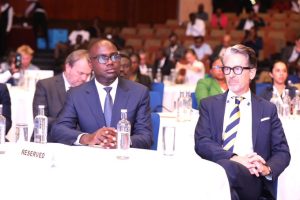
European Union Ambassador to Uganda Jan Sadek reaffirmed the bloc’s commitment to supporting energy investment through financing, technical expertise and partnerships under its Global Gateway strategy.
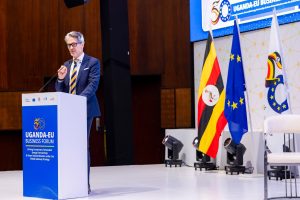
Sadek said Uganda’s energy potential needed to be translated into commercially viable projects capable of attracting private capital.
“Uganda leads, and Team Europe stands ready to support its priorities with expertise, financing, and a long-term partnership for sustainable development,” Sadek said.
He said the EU and its member states were supporting electricity access, renewable generation and transmission infrastructure, while working to reduce investment risks and mobilise private financing.
Sadek highlighted a financing package for the rehabilitation of the Nalubaale and Kiira hydropower plants, which combines €30 million in EU grants with other financing to make up a €170 million Team Europe package.

The rehabilitation is intended to help keep the two hydropower stations operating and supporting Uganda’s electricity grid.
Sadek also cited plans for a 300-kilometre, 400-kilovolt electricity interconnection between Uganda and South Sudan as an example of regional infrastructure investment supported by European partners.
He encouraged businesses, financial institutions and public agencies to use the forum’s business matchmaking and deal-making sessions to identify partners and advance viable projects towards implementation.
The EU has also highlighted its role as Uganda’s leading investment partner. According to Sadek, European sources accounted for 78.8 per cent of foreign direct investment into Uganda in the previous year, worth approximately €2.2 billion.
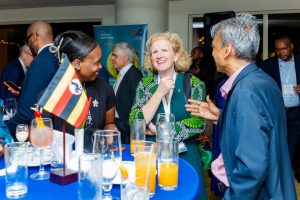
He said the partnership was intended to deliver practical economic benefits through investment in infrastructure, businesses and productive sectors.
Government seeks wider energy partnerships
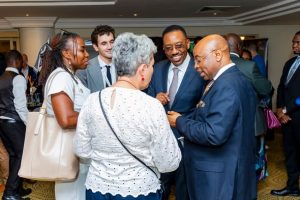
The energy forum was officially opened by Minister of Energy and Mineral Development Dr Monica Musenero, while Vice President Jessica Alupo attended a Team Europe reception held alongside the business forum.
Minister Dr Musenero urged European investors to explore opportunities in solar power, geothermal energy, electricity transmission, storage and clean cooking technologies.
She said Uganda’s renewable energy resources offered opportunities to expand electricity access, support industrial production and create employment.
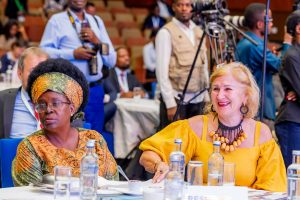
“Renewable energy investment must therefore not be viewed merely as an environmental obligation. It is an economic opportunity, a catalyst for industrialisation and a strategic investment in our shared future,” she said.
She also called for partnerships that extend beyond financing to include technology transfer, skills development, research, innovation and local participation in renewable energy value chains.
The discussions come as Uganda seeks to expand energy access and generation capacity to support its long-term economic ambitions, while the EU promotes investment partnerships under its Global Gateway strategy.