




Uganda and South Sudan have called for stronger trade cooperation, improved border operations and increased private-sector investment as the two countries seek to expand business opportunities and regional market access.
The call was made during the Second Uganda–South Sudan Business Forum and Exhibition 2026, held at Mestil Hotel in Kampala under the theme “Easing the Cost of Doing Business and Unlocking Regional Market Opportunities for Uganda and South Sudan.”
The forum, organised by the Embassy of Uganda in South Sudan in collaboration with the Ministry of Trade, Industry and Cooperatives, brought together government officials, business leaders and other stakeholders to discuss ways of increasing trade and investment between the two countries.

Uganda’s Ambassador to South Sudan, Brig Gen Ronnie Balya, welcomed the South Sudanese delegation and called for stronger partnerships between businesses in both countries to expand markets, create jobs and promote regional integration.
Building on the first business symposium held in Juba in 2022, Balya said the two countries needed to turn their diplomatic relations into practical economic benefits for businesses and citizens.
He highlighted the role of regional organisations, including the East African Community (EAC), the Intergovernmental Authority on Development (IGAD) and the Nile Basin Initiative, in supporting economic cooperation.

South Sudan joined the EAC in 2016, creating opportunities for businesses in both countries to access wider regional markets.
South Sudan’s Ambassador to Uganda, Paul Malong Akaro, called for stronger cooperation between the Uganda Revenue Authority (URA) and South Sudan’s National Revenue Authority (NRA) to improve border operations and address challenges affecting cross-border trade.
“Better information-sharing and coordinated revenue administration are necessary to reduce delays and make legitimate trade easier,” he said.
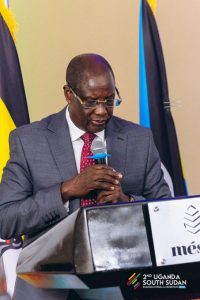
The ambassador also called for fair competition, improved market access and sustained engagement between government institutions and private businesses.
Private sector urged to assess progress
The forum also provided an opportunity for businesses to assess their performance, identify challenges and explore opportunities for expansion.
Amb Barya said the meeting should help businesses examine their progress and plan for the future.

“This is a good opportunity to evaluate ourselves and plan well. Where are we? Are we progressing? Are we degenerating? Are we stagnating? Where are we as the South Sudan and Uganda business community?” he noted.
He said the forum would enable private-sector players to examine their achievements and challenges while identifying opportunities to expand their businesses and contribute to the economies of both countries.
Malong, on the other hand, said Uganda and South Sudan shared a history and a common interest in economic prosperity, with trade playing an increasingly important role in their relationship.

“Ugandan businesses have established a presence in South Sudan, particularly in Juba, where traders supply a range of goods, including construction materials,” he stated.
He said much of the construction material used in Juba originated from Uganda, demonstrating the importance of Ugandan suppliers to South Sudan’s market.
Malong added that bilateral trade should be considered within the wider regional agenda of industrialisation, investment and economic transformation.
Tourism stakeholders also participated in the meeting to explore opportunities for promoting travel and trade between Uganda and South Sudan.

Miss Tourism Uganda queens, including Queen Nosha, Queen Milfat Mucureezi, Queen Harriet and Queen Nachap Cindy, attended alongside Man of Tourism King Arthur.
The participation of tourism representatives highlighted the potential for cooperation beyond the exchange of goods, including tourism promotion and other service-sector opportunities.
The two countries are seeking to translate their diplomatic relationship into increased trade, investment and employment, with improved border efficiency and lower business costs identified as priorities.
The forum comes as businesses in both countries seek better access to regional markets and more efficient systems for moving goods across borders.