



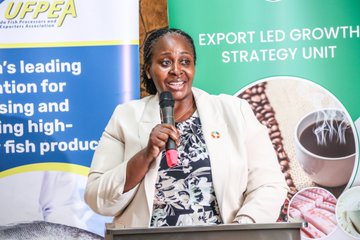
Uganda’s fisheries sector was the focus of a high-level breakfast meeting convened by the Ministry of Trade, Industry and Cooperatives (MTIC) in partnership with the Uganda Fish Processors and Exporters Association (UFPEA) on Tuesday, aiming to chart a path for export-led growth.
The meeting brought together industry leaders, experts, and government officials to discuss strategies for revitalising the sector, which contributes 12% to agriculture and supports over 1.3 million livelihoods nationwide.
“The fisheries sector is a cornerstone of Uganda’s economy, earning approximately USD 54.7 billion in exports and providing critical protein for national food security. It is time to harness its full potential,” said Permanent Secretary Lynette Bagonza, opening the session.
Bagonza highlighted the government’s commitment to sustainable growth through the National Plan for Small-Scale Fish Farms, aiming to expand production to 183,000 metric tonnes by 2028.
She noted that initiatives under the National Development Plan are streamlining regulations, improving infrastructure, and promoting responsible practices.
“Uganda is one of the first countries in the world to launch a National Plan for Small-Scale Fish Farms. This is a historic milestone showing our commitment to supporting local fishers and sustainable growth,” Bagonza said.
Senior Presidential Advisor on the African Growth and Opportunity Act (AGOA) and Trade, Susan Muhwezi, emphasised the sector’s importance for economic development and export competitiveness.
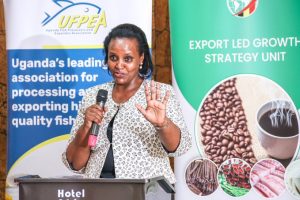
“The fisheries sector contributes 2.6% to national GDP and supports an estimated 1.3 million livelihoods. Export revenues reached USD 2.7 billion in 2024, but we must work to reclaim our peak earnings of USD 171 million in 2018,” Muhwezi said.
She highlighted the challenges facing the industry, including a 22% decline in fish exports to the European Union (EU) between 2023 and 2024, and processing factories running at only 22% capacity due to raw material shortages caused by illegal fishing.
“Rebuilding formal supply chains is urgent to restore export competitiveness,” she said. “Our role is to listen and facilitate solutions. We are establishing a CEO program and have launched the Sea People’s Grant Program to unite exporters from key sectors. By addressing market standards, traceability, and financing together, we can revive Uganda’s fish exports.”
UFPEA CEO William Tibyasa underscored the scale of losses caused by illegal practices, which include smuggling juveniles, fish maws, and the use of destructive nets.
“The Ugandan fish sector is bleeding USD 1.4 billion annually to illegalities. Factories operate at 22% capacity while 98,000 tonnes of fish slip across borders untaxed. We must secure our national treasure,” Tibyasa said.
He pointed out that Uganda had successfully turned around the sector between 2017 and 2019, with fish stocks recovering by 30%, factories increasing from 4 to 12, and exports soaring; however, he warned that the situation has now reversed. “The blueprint for success exists—we need to reactivate it with accountability and enforcement,” he said.
“The key to unlocking the sector’s USD 2 billion annual potential is sustainability. International markets in the EU, US, and UK demand MSC certification and traceability. To compete, we must stop juvenile fishing, formalise the supply chain, and support commercial aquaculture. The roadmap is clear.”
The breakfast meeting concluded with a call for stronger government-industry collaboration, enforcement of fisheries laws, and investment in sustainable aquaculture to secure Uganda’s place in the global fish market.