


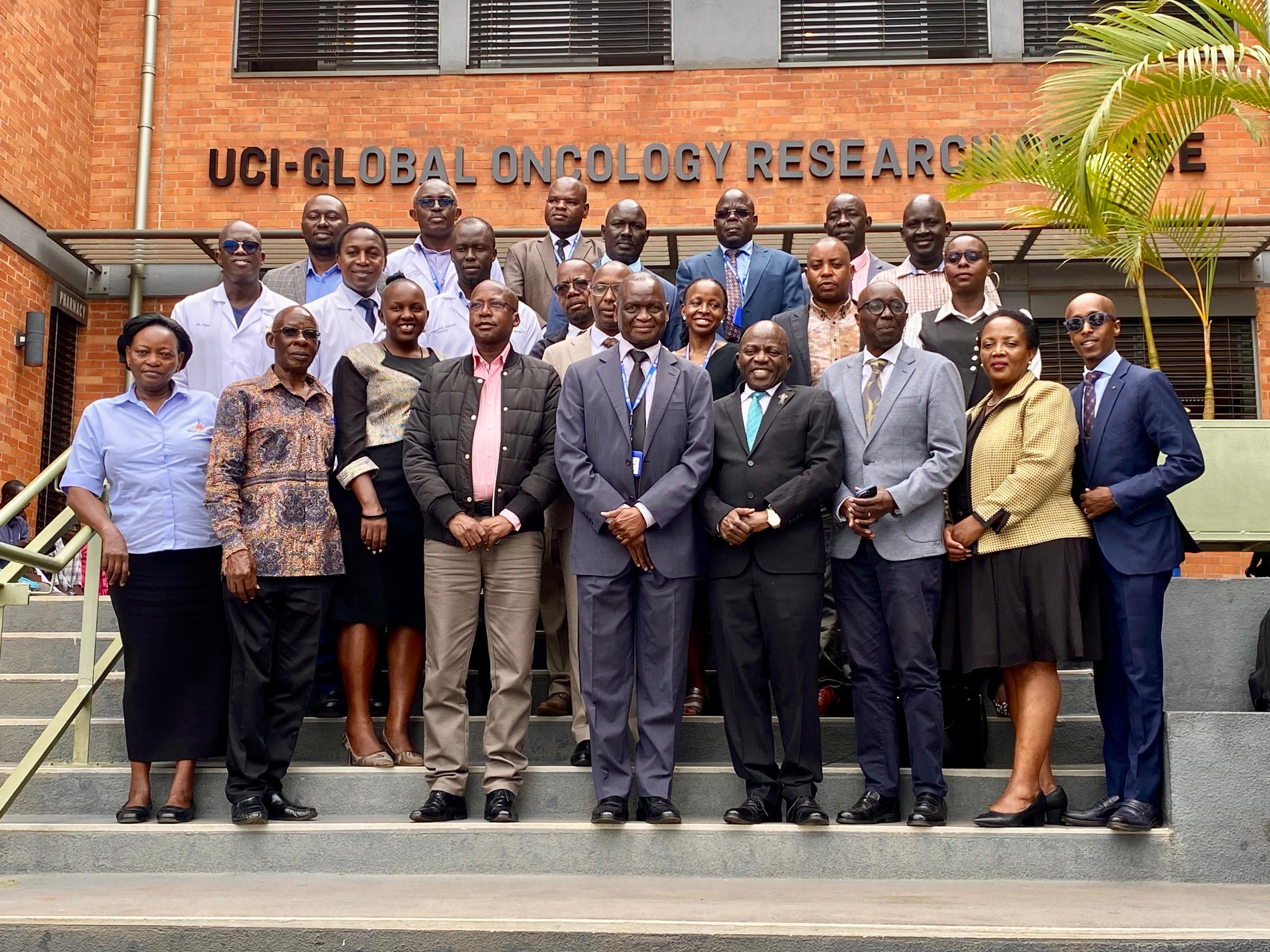
Kampala — The Uganda Cancer Institute (UCI) is positioning itself as a regional centre of excellence in cancer care, research, and training as African delegations seek to learn from Uganda’s experience.
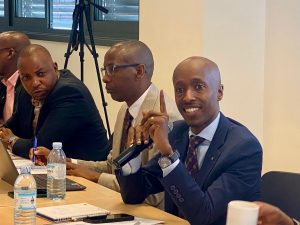
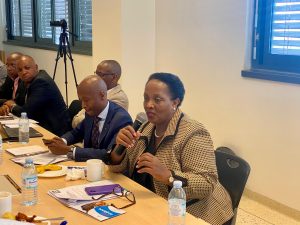
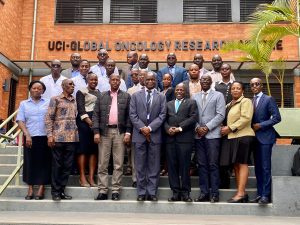
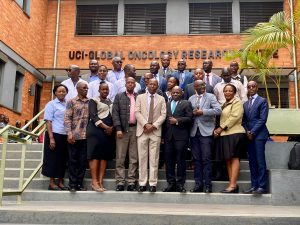
This was highlighted during a high-level familiarisation visit to UCI by a delegation from Burundi, organised by the Ministry of Foreign Affairs through the Uganda Embassy in Bujumbura, as part of efforts to scale up cancer response initiatives in the region.
Speaking during the engagement, UCI Executive Director Dr Jackson Orem noted that the institute’s global reputation reflects decades of deliberate government investment.
“It is very encouraging to see that our Ministry of Foreign Affairs is actively promoting Uganda’s capacity to fight cancer,” Dr Orem said. “Just about a week and a half ago, our embassy in Washington, D.C., facilitated a scouting visit by a team from the United States to assess how our experience in cancer control can be leveraged globally.”
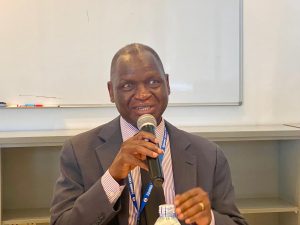
Dr Orem revealed that the U.S. visit explored using Uganda’s model to pilot innovative financing for other countries. “We are already working on developing key performance indicators to guide such initiatives,” he said.
Decades of Progress
Established in 1967, UCI is now among Africa’s most respected public institutions. Dr Orem noted Uganda’s pioneering role in global policy: “Uganda was instrumental in developing the essential package for cancer management, including essential cancer medicines. This framework has since been adopted by the World Health Organisation and is now used globally.”
Since 2016, UCI has served as an East African Community Centre of Excellence. “There is no need for countries in the region to reinvent the wheel. That is why these benchmarking visits are so important,” Dr Orem added.
Government Ownership and Free Treatment
Uganda’s gains are anchored in 100% government funding. “Through this funding, cancer treatment services—including chemotherapy and radiotherapy—are provided free of charge to Ugandan patients,” Dr Orem emphasised.
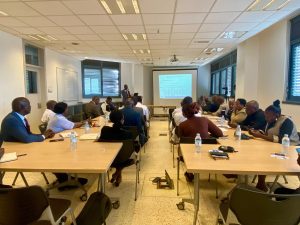
Drug procurement is centralised through National Medical Stores (NMS), though UCI also engages directly with manufacturers. “Cancer medicines are highly sensitive. Direct procurement ensures safety, quality assurance, and cost-effectiveness,” he noted. Consequently, drug availability at UCI stands at 85%, far exceeding the 60–65% regional average. “This demonstrates that the systems we have put in place are working.”
Modern Radiotherapy Capacity
Addressing past challenges, Dr Orem said government intervention has transformed radiotherapy services since 2015. “Today, Uganda has some of the most modern radiotherapy equipment in the region. This transformation was made possible by strong political will and government investment,” he said.
He concluded that UCI is ready to support neighbours by offering affordable radiotherapy access while they build their own domestic capacities.
Diplomacy, Rotary, and Regional Collaboration
Representing the Ugandan Ambassador to Burundi, Ms Anne Babinaga, Minister Counsellor for Economic/Commercial Diplomacy and Investment Affairs at the Embassy of the Republic of Uganda, said the Cancer Run has become a key public diplomacy tool.
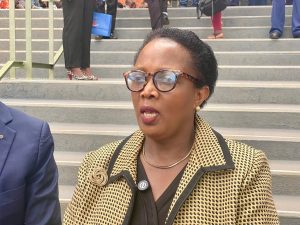
“At the Ministry, we made a deliberate effort to ensure that Uganda’s experiences and successes in cancer response are shared beyond our borders,” she said.
She noted that while Uganda’s Cancer Run has been running for 14 years, Burundi only introduced the initiative in 2021, with its fourth edition held in August 2025 under the theme “Run for a Cause.” “Cancer services in Burundi are still very limited. There is currently only one hospital providing cancer treatment, and it only started in 2021,” Babinaga said. “This makes the need for learning and collaboration even more urgent.”
The 2025 Burundi Cancer Run attracted 586 participants and raised 23 million Burundi Francs, which were donated to Centre Medico-Chirurgical de Kinindo (CMCK) to support cancer patients.
Burundi Seeks Uganda’s Expertise
Speaking on behalf of Burundi’s medical delegation, Dr Alexis Manihakiza, a paediatric haemato-oncologist at CMCK Hospital, said Uganda’s experience offers critical lessons.
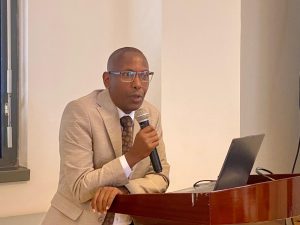
“Our department is still young—almost five years old—and we are seeking inspiration, particularly in patient care,” he said. “We also face challenges such as the absence of radiotherapy and an unsustainable supply chain for cancer medicines.”
He added that Burundi hopes to establish formal partnerships with Ugandan oncology centres and the Rotary Cancer Programme. “Chemotherapy alone is not a complete treatment package. We need complementary services like radiotherapy, and we hope to collaborate so that patients can be referred here at an affordable cost,” Dr Manihakiza said.
Rotary’s Growing Role
Happy Ntwari, Assistant to the Governor of Rotary District 9150 for Burundi, said the visit marks a turning point for Rotary’s cancer efforts in Burundi.
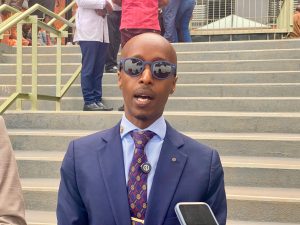
“We realised that cancer was one of the major disease areas we were not adequately addressing in our communities,” he said. “This visit marks a starting point for Rotary in Burundi to address cancer in a structured and sustainable way.”
He expressed hope that, like Uganda, Burundi would one day look back on its Cancer Run journey as a transformative public health initiative.