


Editor’s Note
Every nation is built twice.
It is first built in the memories of its people, long before it is recorded in history books. Those memories live in the voices of grandparents, the wisdom of elders, the rhythms of the seasons, the names given to cattle, the paths worn into hillsides by generations of bare feet, and the quiet lessons that were never taught in classrooms but shaped lives all the same.
Modern journalism is often occupied with the urgency of the present. It tells us what happened today, who said what, and where events are unfolding. Those stories are indispensable. Yet there is another responsibility that journalism can embrace: preserving the knowledge, traditions and lived experiences that explain who we are.
It is in that spirit that SoftPower News presents The Guardians of Kikurungo, a nine-part special feature by journalist and filmmaker Rogers Atukunda.
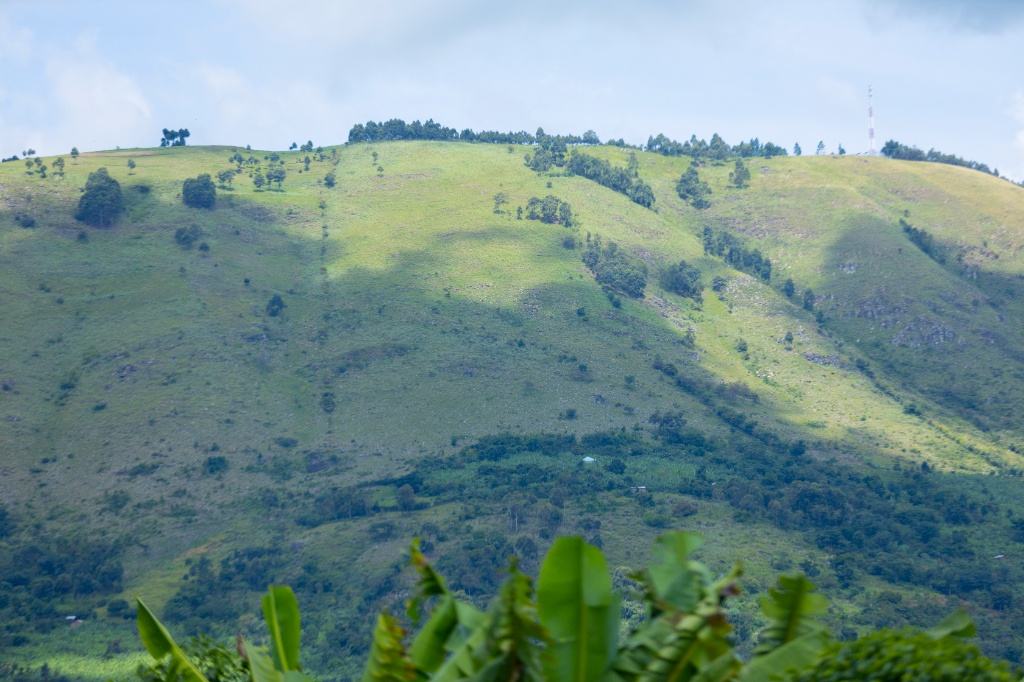
Set among the hills of Kikurungo and Kikondo in Kitagwenda district, and Kashangura in Ibanda district, western Uganda, this memoir journeys into a world where education began long before school; where grandparents served as libraries, cattle carried family histories, dogs embodied different philosophies of guardianship, and the land itself became a teacher.
Through deeply personal memories, Atukunda explores themes that resonate far beyond one family: indigenous knowledge, stewardship, conservation, food heritage, identity and the enduring relationship between people and place.
The stories are rooted in the Batagwenda community, but their questions are universal. What do we inherit from those who came before us? What traditions deserve to endure? And what responsibilities do we carry toward the people, animals and landscapes that shaped our lives?
As Uganda continues to modernise, many of the traditions documented in this series are quietly disappearing. The Guardians of Kikurungo is, therefore, more than a memoir. It is an act of remembrance and a contribution to the preservation of Uganda’s cultural heritage.
We invite our readers to walk these hills, meet these remarkable people and animals, and rediscover a way of seeing the world that still has much to teach us.
Welcome to The Guardians of Kikurungo.
Part One
The First University: The Hills That Raised Me
Standfirst
Before I ever opened a schoolbook, I had already begun an education that no classroom could offer. My first teachers were the hills of Kikurungo, Kikondo and Kashangura, the people who called them home, and the living world that surrounded us. Looking back, I realise that my first university had no walls—and its lessons have stayed with me for life.
By Rogers Atukunda
*
Before I entered a classroom, I had already spent years being educated.
My teachers did not wear gowns or stand before blackboards. They carried walking sticks polished smooth by decades of use. They spoke in proverbs rather than lectures. Some walked on two legs, others on four. Some grazed quietly across the hillsides while others guarded the homestead through the night. Even the land beneath my feet had lessons to offer.
Looking back now, I realise that my first university had no buildings.
Its classrooms were the hills of Kikurungo, Kikondo and Kashangura.
Its library was the memory of my grandmother.
Its laboratory was the kraal.
Its philosophy was written in millet fields, cattle trails and footpaths that wound across the valleys of western Uganda.
I simply did not know I was a student.
At my grandmother’s home, the mountain was never just a mountain.
The valley below the gardens, the wells where people fetched water, the banana plantations behind the homestead and the caves hidden within the Kikondo hills belonged to a world that carried memory, mystery and responsibility.
The land was alive.
Not alive in the way a person is alive, but alive in the way a place becomes alive when generations of people attach meaning to it. A hill is no longer just soil and rock when it carries the footsteps of ancestors, the stories of elders, the sweat of farmers and the laughter of children who grew up climbing its slopes.
That was Kikurungo.
Before I knew the language of geography, I knew the language of belonging.
Before I understood history, I understood that certain places demanded respect.
Before I entered a classroom, I was already being educated.
My teachers did not stand before blackboards. They carried walking sticks. They carried scars. They carried stories.
Some had human voices.
Others had horns, paws and wings.
The cattle in the kraal taught responsibility. The dogs guarding our home taught courage and discipline. The gardens taught patience. My grandmother taught generosity. My uncle taught survival.
And the hills themselves taught something deeper:
That everything we inherit comes with a responsibility to protect it.
That is the meaning of guardianship.
The Hills Were the First Classroom
Kikurungo, Kikondo and Kashangura were never simply geographical features on a map.
They were the centre of our world.
The stories of our childhood were attached to these hills. Paths had names. Valleys had memories. Streams carried histories. Certain places were approached with respect because those who came before us had already taught us that the world was larger than what the eyes could see.
The elders spoke of the Bachwezi — the mysterious rulers associated with the ancient Kitara civilisation — not merely as figures from distant history, but as beings whose presence remained woven into the landscape.
As children, we listened to these stories with fear.
As adults, we begin to hear something else.
We hear a philosophy.
The stories were not only about mysterious encounters. They carried instructions.
Respect the mountain.
Respect the night.
Respect the places where people depend on water.
Respect what is older than you.
The invisible world existed because the visible world required discipline.
The hills were teaching us before we understood we were students.
The hills also taught us the generosity — and occasional selfishness — of village life.
The lessons of Kikurungo did not end at my grandmother’s home. About ten kilometres away, in Omukabare Village in present-day Kashangura Sub-county, another chapter of my education began. This was my parents’ home.
If Kikurungo taught me the philosophy of guardianship, Kashangura taught me how to practise it.
A World Where Everything Had a Guardian
In my grandmother’s world, nothing important was left without protection.
The cattle had guardians.
The crops had guardians.
The children had guardians.
The stories had guardians.
Even memory itself required someone to carry it forward.
A family was not simply a collection of people living together. It was a chain of responsibility.
Someone protected the herd.
Someone protected the food.
Someone protected the home.
Someone protected the knowledge.
Years later, when I became a journalist, I began to understand why these childhood lessons stayed with me.
Journalism often teaches us to look for events.
Something happens.
Someone speaks.
A crisis emerges.
A headline is created.
But the hills taught me to notice something different.
They taught me to notice what disappears slowly.
The cattle breed that becomes rare.
The crop that stops being planted.
The language spoken only by grandparents.
The story that dies because nobody remembers to tell it.
The tradition that disappears quietly without a farewell.
The Education Before Education
Today, we often measure education through classrooms, examinations and certificates. Then we move on to diplomas, degrees, master’s degrees, doctoral degrees (PhDs), etc.
Those things matter.
But my grandmother’s generation possessed another kind of education.
It was practical.
It was inherited.
It was learned through participation.
A child did not first study life and later enter it.
A child entered life and learned through doing.
You learned because you followed.
You learned because you watched.
You learned because someone trusted you with responsibility.
A boy walking behind cattle was not simply walking.
He was learning animal behaviour.
A child helping in the garden was not simply working.
She was learning seasons.
A young person listening to elders was not simply hearing stories.
He was inheriting a worldview.
Nobody announced: “Today you will begin your education.”
The lesson had already started.
Indigenous Competency-Based Education System
Today, we speak proudly of diplomas, bachelor’s degrees, master’s degrees and doctorates. These achievements matter. They have opened doors, advanced knowledge and transformed societies.
But long before formal schooling became the measure of intelligence, my grandmother’s generation belonged to another school altogether.
It was an indigenous competency-based education system.
No ministry designed it. No curriculum committee printed it. Yet it endured for generations because it was woven into everyday life. Education was not something separated from living; it was living itself.
A boy walking behind cattle was reading weather, recognising disease, understanding grazing patterns and developing patience. Every journey across the hills was a lesson.
A child helping in the garden was learning the rhythm of the seasons, the character of different soils, the meaning of rain, and the quiet truth that food begins long before it reaches the cooking pot.
A young person sitting among elders was inheriting a worldview. History, values, customs, language, diplomacy and moral judgment were passed from one generation to the next through conversation, proverbs and memory.
Looking back, I find it fascinating that Uganda’s modern Competency-Based Curriculum seeks to achieve many of the same ideals. Today’s schools encourage practical learning, problem-solving, collaboration and the application of knowledge beyond the classroom. Learners are expected not merely to memorise facts but to demonstrate what they can do with them.
In many ways, it is a return to a wisdom our ancestors never abandoned.
The difference is that today’s competency-based education still begins in school and extends into the community. My grandmother’s education began in the community itself. The family was the first classroom. The homestead was the laboratory. The grazing fields were the lecture halls. The garden was the science laboratory. The evening fireplace was the library. Every elder was a teacher, and every responsibility was an examination.
There were no report cards.
There were no certificates.
There were no graduation ceremonies.
Yet assessment happened every day. Could you identify a sick calf? Could you distinguish the coming of the rainy season from the smell of the wind? Could you cultivate the garden without wasting seed? Could you resolve conflict respectfully? Could the community trust you with responsibility?
Those were the examinations that mattered because failure carried real consequences.
Perhaps the greatest difference between indigenous education and modern education is not the way knowledge was acquired but the purpose for which it was acquired. Modern education often prepares us for employment. Indigenous education prepared one for life. It sought to shape character as much as competence, wisdom as much as knowledge, responsibility as much as skill.
My grandmother never earned a certificate.
Yet she graduated every single day of her life.
Her university was the land.
Her professors were the elders.
Her textbooks were the seasons.
And her classroom stretched as far as the cattle could roam.
The Hills That Remember
Every community has a place where its memory lives.
For the Batagwenda, that memory lives among the hills of western Uganda.
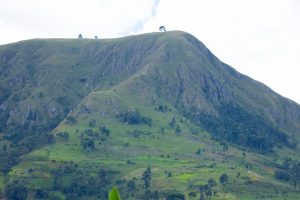
It lives in the paths carved by generations walking to gardens. It lives in the kraals where cattle were counted before sunrise. It lives in the stories told after the evening meal. It lives in the names given to people, animals and places.
A hill was never simply a hill.
It was an archive.
It stored the footsteps of those who came before.
The Kikondo hills and the surrounding Kikurungo landscape were not just the background of my childhood. They were characters in the story of who we became.
Their slopes carried gardens. Their valleys carried water. Their caves carried stories.
The elders understood something that modern life sometimes forgets:
A landscape is not empty.
A place remembers.
The People of the Hills
The Batagwenda world was shaped by movement, settlement and adaptation.
Among the communities connected to this landscape were the Banyantara, who lived around the Ntara highlands overlooking Lake George, and the Abakondo and Abakurungo, whose lives were tied to the hills around Kikondo, Kikurungo and their summit —Kinyamugara.
The names themselves carried geography.
The land shaped identity.
To belong to a hill was not merely to live near it. It was to inherit its stories, its responsibilities and its reputation.
The people who settled these hills carried a legacy of resilience. Their ancestors were remembered as hunters, people who understood the forest, the animals and the rhythms of the wild.
The old stories spoke of a time when the hills were places of abundance, where hunters moved through landscapes shared with wild animals.
The hunter was not simply a person who killed.
A true hunter was an observer.
He understood the movement of animals.
He understood seasons.
He understood patience.
He understood that entering the wilderness required humility.
This philosophy would later shape how I understood guardianship.
A guardian is not someone who owns something.
A guardian is someone who understands that something has been entrusted to them.
From Hunting Grounds to Gardens
With time, the world of my ancestors changed.
The forests became farms.
The hunting grounds became agricultural landscapes.
The wild animals that once moved freely through these hills became fewer, but the relationship between people and land remained.
The same soil that once sustained hunters began sustaining farmers.
The hills became gardens.
And among the most important crops was millet.
Millet was more than food.
It was memory.
It was tradition.
It was part of the rhythm of life.
Long before I understood agriculture as an economic activity, I understood farming as a relationship.
People did not simply plant seeds.
They entered into a conversation with the land.
They waited for rain.
They watched the sky.
They protected the harvest.
They celebrated abundance.
My grandmother’s generation understood that food carried identity. A meal was not only about filling the stomach. It was about connecting the present generation to those who came before.
The Invisible Guardians of the Land
When I look back at the stories my family told, I realise they were never simply stories about strange encounters.
They were stories about responsibility.
The stories of the Bachwezi, whether understood as history, mythology or spiritual belief, created a world where the land was watched and respected.
The hills, wells, caves and valleys were treated as places with meaning.
As children, we heard stories of mysterious beings appearing in gardens, at wells and along lonely paths. We feared them.
But adulthood changed how I heard those stories.
The fear became philosophy.
The stories were telling us:
Do not disrespect the land.
Do not move through the world carelessly.
Do not assume you are the only presence that matters.
The invisible guardians were reminding humans that they were not masters of creation.
They were participants in it.
The Lesson Hidden in the Stories
One of the most powerful lessons from my grandmother’s world was that everything had a place.
The cattle had their place.
The crops had their place.
The elders had their place.
The children had their place.
Even stories had their place.
They were not told simply for entertainment.
They carried instructions.
A child who listened carefully was learning how to live.
A young person who respected elders was preserving knowledge.
A farmer who protected the soil was protecting future generations.
A cattle keeper who cared for animals was protecting family history.
This was guardianship.
Not a title.
Not a profession.
A way of life.
The First Teachers Were Waiting
When I eventually entered formal education, I carried something with me that no classroom had given me.
I carried Kikurungo.
I carried the voices of elders.
I carried the smell of cattle kraals at dawn.
I carried the sound of dogs guarding the compound at night.
I carried the image of my grandmother moving through her world with confidence and purpose.
I carried the knowledge that learning does not begin when someone hands you a book.
Sometimes learning begins when someone hands you responsibility.
That was the education of my childhood.
The education of the hills.
The education of guardianship.
*
But every university has its great teachers.
And in my first university, there was one teacher whose lessons shaped everything that followed.
She did not have a classroom.
She did not write books.
She carried orubango —a walking stick.
She knew the value of hard work, generosity and discipline.
She was the centre of our world.
Her name was Zeluya.
*
Next in The Guardians of Kikurungo:
“Zeluya: The Grandmother Who Owned Half the Hill but Shared Her World.”