



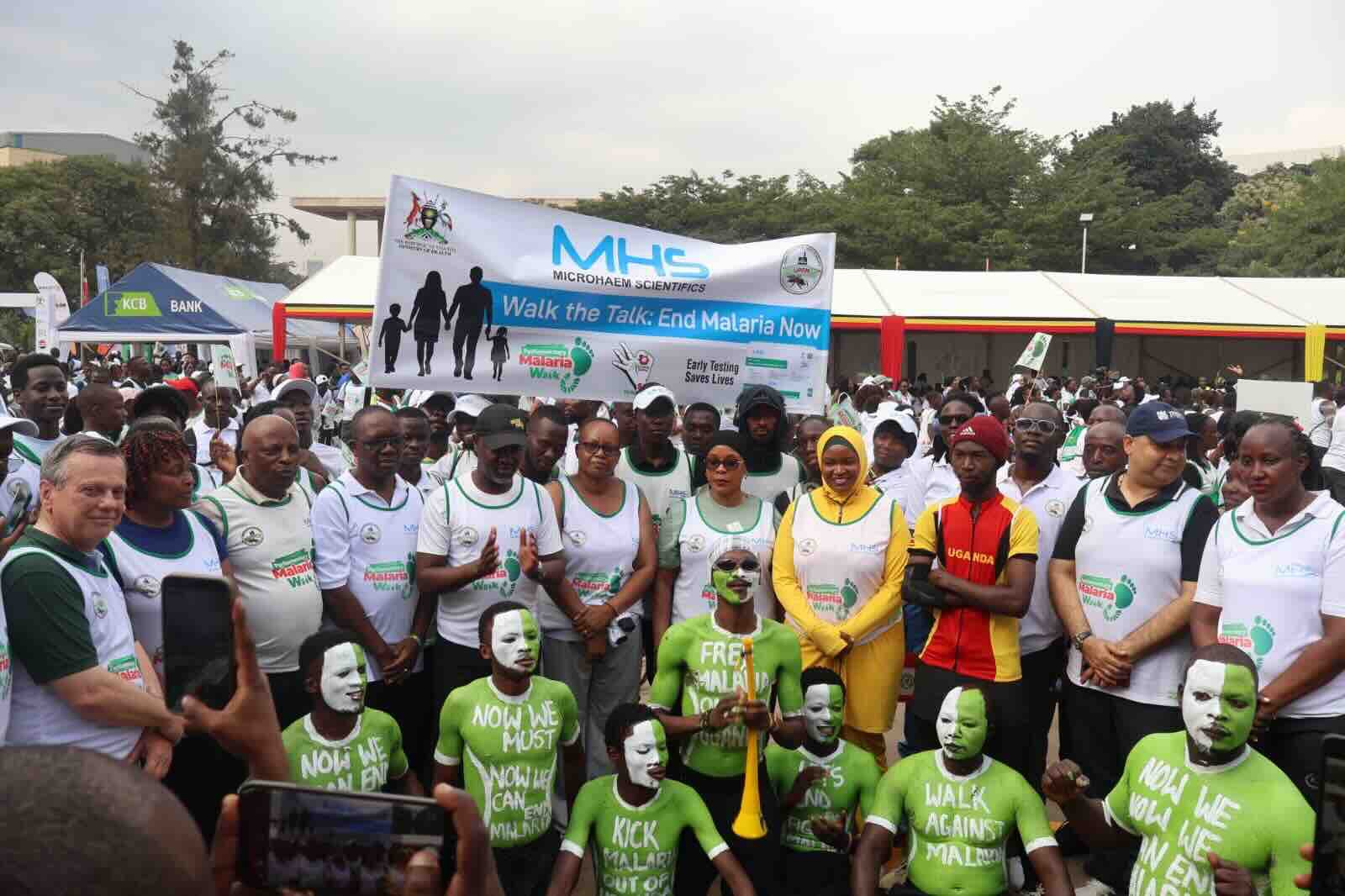
KAMPALA — Uganda’s first in-vitro diagnostics manufacturer, Microhaem Scientifics (MHS), has renewed its commitment to strengthening malaria control efforts through locally produced testing solutions, as the country joined the 4th Parliamentary Malaria Walk to raise awareness on ending preventable deaths caused by the disease.
The walk, held on July 26, 2026, was led by Chief Walker Rt. Hon. Thomas Tayebwa, Deputy Speaker of Parliament, under the theme “Walk the Talk: End Malaria Now.”
Delivering one of the day’s strongest messages, Chief Walker Tayebwa challenged Uganda to strengthen its health security by investing in local innovation and manufacturing. “We should not import malaria testing kits from countries that have never experienced malaria.”
He applauded Microhaem Scientifics for demonstrating that Uganda has the capacity to manufacture high-quality diagnostic tools locally. “Why should we import malaria testing kits from countries which have never seen malaria? I am really happy to see that a Ugandan is producing the kits that we are now using.”
The Deputy Speaker also reminded participants that malaria remains everyone’s responsibility because it strikes without warning. “Malaria can knock on your door because no one makes an appointment with a mosquito. No one chooses to get a disease. That is why we must all stand together in the fight against malaria.”

Uganda remains among the countries with a high malaria burden, with millions of cases recorded annually. The challenge has been compounded by emerging drug and insecticide resistance, as well as changes in malaria parasites that can affect the accuracy of some diagnostic tools.
The World Health Organisation recommends that suspected malaria cases should be confirmed through testing before treatment begins, as treating based only on symptoms can lead to missed malaria cases or unnecessary use of medicines.
Microhaem Scientifics says its locally manufactured malaria rapid diagnostic kits are designed to address some of the emerging challenges facing malaria detection.
During the event, Prof. Bruce Kirenga received an award on behalf of Microhaem Scientifics from Rt. Hon. Thomas Tayebwa in recognition of the company’s continued commitment as a champion in Uganda’s fight against malaria.
The recognition reflected Microhaem Scientifics’ longstanding partnership with the Uganda Parliamentary Forum on Malaria, having supported every edition of the Parliamentary Malaria Walk since its inception. Through local manufacturing of rapid diagnostic tests, the company continues to strengthen Uganda’s efforts toward self-reliance in healthcare while expanding access to reliable malaria diagnosis.
Tackling Malaria Testing Challenges
One of the challenges in malaria diagnosis is the emergence of parasites with deleted pfhrp2/3 genes, which can cause some conventional rapid diagnostic tests that rely only on HRP2 detection to miss infections.

Microhaem Scientifics said its malaria diagnostic kits use a dual-target approach by detecting both HRP2 and pLDH markers, allowing identification of malaria strains that may not be detected by HRP2-only tests.
The company also revealed that its scientists are developing additional diagnostic innovations targeting other diseases.
Uganda’s First Local Diagnostic Manufacturing Facility
Microhaem Scientifics operates a fully automated manufacturing facility in Ntinda, Kampala, established to produce affordable and quality diagnostic kits for Uganda and the wider region.
The facility was commissioned by President Yoweri Kaguta Museveni on November 28, 2023, and was described as one of the first advanced in-vitro diagnostics manufacturing plants in Sub-Saharan Africa.
The company says the facility was built with an initial investment of US$25 million and is expected to create 1,500 direct jobs and 5,000 indirect jobs.
Microhaem Scientifics also secured a US$7.5 million development loan from the Uganda Development Bank to support its operations.

The plant has an installed production capacity of 80 million test kits annually and manufactures diagnostics for malaria, HIV and sickle cell disease, among other conditions.
Supporting Uganda’s Malaria Elimination Goals
The company has participated in the Parliamentary Malaria Walk since its inception, supporting efforts to transform the event into a wider national campaign against malaria.
Uganda has committed to eliminating malaria by 2030, with stakeholders emphasising that achieving the target requires collaboration between government institutions, development partners, private companies, health workers and communities.
Microhaem Scientifics says its contribution is centred on ensuring that accurate and affordable diagnostic tools are available closer to where patients seek care. “Quality Saves Lives” is the company’s stated mission as it continues expanding local production of medical diagnostics in Uganda.