


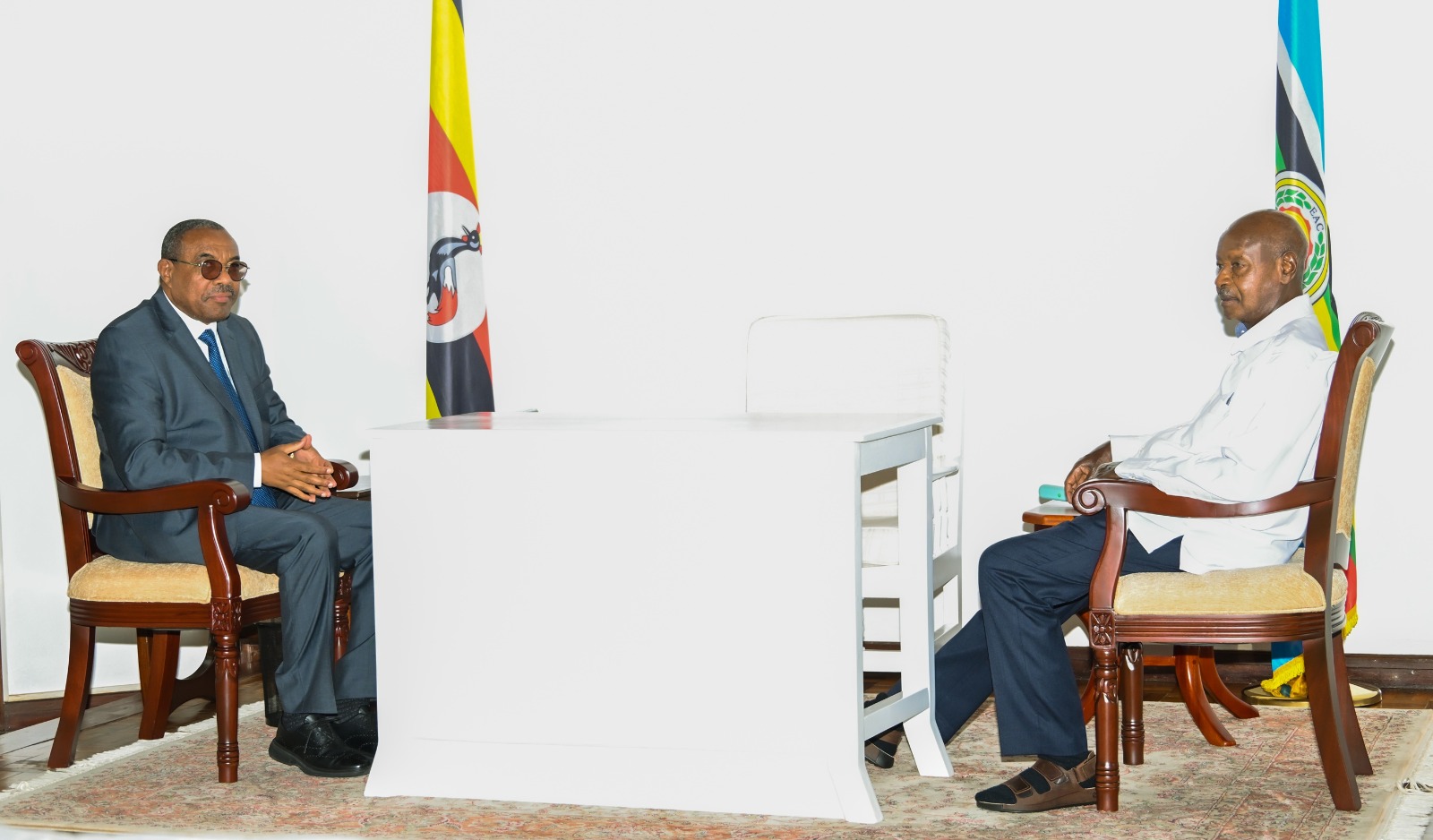
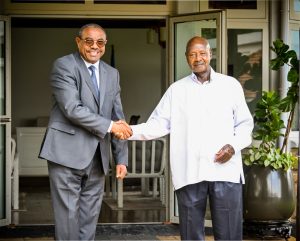
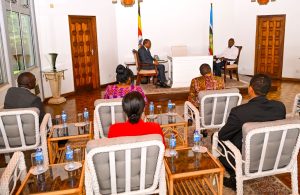
State Lodge, Nakasero – President Yoweri Kaguta Museveni has met with the former Prime Minister of Ethiopia, H.E. Hailemariam Desalegn, who now serves as Chairperson of the Board of the Alliance for a Green Revolution in Africa (AGRA), at State Lodge Nakasero, in discussions focused on strengthening Africa’s food systems and advancing agricultural transformation.
President Museveni commended AGRA for its longstanding contribution to improving agricultural productivity on the continent, particularly through science, innovation, and policy advocacy aimed at supporting smallholder farmers.
“AGRA has played an important role in strengthening food systems in Africa through science and innovation,” President Museveni said, adding that Uganda values partnerships that promote practical solutions tailored to local conditions.
He emphasised the need for context-specific agricultural approaches, noting that some traditional systems are becoming less effective due to evolving farming practices.
“Traditional communal dams are becoming less effective because farmers have moved towards zero grazing to control livestock diseases,” he observed.
President Museveni further highlighted government priorities in modernizing agriculture through water management systems.
“The government is prioritising modern water harvesting systems for irrigation and industrial use,” he said, cautioning that “chlorinated piped water may not be suitable for all agricultural purposes.”
He welcomed AGRA’s approach to agricultural transformation, noting that Africa must develop home-grown solutions rather than relying heavily on imported models.
“We must embrace modern, locally relevant farming methods instead of relying on imported European models that may not fit our conditions, especially in areas like animal feed production,” he said, also underscoring the importance of boreholes in supporting household water access and reducing pressure on communal sources.
H.E. Hailemariam Desalegn thanked the President for the engagement and reaffirmed AGRA’s commitment to transforming Africa’s agricultural sector.
“AGRA is making significant strides in sustainably improving Africa’s food systems,” he said, noting that the organisation, now marking 20 years, remains committed to advancing agricultural development across the continent.
He added that AGRA has expanded its work in Uganda since 2006, supporting research capacity building and strengthening national agricultural systems.

“Over the years, we have supported the training of scientists, including plant breeders, agronomists, and soil experts, many of whom now serve in key institutions such as the National Agricultural Research Organisation,” he said.
AGRA has also aligned its programmes with national and continental frameworks such as the Comprehensive Africa Agriculture Development Programme (CAADP), while supporting agricultural planning and climate resilience initiatives, including access to Green Climate Fund financing for smallholder farmers.
AGRA President Ms Alice Ruhweza noted that the organisation currently operates in 15 African countries and focuses on strengthening seed systems and improving farmers’ access to quality inputs.
“Our work focuses on ensuring farmers have access to high-quality seeds through a strong network of agro-dealers,” she said, adding that AGRA supports early generation seed production, certification systems, and seed tracking mechanisms to improve quality and availability.
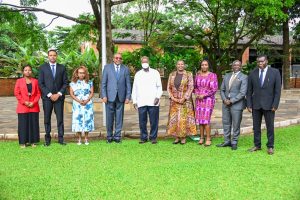
She also highlighted AGRA’s advocacy for improved fertilizer policies, describing fertilizers as essential for increasing seed productivity, as well as its efforts to promote the adoption of modern agricultural technologies across the continent.
The meeting reaffirmed shared commitments between Uganda and AGRA to accelerate agricultural transformation, improve productivity, and strengthen resilience among African farming communities.