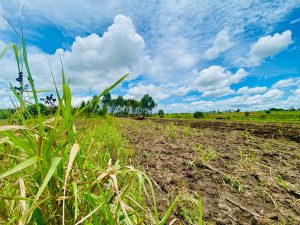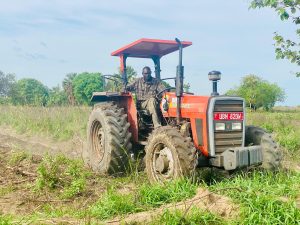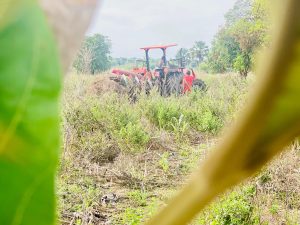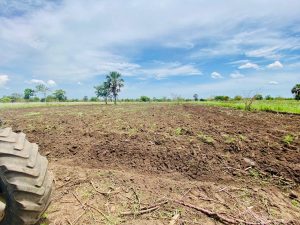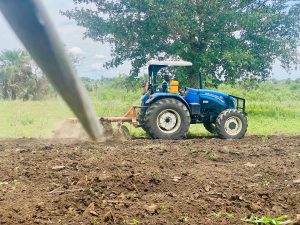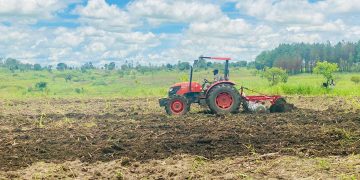



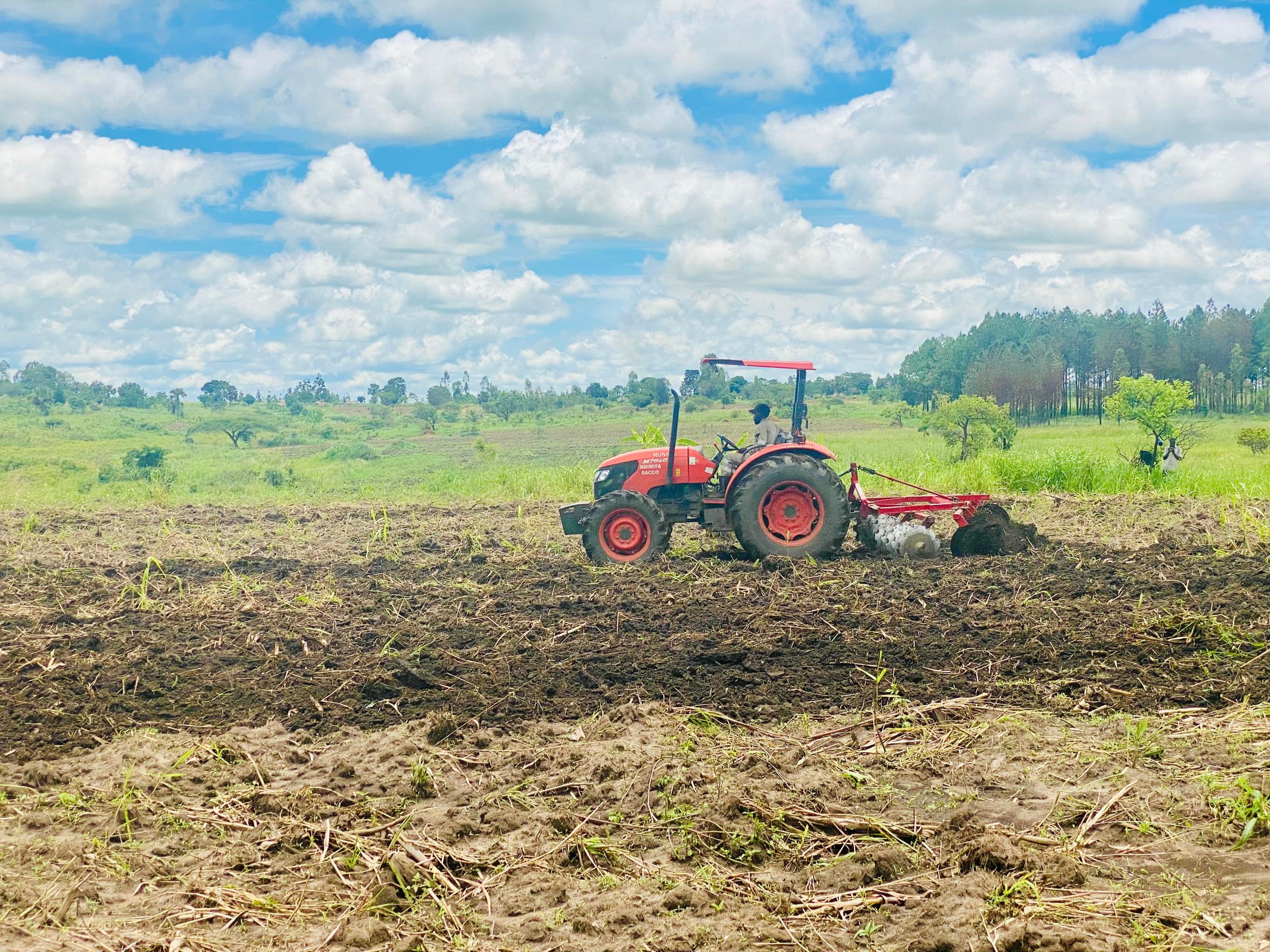
Nwoya/Adjumani — Where hand hoes and ox-ploughs once took a week to clear a single acre, tractors now do the work in forty minutes, providing a mechanical lifeline that is pulling thousands of farmers—including women, widows and war survivors—out of subsistence struggle and into a high-yield “money economy.”
Across Adjumani and Nwoya districts, the Government of Uganda, through the Microfinance Support Centre (MSC) and the Ministry of Local Government (MoLG), is accelerating this transformation.
Implemented in partnership with MoLG under the Local Economic Growth Support (LEGS) Project—and funded by the Lives and Livelihoods Fund (LLF) and the Islamic Development Bank (IsDB)—the $10.4 million initiative is designed to uplift household incomes and turn rural cooperatives into engines of commercial prosperity.
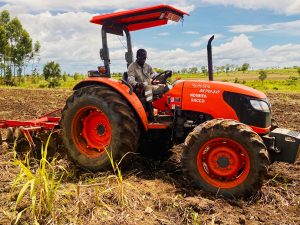
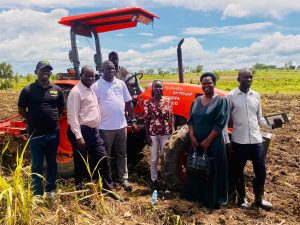
For women like 38-year-old Betty Inyaa, a refugee from South Sudan now living in Opio village, Esia Central, Adjumani district, the tractor is not just machinery—it is survival, dignity, and a pathway to rebuilding life after conflict.
“I lost my husband in South Sudan and came to Uganda. I am now taking care of five children through farming,” Inyaa says. “The tractor reduces the cost of production. I can plant maize and sell it. The tractor is a big contribution to my life.”
Her story is echoed across the region, including by her elder sister, Jane Mindraa, 40, also widowed by war and raising six children.
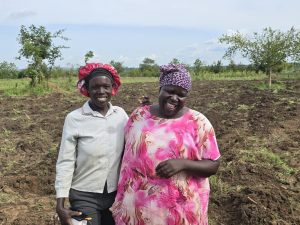
“My husband also died in the war,” Mindraa says. “Now I am farming. The tractor has helped us because we can open the land faster and plant on time. It is helping us survive.”
Under the LEGS framework, MSC and the Ministry of Local Government are driving rural industrialisation through a strategic 60/40 financing model, where the government covers the lion’s share of tractor costs to ensure farmer cooperatives access high-end machinery at a low 8% markup.
By integrating critical infrastructure with affordable, Shariah-compliant financing from the Islamic Development Bank, the MSC and Ministry of Local Government are dismantling barriers to rural wealth across 17 districts, empowering cooperatives to transition from subsistence farming to high-yield commercial enterprise.
By integrating critical infrastructure with affordable, Shariah-compliant financing from the Islamic Development Bank, the MSC and Ministry of Local Government are dismantling barriers to rural wealth across 17 districts, empowering cooperatives to transition from subsistence farming to high-yield commercial enterprise.
According to Ronald Waiswa, Zonal Manager for Arua at the Microfinance Support Centre (MSC), the intervention is already delivering measurable results. “In Adjumani, several groups have so far benefited from five tractors… This intervention has significantly improved agricultural productivity,” Waiswa said.
He added: “In addition, tractor-owning groups and SACCOs have been able to employ drivers, turn boys, and mechanics, thereby creating more jobs within the community.”
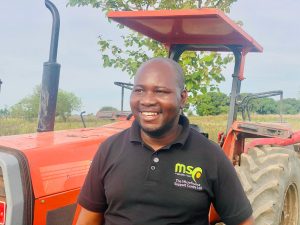
SACCO-Led Mechanisation
According to Lawrence Mangapi, Mayor of Adjumani Town and Chairperson of Adjumani Town Council SACCO, the introduction of tractors has dramatically reshaped agricultural productivity.
“This SACCO started in 2007 following a presidential directive,” Mangapi explains. “We now have about 20,199 members and a portfolio of Shs22bn.”
He adds that mechanisation has been central to their impact. “The tractor is currently ploughing land efficiently. It has reduced additional costs like harrowing. Farmers now plant immediately after ploughing.”
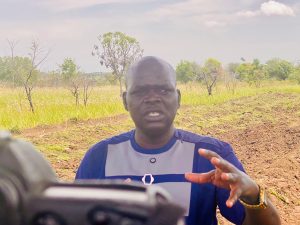
Mangapi notes that affordability remains key: “Members pay about Shs90,000 to hire the tractor compared to Shs120,000–Shs130,000 in the private sector.”
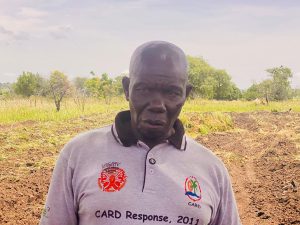
For smallholder farmers like Mzee Tateruga Masimo Obote, a resident of Opio village, Ofua Sub-County, Adjumani district, mechanisation has cut labour time drastically.
“In the past, we used hand hoes, and it took about one week to prepare one acre,” he says. “Today, with tractors, it takes about 40 minutes.” He adds, “We are very thankful to the government. The tractor service helps us plant early and pay school fees for our children.”
Women at the Centre of Agricultural Expansion
In Panyawe village, Ciforo Sub-county, farmer Monica Vuba says mechanisation has allowed her to scale up production significantly.
“I am currently cultivating about 30 acres of land,” she says. “Before MSC tractors, we used hand hoes and private tractors that were expensive. Now I can plant maize and rice on time.”
She notes the economic impact: “From my 30 acres, I can earn up to Shs100m in a good season.”
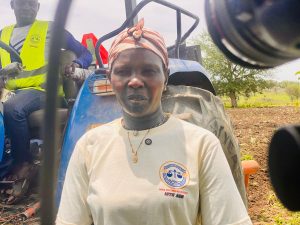
Youth Employment and Mechanisation Jobs
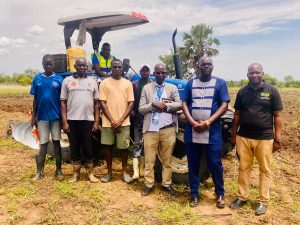
Beyond farming households, tractors have created new rural employment opportunities. Robert Enyani, a tractor operator, says the LEGS Project changed his livelihood entirely.
“I earn about Shs850,000 per month,” he says. “This job has helped me pay school fees and support my family. Before this, I was in the tricycle business, but income was not stable.”
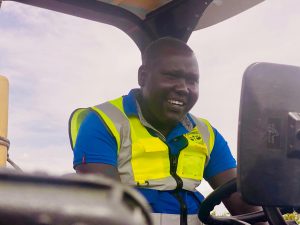
Similarly, Mwanga Charles, another operator earning about Shs650,000 monthly, says stability has improved his life. “This job has changed my life. I can plan for my family and support them better than before,” he says.
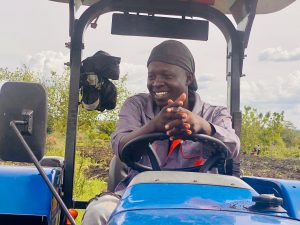
In Nwoya District, Musasizi Passy, also a tractor driver, says the demand is overwhelming. “We plough many acres in a day—sometimes up to 10 acres or more,” he notes. “I can pay school fees for my children through this work.”
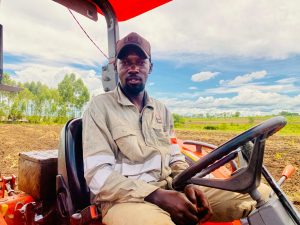
Expanding Access Through SACCO Structures
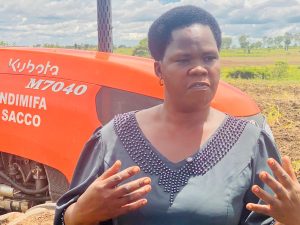
In Nwoya District, Ajok Swibic Odaki, the Chairperson of Nwoya District Mixed Farmers (NDIMIFA) SACCO, highlights how mechanisation is embedded in a wider financial inclusion strategy.
“The SACCO started in 2021 with about 650 members, 75% of them women,” she explains. “We received a tractor under the LEGS project through MSC.” She adds, “The tractor has improved productivity. Farmers are expanding from one acre to five or even ten acres.”
Odaki emphasises inclusivity: “We serve not only members but the entire community. This is about development for everyone.” Here, farmers grow rice, maize, groundnuts, millet, cassava, among other food crops.
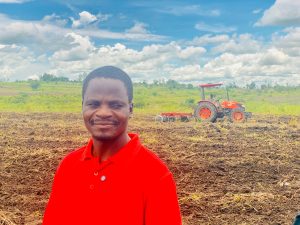
Sam Gesa, a farmer in Nyelumwonya village, Purongo Town Council, Nwoya District, describes the efficiency gains as transformative. “Before, it would take more than a week to prepare land,” he says. “Now the tractor does it in a very short time. I can plant immediately when the rains start.”
He adds that input costs have dropped: “Instead of paying Shs120,000 in labour, I spend about Shs70,000 on fuel and services.”
Food Security and Cost Reduction at Household Level
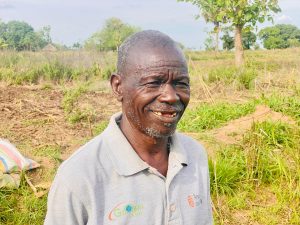
For elderly farmer Kenyi Umaru, 74, a resident of Kozeiza West, Adjumani district, mechanisation has reduced both cost and effort. “I have four acres. I will only dig one acre for now because I do not have enough money,” he says.
He adds, “Tractors are cheaper and faster than hand hoes or ox ploughs. With tractors, land that took weeks is now done in hours. I will plant maize and cassava.”
Across districts, farmers and SACCO leaders consistently credit the LEGS project for strengthening rural finance, agricultural productivity, and value chains through SACCOs and farmer groups. For women, especially widows managing households alone, tractors have become more than tools—they are lifelines.
The impact is not only being felt at household level, but across the wider rural economy. “With increased production, farmers are now harvesting more and producing for the market… some have ventured into value addition,” Waiswa noted.