
• Latest
Makerere Historian William Musamba Unpacks Colonial Roots of Identity Crisis in Busoga

Makerere Historian William Musamba Unpacks Colonial Roots of Identity Crisis in Busoga

11 months ago
AfDB Approves €155.99m for Arua International Airport Upgrade

AfDB Approves €155.99m for Arua International Airport Upgrade

8 hours ago
FUFA, MTN Launch National Campaign to Let Fans Design Next Uganda Cranes Jersey

FUFA, MTN Launch National Campaign to Let Fans Design Next Uganda Cranes Jersey

10 hours ago
‘Growth, Transformation, Impact’: Dr Fabian Kasi Reflects on His 16-Year Centenary Bank Journey

Succession is About Systems, Not Individuals – Dr Fabian Kasi

10 hours ago
The R in Public Relations is a Card You Can Play to Win

The R in Public Relations is a Card You Can Play to Win

10 hours ago
24 Boys Step into the Shoes of Absa Senior Executives for a Day

24 Boys Step into the Shoes of Absa Senior Executives for a Day

14 hours ago
UNICEF Unveils ‘My Green Action’ Initiative to Accelerate Youth-Led Climate Action in Uganda

UNICEF Unveils ‘My Green Action’ Initiative to Accelerate Youth-Led Climate Action in Uganda

15 hours ago
SoftPower News
Friday, June 19, 2026
  • News
  • Tourism & Travel
  • Business
  • Lifestyle
    • Fashion
  • Regional
    • Kenya
    • Rwanda
    • Tanzania
    • Burundi
    • South Sudan
    • DR Congo
  • Defence & Security
  • Sport
  • Entertainment
  • More
    • Agriculture
    • Africa
    • Columnists
    • Education
    • Health
      • COVID-19
    • International News
    • News in Pictures
    • OpEd
    • Pearl Of Africa
    • People
    • Politics
    • Special Reports
    • Women
No Result
View All Result
  • News
  • Tourism & Travel
  • Business
  • Lifestyle
    • Fashion
  • Regional
    • Kenya
    • Rwanda
    • Tanzania
    • Burundi
    • South Sudan
    • DR Congo
  • Defence & Security
  • Sport
  • Entertainment
  • More
    • Agriculture
    • Africa
    • Columnists
    • Education
    • Health
      • COVID-19
    • International News
    • News in Pictures
    • OpEd
    • Pearl Of Africa
    • People
    • Politics
    • Special Reports
    • Women
No Result
View All Result
SoftPower News
No Result
View All Result
Home Featured

Makerere Historian William Musamba Unpacks Colonial Roots of Identity Crisis in Busoga

by Rogers Atukunda
August 7, 2025
Makerere Historian William Musamba Unpacks Colonial Roots of Identity Crisis in Busoga
78
VIEWS

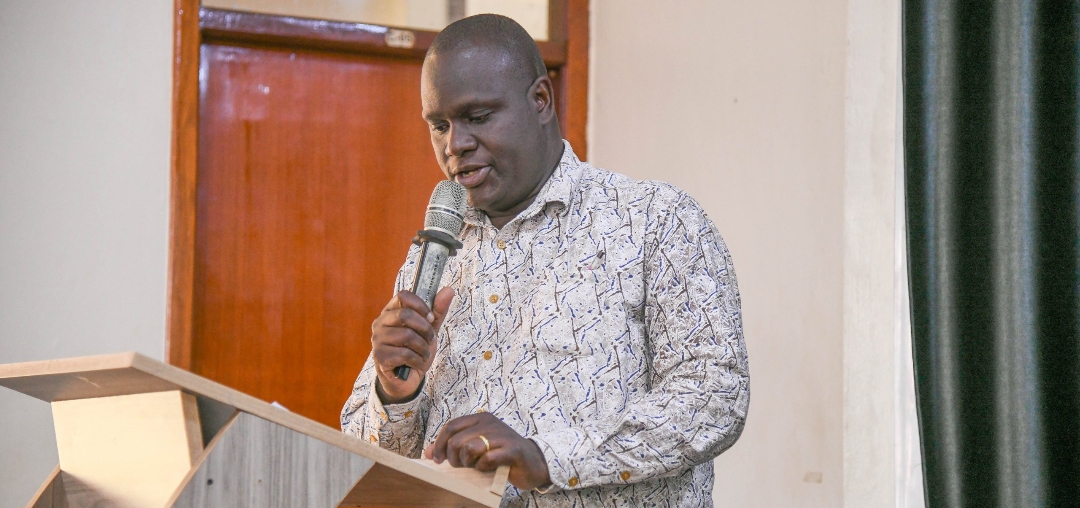
Makerere University researcher and historian in the Department of History, William Musamba, has offered new insights into the historical tensions that continue to shape Busoga’s political identity and governance struggles.

His research titled “Rejected Homeland: Conflict and the Politics of Identity in Busoga, Uganda (1919–1960)” was presented as part of Makerere University’s PhD Completion Grant Initiative (2021–2025), led by the Directorate of Graduate Training. Now in its fourth year, the programme has supported 65 doctoral students to finalise and showcase their work, contributing to national development priorities through applied, locally relevant research.

Related Stories

AfDB Approves €155.99m for Arua International Airport Upgrade

FUFA, MTN Launch National Campaign to Let Fans Design Next Uganda Cranes Jersey

Succession is About Systems, Not Individuals – Dr Fabian Kasi

Speaking at the PhD Completion Grant Research Dissemination Workshop held at the School of Food Science, Conference Hall, Musamba shed light on how British colonial policies fostered deep political fragmentation in Busoga—once a strategic and economic hub in eastern Uganda, famously home to the source of the Nile.

“Despite its geographic centrality, Busoga has long been politically and culturally marginalized,” Musamba noted in the opening of the presentation. “My research asks why the region has struggled to maintain a coherent identity and political unity for over a century.”

Through a combination of archival research, colonial-era correspondence, and oral histories, Musamba traced the roots of division to early colonial strategies that imposed artificial ethnic categories and leadership structures.

One major source of contention was the creation of the Kyabazinga, a paramount chief, by British administrators—a position that lacked legitimacy among several clans in the region.

“Traditional authority in Busoga was plural and decentralized,” Musamba explained. “By imposing a centralized system of leadership, colonial rule disrupted the organic evolution of political institutions and deepened internal divisions.”

The study also highlights how rival Abataka (clan-based) associations in the 1920s and beyond clashed over who held the legitimate claim to represent Busoga. These groups often labeled each other “foreigners,” fueling identity-based conflict that persisted long after independence.

Musamba pointed to the 1963 Validation Act—which formally recognized the Kyabazinga institution—as a post-independence attempt to consolidate authority. However, he argued that the Act only reinforced existing divisions, turning what was intended to be a symbol of unity into a source of political alienation.

“The colonial and postcolonial state both failed to address the plural realities of Busoga’s internal politics,” he said.

The presentation drew attention not only to historical grievances but also to their modern-day implications. Musamba urged policymakers and scholars to consider how colonial legacies continue to shape regional governance and ethnic relations in Uganda.

“Understanding Busoga’s story is crucial for building more inclusive and legitimate governance structures,” he said. “This case offers valuable lessons for other multi-ethnic regions struggling with similar legacies.”

Musamba’s work forms part of a growing body of scholarship on postcolonial state formation and the contested role of traditional authority in East Africa. His published research includes articles in the African Humanities Texts and the Socio-Economic Studies Journal, as well as a widely read academic blog on historical research in Uganda.

The presentation ended with a call for deeper engagement with historical narratives in shaping modern policy. “We must learn from the past if we want to build a more equitable future,” Musamba concluded.

Tags: Busoga KingdomColonialismKyabazingaMakerere UniversitySoft PowerSoftPowerSoftPower NewsTop Uganda NewsUgandaWilliam Musamba

Recent Stories

AfDB Approves €155.99m for Arua International Airport Upgrade

FUFA, MTN Launch National Campaign to Let Fans Design Next Uganda Cranes Jersey

Succession is About Systems, Not Individuals – Dr Fabian Kasi

The R in Public Relations is a Card You Can Play to Win

24 Boys Step into the Shoes of Absa Senior Executives for a Day

UNICEF Unveils ‘My Green Action’ Initiative to Accelerate Youth-Led Climate Action in Uganda

SoftPower News Logo

SoftPower News is a subsidiary of SoftPower Communications LLC, a Ugandan digital media group. Keep posted of the latest from Uganda and East Africa.
Plot 4B Malcolm X, Kololo
P.O Box 1497, Kampala - Uganda
Tel: +256-392-001-701
Email: info@softpower.ug

This news site is licenced by Uganda Communications Commission (UCC)

ADVERTISEMENT
  • News
  • Tourism & Travel
  • Business
  • Lifestyle
  • Regional
  • Defence & Security
  • Sport
  • Entertainment
  • More

© SoftPower News

Welcome Back!

Login to your account below

Forgotten Password?

Retrieve your password

Please enter your username or email address to reset your password.

Log In

Add New Playlist

error: Content is protected
No Result
View All Result
  • News
  • Tourism & Travel
  • Business
  • Lifestyle
    • Fashion
  • Regional
    • Kenya
    • Rwanda
    • Tanzania
    • Burundi
    • South Sudan
    • DR Congo
  • Defence & Security
  • Sport
  • Entertainment
  • More
    • Agriculture
    • Africa
    • Columnists
    • Education
    • Health
      • COVID-19
    • International News
    • News in Pictures
    • OpEd
    • Pearl Of Africa
    • People
    • Politics
    • Special Reports
    • Women

© SoftPower News

Are you sure want to unlock this post?
Unlock left : 0
Are you sure want to cancel subscription?