


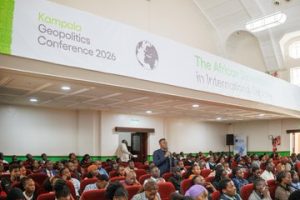
KAMPALA — Africa must own its own narrative to navigate a rapidly shifting global power landscape, Acting Makerere University Vice Chancellor Professor Sarah Ssali declared during the 9th Edition of the Kampala Geopolitics Conference (KGC) held in the Main Hall (Ivory Tower), where she urged the continent to abandon its role as a passive observer.
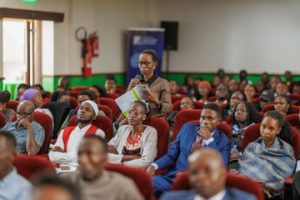
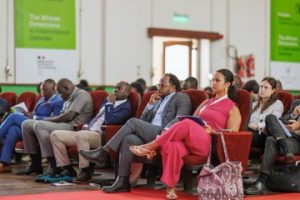
Held under the theme “African Dimensions in International Debates,” the two-day conference brought together diplomats, academics, policymakers, and students to examine Africa’s place in a rapidly shifting global order.
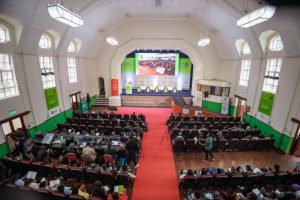
The strongest thread running through all speeches was a shared concern over global power realignments and the urgency for Africa to redefine its role amid declining aid, geopolitical instability, and evolving international partnerships.
Africa Must Tell Its Own Story
Opening the conference, Prof. Ssali, represented by University Secretary Yusuf Kiranda, said Africa’s voice must be central in shaping global knowledge systems. “Until the lions have their own historians, the history of the hunt will always glorify the hunter,” she said, quoting Nigerian writer, the late Chinua Achebe. “This conference is our commitment to telling Africa’s story on Africa’s terms.”
She warned that global geopolitical shifts are no longer abstract academic issues. “What happens in Washington, Brussels, Beijing, Paris, London, or Riyadh does not stay there. It arrives at our doorstep. It shapes our policies. Indeed, it determines the opportunities available to the next generation of Ugandans and Africans,” she said.
Prof. Ssali also called for a permanent institutional framework for the conference. “The time has come to establish a dedicated secretariat for the Kampala Geopolitics Conference,” she said. “Africa’s voice in international debates must be matched by structured institutional rigour.”
Uganda Is Now Interlinked, Not Landlocked
French Ambassador to Uganda H.E. Virginie Leroy said Africa is navigating a complex mix of opportunity and instability, urging a shift toward more resilient partnerships.
“Uganda stands at the heart of East Africa. A strategic force in the Great Lakes region, rich in resources, talent, and opportunity,” she said. “As it navigates economic transformation, regional dynamics, and a rapidly growing youthful population, the path forward is one of resilience, innovation, and bold ambition.”
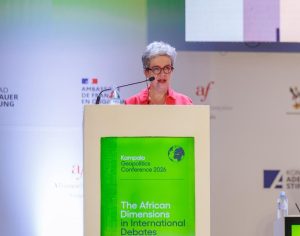
She added: “This moment calls not only for observation, but for deeper analysis, open debate, and collective action toward concrete and forward-looking solutions.”
Leroy stressed that global aid systems are under strain. “We must move beyond short-term responses, strengthen regional approaches, promote sustainable financing, and build partnerships that are more balanced, more resilient, and better aligned to African realities and aspirations,” she said.
In a striking observation on Uganda’s evolving geopolitical identity, she added: “Uganda is now more focused on being an interlinked country as opposed to a landlocked country.”
We Are Living Through a Time of Transition
Anna Reismann, Country Director of Konrad-Adenauer-Stiftung (KAS) Uganda and South Sudan, said global institutions are undergoing deep structural stress, driven by internal and external pressures. “We are certainly living through times of transition,” she said. “Challenges to our institutions and to long-standing alliances are evident.”
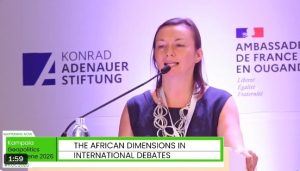
She added that some institutions are being questioned for their effectiveness. “These challenges come from outside, but also and especially from within,” she said. “They are informed by new security priorities and the recognition that some institutions have become inefficient or incapable of fulfilling their functions.”
However, she also pointed to an opportunity within disruption. “All the proposed topics reflect a deliberate effort… to explore the possibilities these changes open up for new approaches, for reimagining the world we live in,” she said.
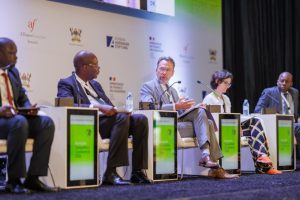
Loïc Boivin, the Director of Alliance Française Kampala, emphasised the cultural and linguistic dimension of geopolitics, linking Africa’s global voice to identity and communication. “French connects over 400 million people and continues to thrive as a widely used language across Africa,” Boivin said.
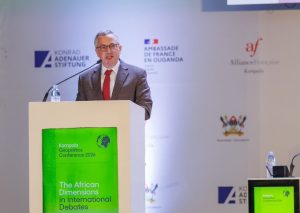
He highlighted the role of cultural institutions in shaping global dialogue, noting that Alliance Française is part of a global network of over 800 centres promoting language, culture, and exchange. “Africa’s participation in international debates is not only political and economic, but also cultural.”
Aid Models Must Be Rethought
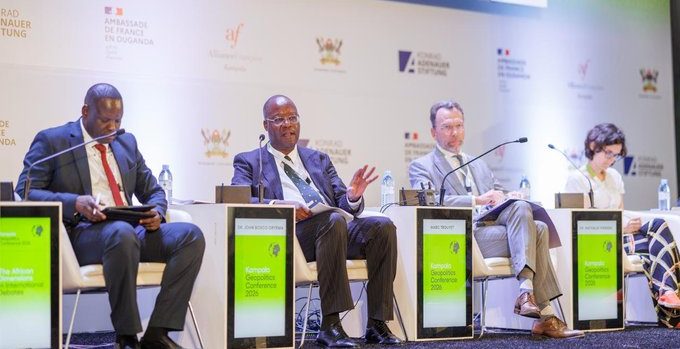
Leonard Zulu, United Nations Resident Coordinator in Uganda, said declining external assistance should push countries toward domestic resource mobilisation.
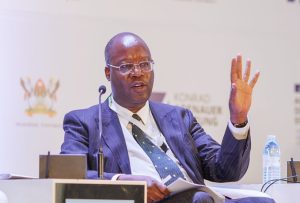
“A lot of overseas development assistance is being cut, but there are resources domestically and partnerships that we can take advantage of,” he said. He added: “The SDGs provide the UN with a roadmap for working to achieve Africa’s development agenda.”
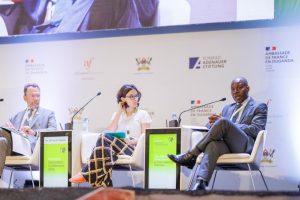
Mark Trouyet, Country Director of the French Development Agency (AFD) in Uganda, said the distinction between aid and investment is narrowing. “Shifting from development assistance to mutually beneficial partnerships is key for Africa’s future development agenda,” he said. “Private investors are looking to invest in good projects—but are these fundable projects available?”
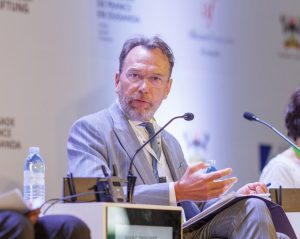
Dr Nathalie Ferrière, Associate Professor of Economics at Sciences Po Aix, cautioned that evidence on alternative financing models remains incomplete. “We still haven’t proven if partnerships are better than the traditional form of development assistance,” she said. “Academic data is still lacking in this field.”
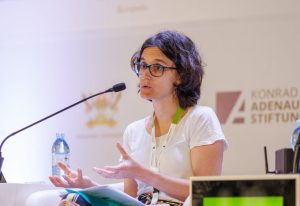
Dr Asumani Guloba, Director of Development Planning at the National Planning Authority in Uganda, however, emphasised the role of domestic capital. “There is a grey area we haven’t been touching,” he said. “We need what we call patient capital. We need to tap into pension funds.”
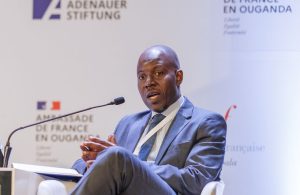
Across the opening session, the dominant question was not whether Africa needs development financing—but what form it should take in a world where traditional aid is shrinking, and geopolitical competition is rising.