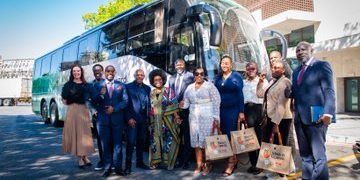



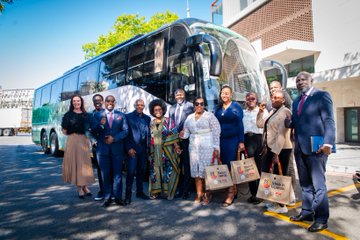
Cape Town — Uganda’s homegrown automotive manufacturer, Kiira Motors Corporation, has crowned a landmark Pan-African electric mobility journey after its Kayoola E-Coach completed a 7,125-kilometre expedition from Kampala to Cape Town, underscoring Africa’s growing capacity for industrial innovation and cross-border trade.
The expedition, dubbed “From the Pearl to the Cape,” culminated in Cape Town, South Africa, where Uganda’s Minister of Science, Technology and Innovation, Hon. Dr Monica Musenero Masanza, hailed the journey as a bold statement of Africa’s readiness to build a sustainable, integrated continental economy driven by science, technology and innovation.
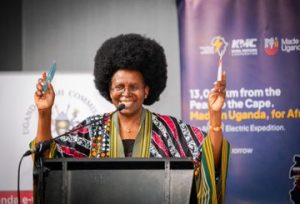
“This is proof in motion,” Kiira Motors said in a statement, noting that the journey validated Ugandan engineering, demonstrated commercial viability and showcased the future of integrated digital and mobility systems along Africa’s trade corridors.
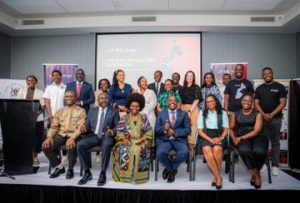
The Kayoola E-Coach’s arrival was celebrated by government officials, diplomats, private sector leaders and strategic partners, marking what Kiira Motors described as a defining commercial and industrial milestone. The expedition also symbolised the success of African collaboration, resilience and ambition in advancing clean mobility solutions.

A highlight of the Cape Town events was the Kayoola E-Coach’s symbolic ascent toward Table Mountain following a crown event, an image that Kiira Motors said represented “African engineering, continental ambition and boundless possibilities.”
The African Electric Expedition was supported by the Science, Technology and Innovation Secretariat (STI-Secretariat), whose partners from government, the private sector and development institutions joined the journey and subsequent stakeholder engagements in South Africa. According to the Secretariat, the expedition has been as much about trade and partnerships as it has been about technology.

“Our grand entry into Cape Town is a historic statement,” the STI-Secretariat said. “Africa’s time to unite is now—economically, technologically and sustainably.”
Beyond mobility, the expedition also served as a platform to promote African products and enterprise. Brian Mulondo, the Head of Local Content at the MultiChoice Group, noted that Uganda presented a portfolio of more than 3,000 locally made products during engagements along the route, ranging from natural foods, coffee, and dried fruits to cosmetics, crafts, and organic goods.
Kiira Motors announced that the journey yielded tangible commercial outcomes. During engagements in Southern Africa, the company secured commitments for the sale of 450 electric buses in Johannesburg, reinforcing confidence in African-manufactured electric vehicles.
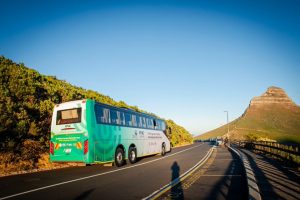
“Today, in Cape Town, we deliver the ‘proof in motion. 7,125KM conquered, 450 buses sold in Johannesburg, 0.84 kWh/km efficiency validated. The expedition has redrawn the map of African industry.”
Performance data from the expedition showed an energy efficiency of approximately 0.84 kWh per kilometre, further strengthening the business case for electric public transport on the continent.
Technical data released by the STI-Secretariat indicates that as of December 9, 2025—Day 20 of the expedition—the team had covered 7,125 kilometres of the planned 13,922-kilometre route. Energy consumption stood at 5,891.12 kWh, with an estimated 2,707.5 litres of fuel substituted and approximately 3,240 kilograms of carbon dioxide emissions avoided.
The expedition began with a “declaration of intent” launched on November 20, followed by what Kiira Motors described as the delivery of “proof in motion” upon arrival in Cape Town. For the 50-member expedition crew, the journey demonstrated the durability of African engineering across diverse terrain, climates and regulatory environments.