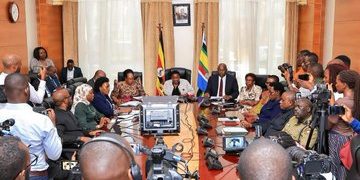



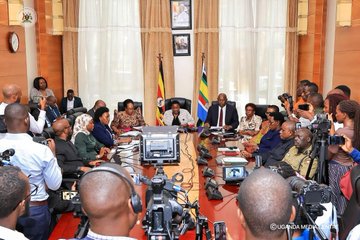
KAMPALA — The Government of Uganda has officially launched the National Cleaning Days (NCDs) Programme, introducing a mandatory monthly three-hour nationwide sanitation exercise aimed at improving public hygiene, reducing disease risks and promoting community responsibility for environmental cleanliness.
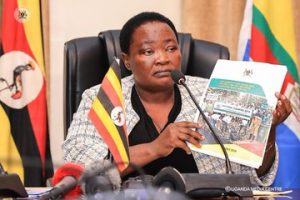
The programme was unveiled by Prime Minister Robinah Nabbanja, who announced that National Cleaning Days will be observed on the last Saturday of every month, with all members of the public expected to participate in cleaning their communities.
The cleaning exercise will run from 7:00 a.m. to 10:00 a.m., during which all non-essential businesses will be required to close, and unnecessary movement of people and vehicles will be restricted.
“For three hours, let Uganda stop and clean. During this time, all businesses shall remain closed,” Prime Minister Nabbanja said.
The first National Cleaning Day will be launched on Saturday, July 25, 2026, at Kiti Zone, Kisenyi III Parish in Kampala Central Division, by Vice President Jessica Alupo, representing President Yoweri Kaguta Museveni.
The Ministry of Health will serve as the technical lead for the programme, while the Office of the Prime Minister will coordinate implementation.
Tackling sanitation-related diseases
The government said the initiative is a response to persistent sanitation challenges that continue to contribute to preventable diseases across the country.
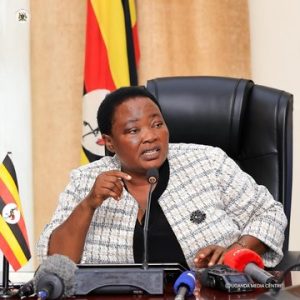
According to Prime Minister Nabbanja, a significant proportion of Uganda’s disease burden is linked to poor sanitation and environmental management.
She said about 75 percent of diseases, including malaria, diarrhoeal illnesses and typhoid, can be prevented through improved hygiene, waste management and environmental protection.
The Prime Minister also highlighted challenges in urban waste management, particularly in Kampala, where she said the city generates between 2,000 and 2,500 tonnes of solid waste every day, but only about 50 to 60 percent is safely collected and disposed of.
She said uncollected waste often blocks drainage channels, pollutes communities and increases public health risks.
Nabbanja further noted that poor sanitation has serious consequences for children, with approximately 33 children dying daily in Uganda from conditions associated with unsafe water, poor hygiene and inadequate sanitation.
Businesses, transport restrictions
Under the new guidelines, all commercial activities will pause during the three-hour cleaning period, except essential services.
Exempted services include medical emergencies, ambulances, fire and rescue services, security operations and other critical functions.
The government said the restriction is intended to allow communities to participate fully in cleaning activities without disruption.
The Ministry of Internal Affairs, Uganda Police Force and other security agencies have been tasked with enforcing compliance with the directive.
Individuals and businesses that fail to participate, create public nuisances, engage in illegal dumping or obstruct public health officers may face action under existing laws, including the Public Health Act, Local Governments Act, National Environment Act and relevant municipal bylaws.
Government roles in implementation
The National Cleaning Days initiative was approved by Cabinet under Minute No. 246 (CT 2025) in August 2025 and will operate under the theme: “A Clean Uganda is Everybody’s Responsibility.”
The programme will involve multiple government institutions with defined responsibilities.
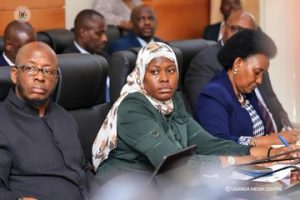
President Yoweri Kaguta Museveni is the overall champion of the initiative, while the Office of the Prime Minister (OPM) will provide policy oversight and coordination.
Political mobilisation will be led through the Office of the President, with support from Resident District Commissioners (RDCs) and local government leaders from LC I to LC V levels.
The Ministry of Health will provide technical guidance, while the Ministry of ICT and National Guidance will lead public awareness and communication.
The Ministry of Local Government, together with local government structures, will oversee waste management operations, community mobilisation and enforcement of sanitation bylaws.
Government calls for cultural change
Prime Minister Nabbanja urged citizens, religious leaders, cultural institutions and private sector players to make cleanliness a routine responsibility beyond the monthly exercises.
She said the programme is intended to create a long-term culture of responsible waste management and environmental protection.
The government maintains that improved sanitation requires collective action from households, businesses, communities and public institutions.
The first National Cleaning Day will therefore serve as a test of public participation and enforcement as Uganda begins implementing the monthly nationwide sanitation campaign.