




Ugandan manufacturers and innovators have urged the government to address high production costs, improve access to markets and strengthen support for local enterprises to reduce dependence on imported products.
They say local businesses can create jobs, supply domestic markets and generate export earnings but struggle to expand because of limited financing, expensive production inputs, inadequate infrastructure and difficulties reaching customers.
The concerns were raised during the STI-Supported Incubation and Accelerator Cohorts Demo Day at Fairway Hotel in Kampala on Friday, where entrepreneurs supported by the Ministry of Science, Technology and Innovation showcased locally developed products and shared their experiences.
Joel Bamwise, Programme Director of the STI Investor and Market Readiness Programme, said the initiative was established to help young enterprises overcome business development challenges and attract investment.
He said many innovators had the technical ability to develop products but lacked the financial, legal, marketing and management skills needed to build sustainable businesses.

“We discovered that many businesses still need hand-holding and support. We therefore developed a programme to provide them with marketing support, legal assistance, accounting and financial management guidance, best practices, and networking opportunities,” Bamwise said.
The programme, which began in 2023, supported eight enterprises in its first cohort and plans to take on close to 11 more in the next cohort.
Bamwise said it does not provide direct seed capital but prepares businesses to attract grants, equity investment and other forms of financing.
The programme also works with the Uganda National Bureau of Standards (UNBS) and the National Drug Authority (NDA) to help enterprises meet certification requirements. Bamwise said Pombe Guard had received NDA certification, while Sesaco’s Bakers’ Soy Flour had been certified by UNBS. Ugabrush was still pursuing certification.
Moses Byaruhanga, founder and Venture Lead of Made in Uganda, said the platform was addressing one of the biggest obstacles facing local manufacturers: access to consumers.

“One of the biggest challenges facing Made in Uganda products is, I think, a cultural problem. There is a perception that Ugandan products are inferior. That is not the case,” he said.
Byaruhanga said the platform provides shared marketing, packaging, logistics and distribution support, allowing manufacturers to concentrate on production.
It has worked with more than 500 manufacturers over the past one and a half years and assembled a portfolio of more than 4,000 Ugandan products.
He identified coffee, avocado oil, matooke flour and gluten-free cake mixes as products with export potential. The platform is targeting markets in the Gulf Cooperation Council region and China.
Participation in the Gulfood exhibition in Dubai generated a pipeline of business opportunities worth between US$5 million and US$8 million, although the deals were still awaiting fulfilment, he said.
The challenges facing manufacturers were illustrated by Xunda Tech Limited, which produces 3D printers, printing filament and offers 3D printing services.
Its team lead, Engineer Ntege Gonzaga, said the company began making its own machines after finding imported printers expensive and sometimes unreliable.
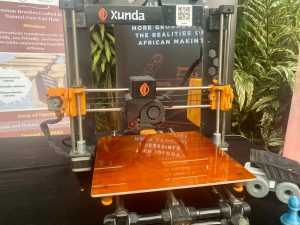
“We initially considered sourcing 3D printers, but they were very expensive. Even the relatively cheap ones from China were not very reliable; some would break down within a month or two,” Gonzaga said.
The company cuts metal, prints plastic components and sources some motors locally, while importing electronic and other small components.
A printer costs about Shs2.5 million when bought directly from the company, compared with an estimated Shs4.5 million for a similar imported machine after transportation, taxes and other costs.
Gonzaga said its customers included universities and secondary schools, and that it had sold 100 machines to the Engineering Development and Innovation Centre in Mbarara. However, access to affordable components, skilled workers and a wider market remained challenges.
Enoch Nsubuga of Sesaco said support from the STI programme helped the soybean-processing company develop Bakers’ Soy Flour, which is used in products such as mandazi, bread, chapati, samosas, cakes and scones.
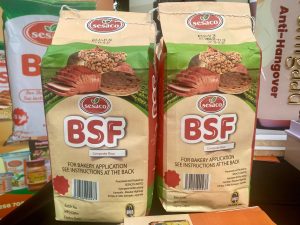
He said the flour improves yield, shelf life and nutritional value.
“Like any other innovator or person trying to develop a new product, our first challenge was funding. You may have an idea or a product, but you need money to develop it, take it to the market and sustain it,” Nsubuga said.
A grant under the programme helped the company develop the product and finance marketing campaigns across Uganda. Sesaco’s bakery customers increased from about eight to approximately 20 within one year, alongside chapati makers, he said.
Ronnie Kalyango, Chief Executive Officer of Hubs4U Limited, said the programme helped him formalise the business behind Pombe Guard, a plant-based product marketed as an anti-hangover supplement.

“Most innovators can invent something, but we may not necessarily know how to turn that invention into a business. That is why you find many innovations and projects that are developed but eventually remain just projects,” he said.
Kalyango said the product was available through Made in Uganda and online, with plans to expand distribution to pharmacies and wellness centres. He said the company’s factory in Namanve had a stated production capacity of 50,000 pieces daily.
Enoch Muwanguzi, an agricultural engineer and founder of Ugabrush, said his business makes handmade shoe and hair brushes using cow-tail hair and wood, offering an alternative to imported products.

The company, which operates under Deploy Resource Africa Ltd, began in 2019, with mass production starting in 2020. Muwanguzi said STI support after the Covid-19 pandemic helped the business recover.
“Actually, demand for our brushes is higher than our supply,” he said.
He said limited production capacity, raw material availability and unreliable electricity were constraining expansion. Generators were expensive to run, while solar power required substantial initial investment.
The company hopes to acquire machinery to increase production and is exploring regional opportunities, including possible collaboration in Botswana and exports to Kenya, subject to obtaining the required certification.
The entrepreneurs said local manufacturing could reduce reliance on imports and create employment, but argued that innovation support must be matched with financing, certification, production capacity and reliable access to markets.