




The Uganda Free Zones and Export Promotions Authority (UFZEPA) this week convened a specialised training on Environmental Management Standards aimed at strengthening the capacity of Free Zone developers and operators to comply with Uganda’s environmental regulations.
The training was held on 9 December 2025 at the Speke Hotel in Kampala and was facilitated by senior technical experts from the National Environment Management Authority (NEMA).
The engagement brought together Free Zone developers and operators to address practical challenges related to environmental compliance, particularly the use of NEMA’s online Environmental and Social Impact Assessment (ESIA) licensing portal. While NEMA has digitised the licensing process, several participants raised concerns about limited visibility on the status of their applications once submitted.
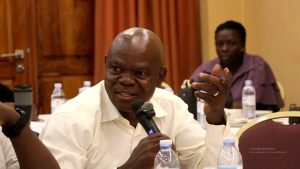
Sharing his experience, Stephen Mutyaba of Mahathi Infra Uganda Ltd noted that although applications can be lodged online, developers often struggle to track progress.
“We applied for a licence online, but from the developer’s end, all you can see is that the application is active. You cannot see the detailed status,” Mutyaba said. “For our lakeshore permit application, we have only been told that it has been on the Executive Director’s desk for three months now.”
Speaking on behalf of UFZEPA, Ms Rebecca Nalumu, Senior Manager for Special Economic Zones Operations and Compliance, reaffirmed the Authority’s commitment to ensuring that all Free Zone developments fully align with national environmental laws and international best practices.
She emphasised that environmental compliance goes beyond meeting legal requirements and is a strategic foundation for building competitive, sustainable Free Zones.
“Environmental compliance is not only a statutory obligation; it is also a key pillar for attracting quality investment and supporting Uganda’s export-led growth agenda,” Nalumu said.
Representing NEMA, Ms Anita Ainomugisha, Senior Environment Compliance Officer, provided detailed guidance on Uganda’s environmental regulatory framework, with particular focus on the process and requirements for acquiring an Environmental and Social Impact Assessment (ESIA) Certificate.

She underscored the importance of early engagement with environmental regulators, continuous compliance monitoring, and adherence to established standards to ensure responsible and sustainable industrial development within Free Zones.
The training also equipped participants with a clearer understanding of their obligations under the Free Zones (Amendment) Act, 2024, while highlighting best practices for mitigating environmental risks and promoting sustainability. Emphasis was placed on ensuring that Free Zone operations contribute positively to both economic growth and environmental protection.
UFZEPA commended participants for their active engagement and reiterated its commitment to promoting environmentally sound practices across all Free Zones. The Authority stressed that close collaboration between UFZEPA, NEMA and the private sector is critical to building a resilient, sustainable and export-driven economy.
As of June 2025, a total of 43 private Free Zones had been licensed, reflecting growing investor confidence in Uganda’s Free Zones regime. Of these, six firms were licensed in FY 2023/24, namely Image Coffee Ltd., GOCTA Workwear (U) Ltd., Yako (U) Ltd., Kasanda Sugar (U) Ltd., Inspire Africa Establishments Ltd., and Master Grain Milling (U) Limited.