



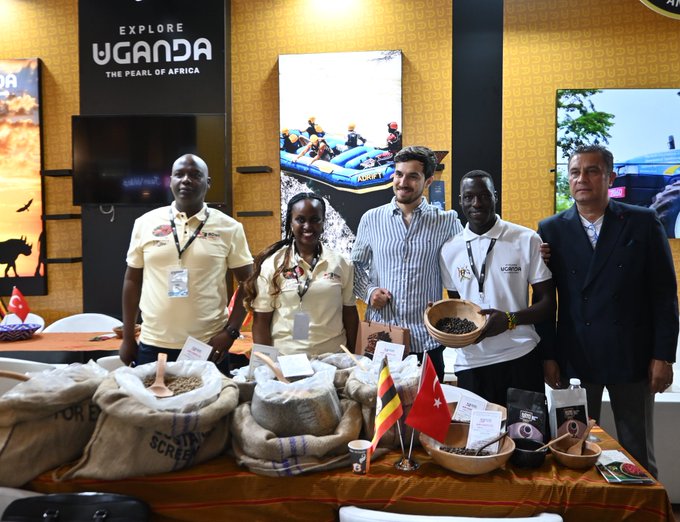
Kampala — Ugandan coffee farmers are monitoring the markets closely this week following a slight decline in both Robusta and Arabica prices, according to the latest Daily Coffee Market Analysis released by the Ministry of Agriculture, Animal Industry and Fisheries (MAAIF).
The Ministry, through its Department of Coffee Development, works with partner institutions and market-based companies to provide timely information to coffee value chain stakeholders.
As of Wednesday, March 11, 2026, farm-gate prices in Uganda were reported as follows: Arabica Parchment: Shs 14,500 – 15,500 per kilogram, Drugar (Clean Arabica): Shs 14,000 – 15,000 per kilogram, FAQ (Fair Average Quality) Robusta: Shs 12,000 – 12,500 per kilogram and Kiboko (Grade Robusta): Shs 6,000 – 6,500 per kilogram.
Global Factors Affecting Local Prices
MAAIF noted that international dynamics are influencing local rates. In London, Robusta futures dropped due to rising certified coffee inventories. Analysts point out that while low inventory usually pushes prices higher, the recent stock recovery has created downward pressure. Local farmers can still expect competitive rates for FAQ Robusta at Shs 12,000 – 12,500 and Kiboko at Shs 6,000 – 6,500 per kilogram.
Arabica prices were also affected by weather abroad. “Significant rainfall in Brazil’s Minas Gerais region, totaling 35% of the historical average, has eased some crop stress but caused a temporary dip in futures markets,” the report states.
Ugandan Arabica farmers, particularly in Bugisu, can expect Arabica Parchment prices of Shs 14,500 – 15,500 and Drugar at Shs 14,000 – 15,000 per kilogram.
Local Market Outlook
MAAIF highlighted that the stable exchange rate, with the US Dollar trading at around Shs 3,669, is helping buffer exporters from global volatility. Early-week registered sales also indicate steady demand for high-quality Ugandan beans, with over 6,800 bags of Screen 15 Robusta sold at a top price of 194.87 US cents per pound.
The Ministry advises farmers to focus on quality processing, including proper drying and grading, to maximise returns despite global market fluctuations. “Attention to grading and handling can ensure farmers capture the highest possible Screen grade prices,” the Ministry emphasised.
Uganda remains one of the world’s top coffee producers, and stakeholders say maintaining quality will continue to be the key to sustaining competitiveness in the international market.