


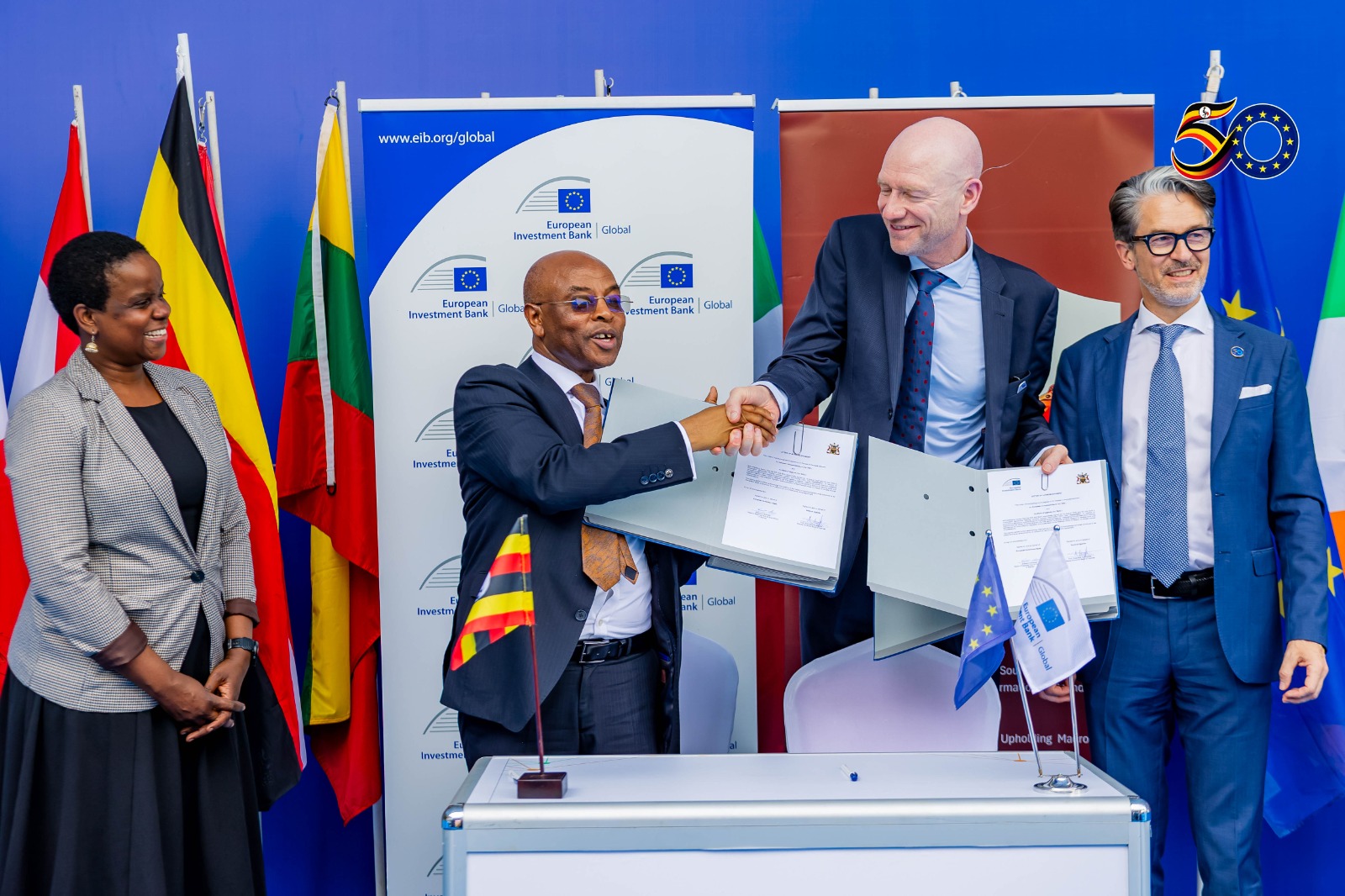
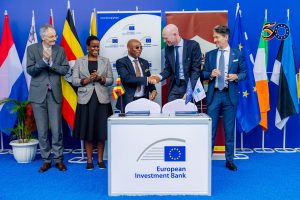
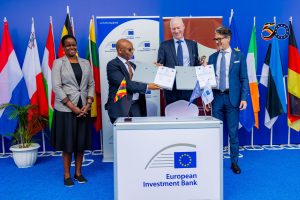
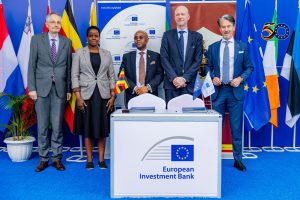
The Bank of Uganda (BoU) has signed a collaboration agreement with the European Investment Bank (EIB) to strengthen the financial sector’s capacity to manage climate-related risks and increase financing for sustainable investments.
The agreement, signed on Wednesday, October 21, 2026, at Kampala Serena Hotel, will provide technical assistance to the central bank to improve climate-risk supervision, reporting and disclosure among financial institutions.
The partnership is being implemented under the EIB Global Greening Financial Systems Technical Assistance Programme, financed by the governments of Germany and Luxembourg in coordination with the NDC Partnership.
Speaking at the signing ceremony, Bank of Uganda Deputy Governor Prof. Augustus Nuwagaba said climate change posed a growing threat to economic performance and financial stability through droughts, floods, energy disruptions and damage to infrastructure.
“These effects, coupled with other economic and financial vulnerabilities, can spill over into inflation, financial stability, and economic growth,” Nuwagaba said.
He said the partnership would strengthen the central bank’s capacity to support supervised financial institutions in identifying, assessing, managing and disclosing climate-related risks.
Uganda requires approximately $28.1 billion in climate-action financing by 2030, according to the government’s estimates. Mobilising the funds will require coordinated contributions from public and private sources, alongside international development partners.
“For Uganda, it can help mobilise the financing needed for development and resilience,” Nuwagaba said.
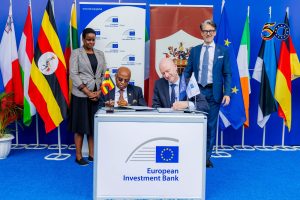
Under the agreement, EIB Global will support the Bank of Uganda in developing a roadmap for greening the financial sector, strengthening climate-risk disclosure frameworks and improving reporting by financial institutions.
The programme will also support implementation of Uganda’s National Green Taxonomy, launched in 2025 to establish a common classification of environmentally sustainable economic activities.
The assistance is expected to help the central bank strengthen its supervisory frameworks while enabling financial institutions to incorporate climate-related risks into their lending and investment decisions.
EIB Vice-President Marko Primorac said improved risk assessment would help banks make more informed lending decisions and increase their confidence in financing sustainable projects. “Banks can’t manage a risk they can’t see,” Primorac said.
He said the partnership would help Uganda’s financial sector identify and manage climate risks, supporting efforts to attract private capital for climate action.
The initiative will also extend to selected commercial banks, helping them strengthen climate-risk management, disclosure practices and policies that support green lending. Housing Finance Bank is the first Ugandan commercial lender expected to benefit from the technical assistance.
Nuwagaba said the transition to a greener financial system should not unnecessarily restrict access to credit, particularly for productive economic activities.
“We must strengthen resilience without unnecessarily constraining access to finance. Our objective is a financial system that understands emerging risks, allocates capital effectively and continues to finance productive activity,” he said.
He added that renewable energy, climate-resilient infrastructure, sustainable agriculture and cleaner technologies presented opportunities to create jobs, improve productivity and attract investment.
The partnership comes as Uganda implements its National Climate Finance Strategy 2025–2030, which seeks to strengthen the country’s capacity to mobilise climate finance and build a financial system capable of supporting its climate commitments.
Pablo Vieira, Global Director of the NDC Partnership, said stronger institutional capacity to understand and manage climate risks was necessary to attract investment at the scale required to meet Uganda’s climate and development priorities.
European Union Ambassador to Uganda Jan Sadek said the financial sector had a key role in directing resources towards sustainable economic activities.
“Ensuring that the financial sector can channel resources towards sustainable, climate-friendly solutions is essential to turning this ambition into real change in people’s lives,” Sadek said.
The agreement places Uganda among the African countries receiving support under the Greening Financial Systems Technical Assistance Programme, alongside Kenya, Rwanda, Nigeria and Ethiopia.
The programme is part of broader international efforts to help financial regulators and institutions prepare for climate-related risks while mobilising capital for sustainable development.
For Uganda, the challenge will be translating improved supervision and reporting into greater investment in climate-resilient agriculture, energy, transport and infrastructure without undermining access to finance for businesses and households.
The Bank of Uganda said the partnership would draw on EIB technical expertise and international experience to strengthen financial institutions and support the development of a more resilient and sustainable economy.