



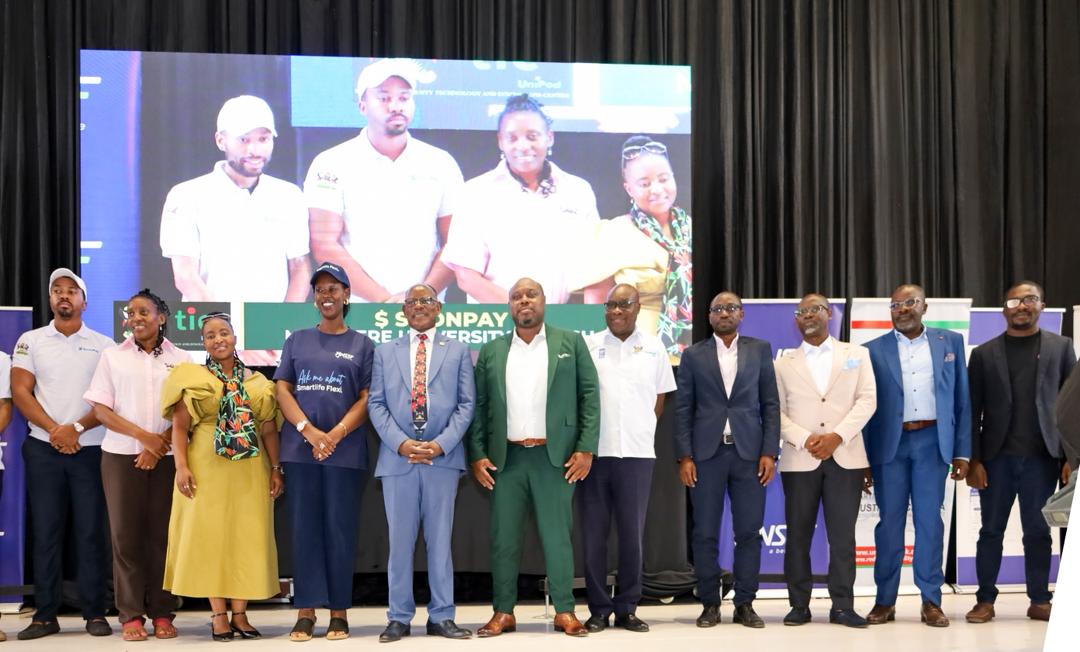
Makerere University Vice Chancellor, Prof. Barnabas Nawangwe, has called on African universities to take the lead in steering the continent’s technological resurgence, arguing that Africa’s future will be determined not by politics but by investment in education, research and innovation.
Prof. Nawangwe made the remarks during the launch of the SoonPay app at Makerere University in Kampala. SoonPay is being promoted as an all-in-one digital wallet designed to help users manage, move and potentially grow their money through a blend of everyday payments and emerging digital financial tools.
Placing Africa’s technological journey in a historical context, Prof. Nawangwe said the continent once stood at the forefront of global civilisation before suffering centuries of disruption.
He pointed to the year 711 AD, when the Moors from North Africa occupied Spain for 700 years and introduced transformative systems of architecture, engineering and education.
“They were the first to introduce stone-building technology there. Before that, Europeans had structures similar to the mud-and-wattle buildings many of us still use today,” he said.
He added that although Europe later adopted and expanded the knowledge introduced by Africans, the expulsion of the Moors triggered a long period of decline for Africa—one that was worsened by the transatlantic slave trade and colonialism.
“For 400 years Africans were taken away. Even after slavery ended, it was followed by 200 years of colonial rule,” he said. “For a total of 600 years, Africa’s civilisation and technology were completely destroyed.”
Prof. Nawangwe said Africa is now at a decisive moment, with most countries having been independent for only 60–70 years, and argued that the continent can reclaim its position in the global knowledge economy. “What will liberate us from poverty is education, research and innovation. Nothing else,” he said.

He described Makerere students as “the cream of Africa,” saying their presence at the continent’s oldest university places a responsibility on them to drive transformation. “You must understand your responsibility. You are the people who should contribute to transforming Africa,” he told the students.
However, he warned that Africa’s rapidly growing youthful population could become either an engine of growth or a source of instability. “These young people will either innovate and change Africa for the better, or destroy it if they are just waiting for jobs that are not there,” he said.
On concerns about graduate unemployment, Prof. Nawangwe argued that Africa faces a shortage of industries, not a shortage of skills. He urged students to become creators and innovators rather than job seekers.
He also highlighted Africa’s vulnerability in the digital revolution, recalling an international conference where more than half the participants discussing artificial intelligence were Africans in the diaspora.
“We don’t want history to repeat itself. We want to move with the world and eventually lead the world, as we once did,” he said.
During the event, SoonPay CEO Frantz Morency unveiled the platform’s integration of financial tools with blockchain technology.
He said SoonPay aims to offer transparency, secure digital transactions and a foundation for emerging digital systems. “We call it a resource app not only from a financial standpoint, but also blockchain, which is why we’re here today with Makerere University,” Morency said.
He emphasised that partnering with Makerere is key to SoonPay’s goal of equipping young innovators with blockchain skills that can drive adoption across industries.
Morency said the initiative aims to expand blockchain-based solutions while empowering institutions and youth with tools for the future digital economy. “It’s one of these blockchains,” he added, noting that SoonPay hopes students and developers will gain hands-on experience with technologies shaping global finance and digital infrastructure.