


Uganda has set up a national taskforce of scientists, conservationists and tourism players to help pull its lions back from the brink, as surveys show populations in two of the country’s major national parks have fallen sharply.
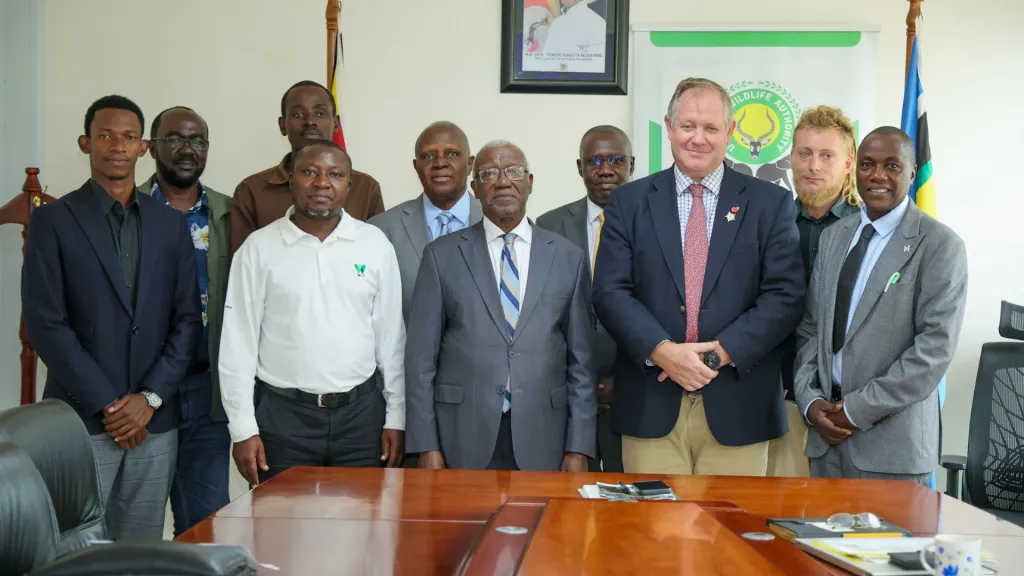
The Minister of Tourism, Wildlife and Antiquities, Col (Rtd) Tom Butime, launched the National Lion/Large Carnivore Conservation Taskforce, which will advise the ministry and the Uganda Wildlife Authority (UWA) on how to protect and rebuild the populations of lions, leopards and other large carnivores.
Butime said lions matter beyond ecology. “Protection of lions and other iconic wildlife species should be prioritised because they attract tourists and immensely contribute to revenue generation, employment and livelihoods of our people,” he said.
Recent assessments point to the greatest pressure in Kidepo Valley and Queen Elizabeth National Parks. UWA’s 2022 national survey estimated about 39 lions in Queen Elizabeth and only about 12 in Kidepo. In Queen Elizabeth, which is home to the famed tree-climbing lions of Ishasha, the plan notes a decline of roughly 45 per cent between comparable surveys in 2018 and 2022.
The picture is not uniformly bleak. Murchison Falls National Park holds an estimated 240 lions, and its Nile Delta area has some of the highest carnivore densities recorded in Africa.
The threats include habitat loss, retaliatory killings, poisoning, snaring, declining prey and the illegal trade in wildlife body parts. The plan records incidents such as the poisoning of eleven lions in Hamukungu in 2018 and six in Ishasha in 2021.
The economic stakes are high, as each tree-climbing lion in the Ishasha sector is estimated to generate approximately US$ 14,000 individually, contributing significant funds from experiential tourism to the local tourism economy.
The taskforce will be chaired by Michael Keigwin, MBE, Founder Trustee and Director of the Uganda Conservation Foundation. Its other members are Dr Alex Braczkowski, Prof. Charles Masembe, Charles Tumwesigye, Dr Simon Nampindo, Dr Ludwig Siefert, Candia Leone, Prof Moses Muhumuza and Benon Ssebina Katumba. UWA will act as the secretariat.
The panel will review current conservation work, advise on priorities, flag emerging threats and help mobilise funding. It will also support delivery of the Strategic Action Plan for Large Carnivore Conservation (2024–2034), which aims to raise viable large carnivore populations by 30 per cent over ten years and cut poaching by at least 50 per cent. It stresses habitat protection, reducing human–wildlife conflict, involving neighbouring communities, and stronger research and monitoring.
The current plan replaces a 2010–2020 strategy that was never effectively implemented. The plan points to limited funding, poor coordination among stakeholders and the Covid-19 lockdown. Stakeholders say that the new plan should be different, with a coordinated approach and a budget framework. UWA’s board approved it in January 2025.
UWA welcomed the task force and said it looks forward to working with members, conservation partners, tourism operators and communities living next to protected areas “to ensure that lions and other large carnivores continue to thrive in Uganda’s wild spaces.”