



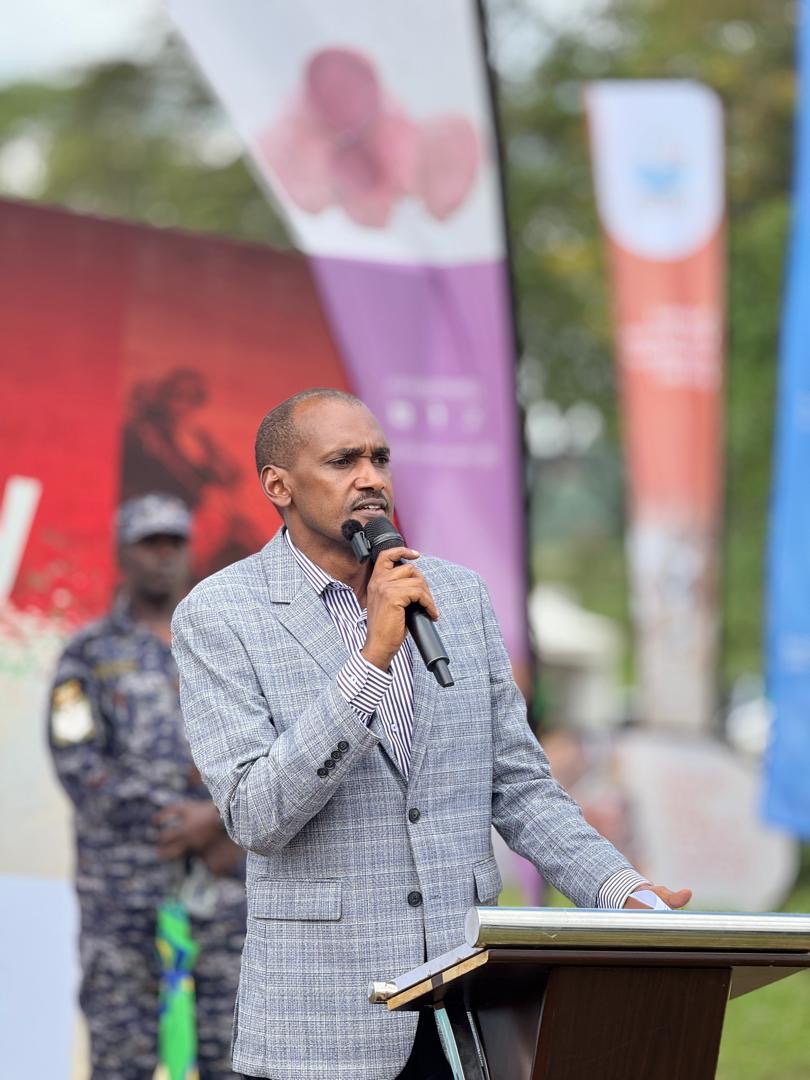
The Minister of Agriculture, Animal Industry and Fisheries, Frank Tumwebaze, has highlighted the critical role of science and research in transforming Uganda’s agricultural sector.
He underscored the importance of bridging science with farming communities. “We need to balance between the four pillars of farming, food security farming, income-generating crops, animal feed security crops and environmental security. Research and science come in to balance enablers such as knowledge, tools and innovations.”
He made the remarks at the celebrations to mark the World Food Day 2026 in Mbarara.
Held under the theme “Innovate Today. Nourish Tomorrow,” the four-day event was hosted by the Government of Uganda through the Ministry of Agriculture, Animal Industry and Fisheries (MAAIF) and the National Agricultural Research Organisation (NARO), in collaboration with development partners including the World Food Programme (WFP) and the Food and Agriculture Organization (FAO).
The event drew over 3,000 stakeholders to the Mbarara Zonal Agricultural Research and Development Institute (MBAZARDI) to explore digital innovations, artificial intelligence, and climate-smart farming solutions.
Tumwebase further said the World Food Day offers a platform where science, products of science and knowledge meet the farmers, ensuring that knowledge and innovations translate into practical agricultural solutions.
He congratulated MBAZARDI on reaching its 100-year milestone and also thanked all partners for their support and contribution to advancing agricultural research and development in Uganda.
Emmanuel Rustinda, Head of the South West Region at WFP and representing the WFP Country Director Wanja Kaaria-Ndohо, said this year’s commemoration coincides with the global El Niño that is rolling back hard-won gains against hunger and malnutrition.
“The El Niño is expected between October and December 2026. It makes today’s theme more than a slogan. Innovation now is the difference between holding these gains and losing them.”
Rutsinda added, “With Government in the lead, innovation is critical in addressing today’s challenges. As WFP, we are scaling early action through anticipatory action. We have to pair the new with the unknown – indigenous crops, local varieties and the knowledge within the pastoral communities already hold important assets.”
He congratulated MBAZARDI on its centenary celebration(1926 – 2026) and reaffirmed WFP’s commitment to Sustainable Development Goal 2: Zero Hunger.
Rustinda highlighted a critical paradox – food scarcity persisting amid abundant production – noting that between 30% to 40% of food is lost between harvest and market due to poor handling and storage.
He emphasized that WFP is actively strengthening market linkages among farmers, agro-dealers, and private-sector partners.
Simultaneously, the organization is collaborating with the Office of the Prime Minister to support refugees and host communities in cultivating food on shared land. producing food on shared land.
The celebrations in Mbarara featured national exhibitions, technology tours, crop and livestock shows, farmer clinics, and specialized training in commercial banana, coffee, and dairy production.
MBAZARDI serves as Uganda’s National Dairy Centre of Excellence. The institute is paving the way for a new One Stop Centre for Agricultural Technologies and Innovations, aligning with Uganda’s Fourth National Development Plan (NDP IV) to drive rural transformation and youth employment.