



Kampala — Uganda has officially launched the transition from Tax Identification Numbers (TINs) to National Identification Numbers (NINs) for individual taxpayers, as the government moves to establish a unified identification system across public services.
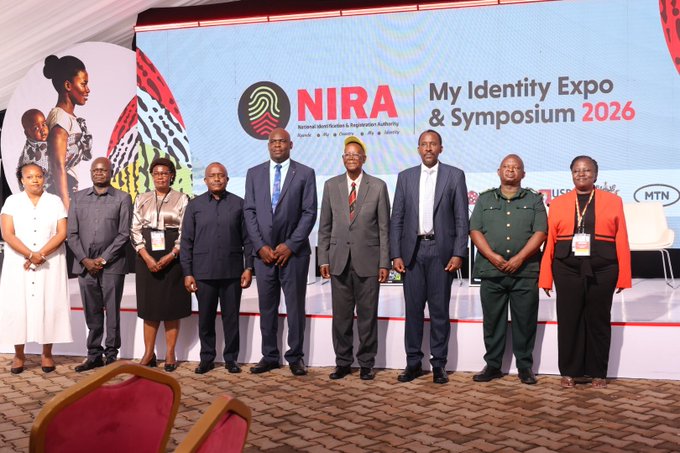
The transition was launched Tuesday by Minister of Internal Affairs Prof. Ephraim Kamuntu during the inaugural “My Identity Expo and Symposium 2026” organised by the National Identification and Registration Authority (NIRA) at Kololo Independence Grounds.
Under the new arrangement, the NIN issued by NIRA will become the official tax identifier for individual Ugandan taxpayers, while companies and other non-individual entities will use their Entity Registration Number or Business Registration Number. Non-citizens with an Alien Identification Number will use that identifier for tax purposes.

URA Commissioner General John R. Musinguzi said the integration of NIRA’s identification system with the taxpayer register would address weaknesses associated with the existing TIN system.
“Although we issue TINs, it has been possible for one individual to hold ten TINs,” Musinguzi said.
He said multiple TINs could allow an individual to close one tax account and open another without being easily identified as the same taxpayer.
Musinguzi also said the existing system had exposed some taxpayers to fraud where individuals accessed other people’s TINs and tax profiles without their knowledge.

He said linking taxation to NIRA’s biometric identification system would enable URA to consistently identify taxpayers, including those operating multiple companies.
“There is no nation that can effectively serve its citizens, and there is no government that can effectively serve its citizens, without proper registration and identification,” Musinguzi said.
The Commissioner General said the transition would also support Uganda’s revenue mobilisation ambitions, noting that URA had committed to increasing the country’s tax-to-GDP ratio from about 14% to at least 20% within three years.

URA had already begun mapping taxpayers’ NINs to their existing TINs following Cabinet approval on September 1, according to the authority.
The mapping is being conducted through direct engagement with taxpayers, URA service centres and the URA online portal.
URA has clarified that taxpayers will not lose their existing TINs. Instead, from January 1, 2027, taxpayers whose records have been updated will access their accounts using their NIN or the applicable entity registration number.
Minister Kamuntu, on his part, said accurate identification was central not only to taxation but also to security, planning and delivery of government services.

“Identity matters. It does,” he said, citing the role of identification in access to services, banking, education, health facilities, driving licences and passports.
He said NIRA’s identification register would also provide government with population data needed for resource allocation and programmes such as the Parish Development Model, youth livelihood programmes and other government interventions.
Kamuntu urged NIRA to complete the registration of Uganda’s population, saying the authority’s work remained unfinished until all citizens were identified.
NIRA officials told the symposium that about 36.2 million people had so far been registered, representing about 78.8% of the population, leaving a significant gap against the population recorded in the 2024 census.
Kamuntu also called for continued registration of vital events, including births, marriages and deaths. “Registration is a continuous exercise,” he said. “There is nobody who should not be identified.”

The launch comes as government increasingly links the national identification register to public and private services.
URA says the unified identifier is intended to reduce duplicate records, improve the accuracy of taxpayer information, simplify access to services and strengthen revenue mobilisation by giving government greater visibility of economic activity.
For taxpayers, the immediate requirement is to ensure that their NIN is mapped to their existing tax records. URA has said individuals who do not yet have a NIN must obtain one from NIRA before registering for tax.