



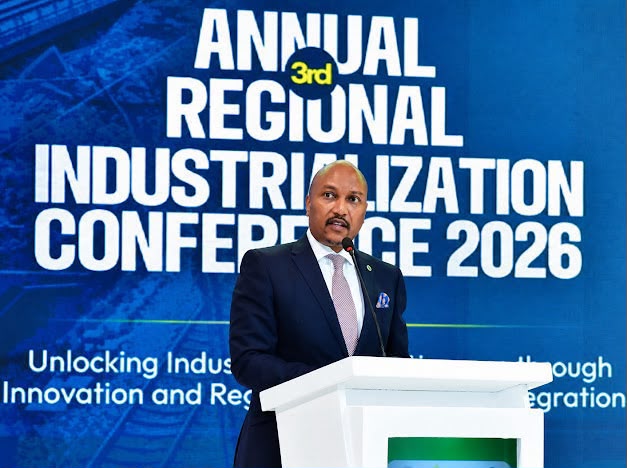
KAMPALA — The Private Sector Foundation Uganda (PSFU) has called for concrete and time-bound reforms to accelerate industrialisation in East Africa, saying the region must move beyond policy commitments and create conditions that allow manufacturers to produce, add value and trade competitively.
PSFU Board Chairman Humphrey Nzeyi made the call at the 3rd Annual Regional Industrialisation Conference, taking place at the Kampala Serena Hotel under the theme, “Unlocking Industrial Competitiveness through Innovation and Regional Value Chain Integration.”
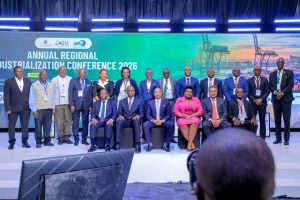
The two-day conference, running from August 18-19, brings together governments, private-sector leaders, investors and other stakeholders to discuss industrial competitiveness and regional value chains.
Nzeyi said manufacturing is central to Uganda’s economic transformation, attracting about a third of foreign direct investment while supporting value addition, employment, exports and economic growth.
“Manufacturing is the engine of Uganda’s GDP growth,” Nzeyi said, adding that the sector contributes more than 16.5% of GDP and supports approximately two million direct jobs.
He said the conference should produce practical recommendations rather than another diagnosis of the challenges facing East African industry.
“Our intention is clear: to move beyond diagnosis to concrete and time-bound solutions that accelerate the full implementation of the EAC industrialisation policy and strategy, the special economic zones policy and the common market protocol,” Nzeyi said.
Intra-EAC trade reaches record level
Nzeyi pointed to the growth of intra-regional trade as evidence that East Africa already has the foundations for a stronger industrial economy.
He said intra-EAC trade reached a record US$14.3 billion in 2024, with manufactured goods accounting for 42% of the trade.
The EAC’s 2024 Trade and Investment Report confirms that intra-EAC merchandise trade rose 18.4% to US$14.33 billion, while manufactured products—including pharmaceuticals, paperboard, edible oils and steel products—accounted for 42% of intra-regional trade value.
However, Uganda’s intra-EAC exports declined by 6.2% in 2024 to about US$2.07 billion, according to the EAC report. The decline was partly attributed to the diversion of Ugandan maize and sugar exports to South Sudan and the Democratic Republic of Congo under AfCFTA preferences.
Nzeyi said the figures demonstrate both progress and the size of the opportunity that remains.
“Only when government and the private sector work in lockstep, with predictable policies, coordinated infrastructure and deliberate incentives for regional sourcing, will East Africa emerge as a true industrial powerhouse capable of competing globally under the African Continental Free Trade Area,” he said.
Produce more, add value and export more
Minister of State for Trade, Industry and Cooperatives responsible for Industry David Bahati said East Africa must use its enormous natural-resource base to build industries rather than continue importing finished products.
“Our region holds immense potential,” Bahati said. “We must convert these resources into finished products, jobs and exports.”
He cited Africa’s estimated 30% share of global mineral reserves, Uganda’s iron ore deposits at Muko and copper resources at Kilembe as examples of resources that could support greater industrial production.
Bahati said governments must also address infrastructure gaps and non-tariff barriers that continue to make cross-border trade difficult.
He called for greater harmonisation of standards, removal of trade barriers and development of cross-border production systems.
The minister said the EAC represents a market of about 331 million people, with approximately US$357 billion in GDP and US$76.4 billion in merchandise imports, presenting a significant opportunity for regional manufacturers.
Uganda’s manufacturing sector
Uganda’s manufacturing sector currently contributes about 16.5% of GDP, according to government data, while manufacturing establishments have increased to more than 9,000. Government figures also put manufacturing employment at more than 1.8 million people and its contribution to merchandise exports at 24.6%.

The Uganda Manufacturers Association has separately reported that manufacturing contributes up to 16.5% of GDP, employs more than 1.3 million people directly and generates approximately US$2.9 billion in exports.
The differences in employment figures reflect different definitions and datasets, but both sources underline the sector’s importance to the Ugandan economy.
Nzeyi said Uganda’s progress should not obscure the challenges that continue to constrain industrial expansion, including access to long-term finance, energy, infrastructure, standards, illicit trade and cross-border trade barriers.
Digital infrastructure
The conference also examined the role of technology in industrialisation, with MTN Uganda CEO Sylvia Mulinge highlighting digital infrastructure as an enabler of industrial growth.
Mulinge said telecommunications and digital networks can connect manufacturers to markets, improve efficiency and strengthen the competitiveness of businesses operating across East Africa.
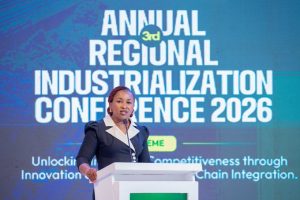
MTN Uganda said it is committed to supporting Uganda’s US$500 billion Tenfold Growth Strategy by providing digital infrastructure that enables businesses and industries to compete regionally.
The push for digital connectivity comes as Uganda’s economy continues to expand. Preliminary government estimates show the economy grew by 6.4% in FY2025/26, reaching an estimated Shs250.4 trillion, with industry accounting for 24.1% of GDP.
From commitments to production
The conference’s organisers say RIC 2026 is intended to shift the regional industrialisation conversation from agenda-setting toward implementation, with particular attention to trade barriers, standards, logistics, financing, skills and regional value chains.
For Nzeyi, the central question is no longer whether East Africa has the resources or market to industrialise, but whether governments and businesses can coordinate sufficiently to turn those advantages into competitive regional production.

“We seek actionable recommendations that can translate regional commitments into practical industrial growth,” he said.
The conference continues through Wednesday, August 19, in Kampala.