


The National Water and Sewerage Corporation (NWSC) is undertaking a major expansion of water and sanitation infrastructure across Uganda as rapid population growth and urbanisation continue to put pressure on existing systems.
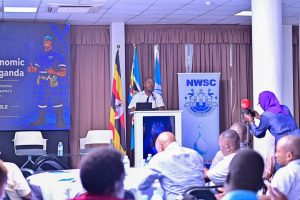
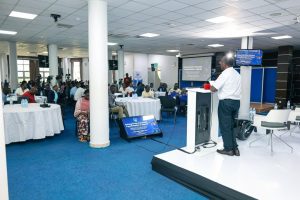
The Corporation disclosed this during a media round table held on Friday, August 14, 2026, at the NWSC International Resource Centre in Kampala under the theme “NWSC Works: Driving Social and Economic Transformation in Uganda.”
The engagement brought together journalists, NWSC staff and officials from other government agencies to assess ongoing and completed projects, the impact of improved water and sanitation services and challenges facing the national utility.
NWSC Managing Director Eng. Dr Silver Mugisha said the Corporation had experienced significant growth over the past decade, expanding its service footprint from 23 to about 290 towns.
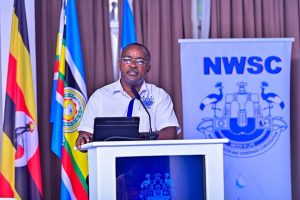
According to Mugisha, NWSC’s customer connections have grown from about 300,000 a decade ago to more than one million, while its water network has expanded from about 6,000 kilometres to more than 25,000 kilometres.
He said the growth reflects the Corporation’s efforts to extend safe water services to previously underserved urban and peri-urban communities.
Kampala water supply under pressure
NWSC General Manager for Kampala Water, Eng. Mahmoud Lutaaya, said the Corporation’s biggest challenge in the Greater Kampala Metropolitan Area is keeping infrastructure ahead of rapidly expanding settlements.
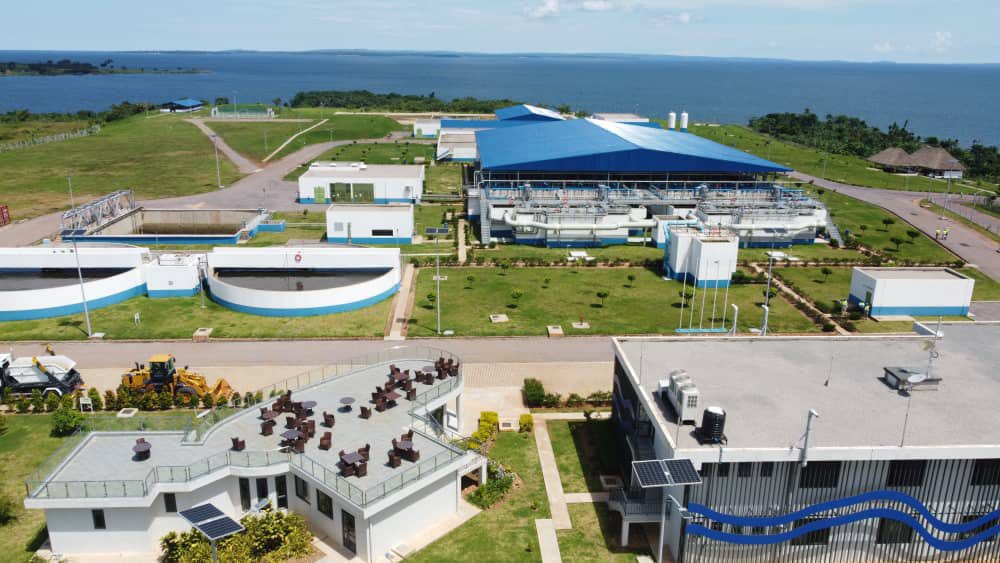
He said Kampala’s water production capacity has increased substantially, particularly following the commissioning of the Katosi Water Treatment Plant in 2021.
Katosi currently has a production capacity of about 160,000 cubic metres of water per day, while the combined production capacity of Katosi and the Gaba plants is about 390,000 cubic metres per day.
“Service provision is always a moving target. We have to keep following where people are developing, and that is what makes service delivery challenging,” Lutaaya said.
He said the Kampala metropolitan service area now serves about five million people, covering Kampala City and parts of Wakiso and Mukono.
The growth has been accompanied by a sharp increase in customer connections, from about 75,000 in 2005 to nearly 500,000 today.
NWSC’s production capacity in Kampala has also increased from approximately 117,000 cubic metres per day in 2005 to more than 300,000 cubic metres per day today.
Katosi project transforms supply
Lutaaya described the Katosi project as a “game changer” for Kampala’s water supply.
The project included the Katosi treatment plant, transmission infrastructure and reservoirs, significantly improving water availability across much of the metropolitan area.
However, he said some areas, particularly in western Kampala, continue to experience unreliable supply.

These include Matugga, Nansana, parts of Kawempe, Wakiso, Ggoba, Kyengera and Budo.
To address the gaps, NWSC is implementing Package 2B of the Greater Kampala Metropolitan Area Water Supply Network Expansion Project.
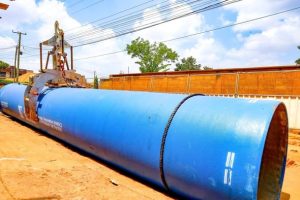
The project involves laying approximately 70 kilometres of transmission and distribution pipelines and constructing major reservoirs and booster stations.
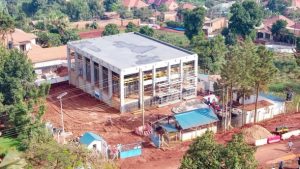
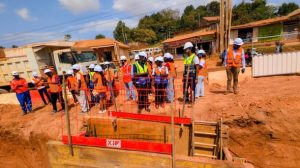
The media round table was preceded by a field excursion to several installations under the project, including Kabulengwa, Mpererwe, Kanyanya, Kungu, Namugongo and Mutungo booster stations.

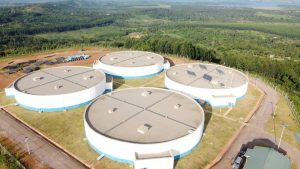
At Kabulengwa, water will flow from Sonde to Kanyanya Reservoir before being pumped up Kabulengwa Hill into an elevated reservoir with a capacity of about 3.89 million litres.
The project also includes the 10-million-litre Kanyanya Reservoir and a one-million-litre Mutungo Reservoir.
NWSC said the project is intended to address the “missing link” between water-stressed communities and the Katosi supply system.
Lutaaya said the project is expected to be completed in August 2027, although some sections will be commissioned earlier.
“We believe that once this project is completed, we will see a major improvement in water reliability across those areas,” he said.
NWSC plans further expansion
NWSC Deputy Managing Director for Technical Services, Eng. Johnson Amayo, said the Corporation is simultaneously implementing major water projects across the country using both external financing and internally generated resources.
He said NWSC is planning to add approximately 80 million litres per day to the Gaba system, which would bring overall production capacity closer to 500 million litres per day.
In Masaka, the Corporation is implementing a project to substantially increase production through a new lake intake, transmission system and reservoir.
Amayo said the new intake will extend into the lake, while a large reservoir at a high point will allow water to flow by gravity to different parts of the city.
Projects are also being implemented in Gulu, Mbarara, Kabale, Soroti, Lira, Hoima and other towns.
In Soroti, NWSC has completed a project that increased production capacity from about five million to 10 million litres per day at a cost of approximately Shs8 billion.
In Lira, the Corporation has upgraded the water production system, with testing of the new infrastructure already underway.
Hoima and Albertine region
Amayo said NWSC is also working with Government and development partners to mobilise financing for major water infrastructure in Hoima and the wider Albertine region.
The proposed project is estimated at approximately €270 million, with an initial commitment of about €150 million.
He said NWSC’s long-term ambition is to source water from Lake Kyoga, which would enable the Corporation to supply several rapidly developing towns along the Hoima corridor.
The Corporation is also developing a dedicated water system for a stadium in Hoima to ensure that the facility has adequate water supply without placing additional pressure on the wider municipal network.

Sanitation remains a major gap
While water supply has expanded rapidly, NWSC acknowledged that sewerage infrastructure has not grown at the same pace.
Lutaaya said Kampala has four major wastewater treatment facilities, including Lubigi, Nakivubo, Kinawataka and Bugolobi, alongside smaller treatment facilities and ponds.
The Nakivubo Wastewater Treatment Plant is the largest, with a treatment capacity of nearly 45,000 cubic metres per day.
The plant also generates electricity from wastewater, with approximately 80 percent of its power requirements being generated from the waste it treats.
At Lubigi, NWSC treats nearly 4,500 cubic metres of wastewater per day and recovers products such as sludge and manure that can be used as fertiliser.
Despite these investments, Lutaaya said a significant proportion of Kampala’s population continues to rely on on-site sanitation systems.
NWSC turns to internal financing
Amayo said NWSC has increasingly used internally generated revenue and market financing to implement projects without waiting for external funding.
He said the Corporation has completed numerous projects through this approach, including water production upgrades, reservoirs, network extensions and mini-water systems.
One project costing about Shs4.3 billion increased production capacity by approximately 4,300 cubic metres per day, while another project worth about Shs14 billion established a facility with a capacity of approximately 5.8 million litres per day.
The Corporation is also using smaller interventions, including boreholes and mini-water systems, to provide immediate relief in water-stressed communities while major infrastructure is being developed.
In Amuria, for example, NWSC drilled two boreholes with a combined yield of approximately 20 cubic metres per hour and extended the distribution network to surrounding communities.
Digitalisation and cost efficiency
Mugisha said NWSC’s expansion has been supported by an internal cost-efficiency strategy that includes force-account contracting, in-house engineering and technology development, digital procurement, electronic payments and digital human-resource systems.

The Corporation has also developed internal systems for water-quality monitoring and financial management.
Mugisha said using internal engineering teams for projects allows NWSC to reduce expenditure on external consultants and channel more resources into actual infrastructure.
He also highlighted special audits, performance management, staff incentives and continuous training as measures intended to improve efficiency and accountability.
Water tariffs
Lutaaya said NWSC operates different tariff bands depending on the category of consumer.
For public standpipes serving informal settlements, the tariff is Shs1,060 per cubic metre, equivalent to about Shs25 for a 20-litre jerrycan.
Domestic residential customers pay approximately Shs4,434 per cubic metre, equivalent to about Shs105 per 20-litre jerrycan.
He said prepaid meters are being introduced in informal settlements to ensure customers pay the official tariff and reduce exploitation by intermediaries.
For industries consuming more than 1,000 cubic metres per month, the tariff is approximately Shs2,504 per cubic metre, a rate intended to support industrial competitiveness.
Population growth remains the biggest challenge
Lutaaya said rapid urbanisation, unplanned development and climate variability continue to complicate water service delivery.
He cited areas such as Kololo where infrastructure originally designed to serve individual homes is now required to support multi-storey buildings containing dozens of households.
“The pipe that was originally designed to serve one bungalow can no longer adequately serve 50 units,” he said.
He added that climate change and increasingly extreme weather conditions were also affecting water systems.
NWSC said it will continue combining major infrastructure investments with smaller, rapid-response projects as it works to expand reliable water and sanitation services across Uganda.
The Corporation said the #NWSCWorks initiative is intended to strengthen public understanding of these investments and encourage deeper media reporting on how water infrastructure is affecting public health, education, livelihoods and economic activity across the country.