


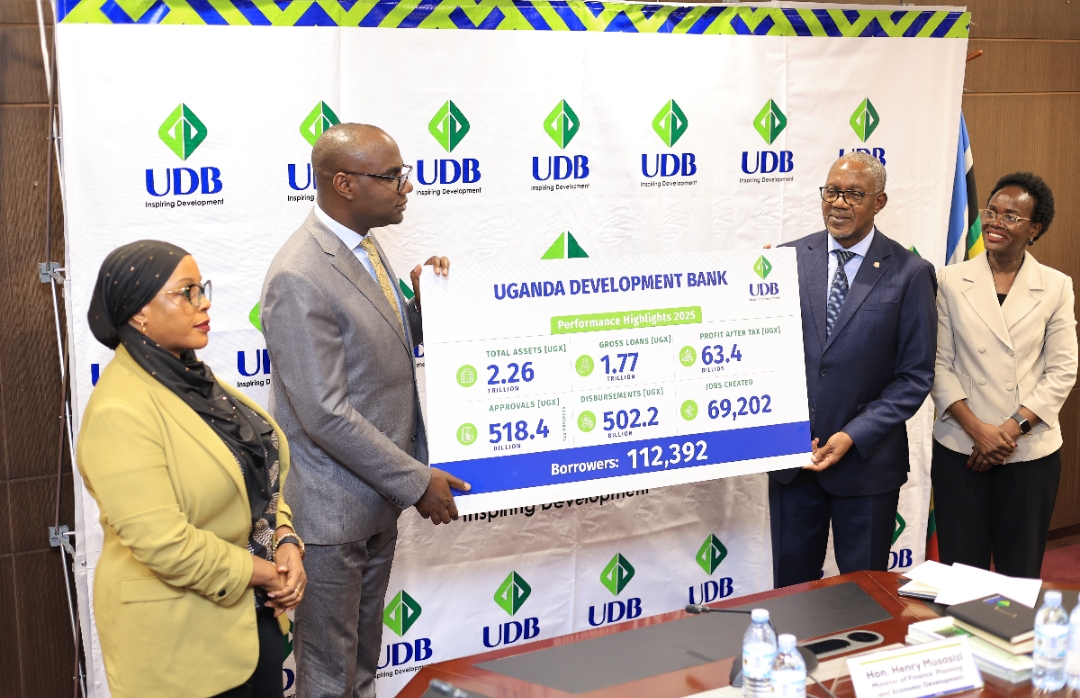
Kampala — Uganda Development Bank (UDB) disbursed Shs502.2 billion to private-sector enterprises in 2025, helping businesses create and sustain more than 69,000 jobs, as the state-owned development finance institution reported strong growth in assets, lending and profitability.
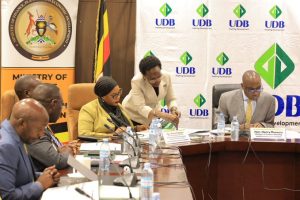
The figures were released on Thursday during UDB’s Annual General Meeting held at the Ministry of Finance, Planning and Economic Development, where the bank reviewed its 2025 financial and development performance.
According to UDB, its supported enterprises created and maintained 69,202 jobs, representing a 24.6 percent increase compared to the previous year.
The bank said it approved Shs518.4 billion in new funding for 120 projects across the country and disbursed Shs502.2 billion, a 29 percent increase from its 2024 disbursements.
UDB Managing Director Dr Patricia Ojangole said the bank’s growth was strengthening its ability to provide long-term capital to businesses involved in production, employment creation and exports.
“Development finance delivers its greatest value when it unlocks opportunities that commercial markets alone cannot provide,” Ojangole said.
“Every investment we make is intended to strengthen productive enterprises, create decent jobs, expand value addition and improve incomes for Ugandans.”
Assets rise to Shs2.26 trillion
UDB’s total assets increased by 27 percent, from Shs1.78 trillion in 2024 to Shs2.26 trillion in 2025.
Total equity rose by 24.8 percent to Shs1.89 trillion, while net loans and advances increased by about 7 percent to Shs1.63 trillion.
The bank recorded a Shs63.4 billion post-tax profit, representing a 9.7 percent increase from 2024.
UDB attributed the growth in assets and lending capacity partly to increased government capitalisation and financing from development partners.
The bank’s active customer base also expanded to 689 enterprises operating in 105 districts, while its number of direct borrowers increased to 112,392.
Agriculture, agro-industrialisation and manufacturing accounted for nearly two-thirds of UDB’s financing during the year, reflecting the bank’s focus on productive sectors considered critical to Uganda’s industrialisation and value-addition agenda.
Supported businesses generate Shs6.26 trillion
UDB said enterprises financed by the bank generated Shs6.26 trillion in annual production during the year.
The businesses also generated profits of more than Shs1.16 trillion, enabling them to reinvest in expansion, technology and other productive activities.
Their tax contributions increased by 22.5 percent to Shs387 billion, according to the bank.
Foreign exchange earnings generated by UDB-supported enterprises also rose significantly, reaching Shs1.84 trillion in 2025, up from Shs1.11 trillion the previous year.
The bank said the increase demonstrates growing competitiveness among Ugandan enterprises in regional and international markets.
Government promises further capitalisation
Speaking at the meeting, Finance Minister Henry Musasizi commended UDB for translating government capital into measurable economic outcomes.
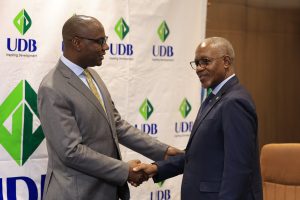
He said government intends to continue strengthening the bank’s capital base to enable it to provide more affordable long-term financing to businesses.
Musasizi said government had authorised Shs63 billion in additional capital, allowing the bank to retain its 2025 profits as additional capital.
He also said government had approved an increase in UDB’s authorised share capital from Shs2 trillion to Shs5 trillion, creating room for an additional Shs3 trillion in authorised capital.
The minister said the ultimate objective was to strengthen UDB’s ability to lend at lower interest rates. “We want to reduce the cost of borrowing so that we are able to respond to the needs of our people in Uganda,” Musasizi said.
He said government would like to see UDB’s lending rates eventually fall into single digits, following the current rate of about 12 percent.
Focus on priority sectors
UDB said its 2025 performance was achieved against a favourable macroeconomic environment, with Uganda’s economy growing by 6.3 percent while inflation declined to 3.3 percent.
The bank also highlighted its efforts to strengthen its funding base through partnerships with bilateral and multilateral development partners.
Among its institutional initiatives was the launch of the Reshaping Industry for Sustainable Economy (RISE) programme, intended to turn development challenges into investment-ready projects.
UDB also hosted its inaugural Uganda Development Finance Summit, bringing together more than 500 policymakers, industry leaders and development partners.
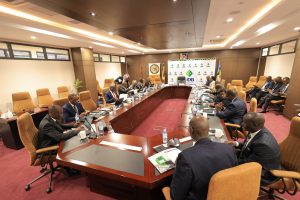
The bank said the summit was aimed at strengthening collaboration around development finance challenges in Uganda and Africa.
UDB Chairman Geoffrey Kihuguru said the bank would continue to focus on prudent asset creation and deployment while maintaining operational efficiency.
The bank also cited international recognition, including an AA+ (Uga) national rating from Fitch Ratings and an A+ rating from the Association of African Development Finance Institutions (AADFI).
Ojangole was also named Banker of the Year at the 2025 Africa Banker Awards, while UDB received sustainability awards in Germany and retained the highest Level 5 certification under the Sustainability Standards and Certification Initiative.