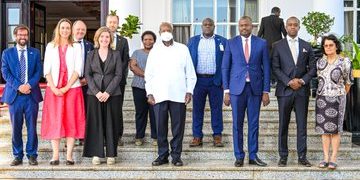



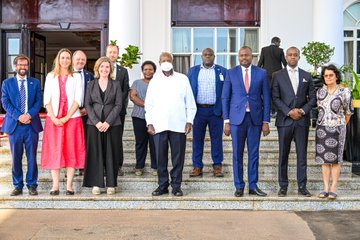
ENTEBBE — President Yoweri Kaguta Museveni has called for stronger collaboration between Uganda and the United Kingdom in public health, pharmaceutical manufacturing and medical research, saying such partnerships would strengthen disease prevention, expand local medicine production and improve access to affordable healthcare.
The President appealed on Thursday during a meeting with a United Kingdom delegation at State House Entebbe. The delegation was led by Uganda’s High Commissioner to the UK, Ambassador Nimisha Madhvani, and included British politician and Chair of the UK All-Party Parliamentary Group, Hon. Beccy Cooper, as well as members of the Ugandan diaspora working in Britain’s health sector.
President Museveni said Uganda’s healthcare policy places prevention at the centre of its strategy, arguing that preventing disease is more effective and less costly than treating illnesses after they occur.
“Our main emphasis is public health prevention because when you prevent disease, you solve many problems. Through immunisation, we have eliminated or controlled diseases such as smallpox, polio and tuberculosis. If you add nutrition, safe water, hygiene and behavioural change, you eliminate almost 80 percent of diseases,” he said.
The President noted that while Uganda has made significant progress in combating communicable diseases, attention is increasingly shifting to the growing burden of non-communicable diseases such as cancer, diabetes and hypertension.
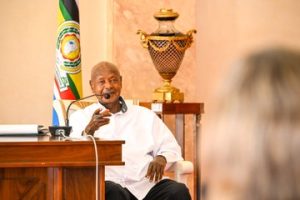
“We are trying to change our doctors from concentrating mainly on curative medicine to putting greater emphasis on prevention,” he added.
Museveni also highlighted Uganda’s efforts to advance research into traditional medicine, saying the country’s rich biodiversity presents opportunities to develop commercially viable medicines if supported by scientific research, modern technology and investment.
“We have many medicinal plants. Our scientists are working through the Natural Chemotherapeutics Research Institute to identify their active ingredients. What we need are partners and investment to acquire equipment, complete infrastructure and secure patents so that these medicines can be produced commercially,” he said.
The President invited British pharmaceutical companies to establish manufacturing operations in Uganda, describing the country as a strategic hub for producing medicines and vaccines for both domestic use and the wider regional market.
Reflecting on his own experience with disease, Museveni recounted surviving smallpox while he was a student and credited a British doctor for diagnosing and isolating him.
“I still remember Dr Allport, a British doctor, who diagnosed and isolated me after I contracted smallpox. That experience strengthened my appreciation for health workers and the importance of public health,” he said.
Speaking on behalf of the delegation, Hon. Beccy Cooper commended Uganda’s leadership in public health, particularly its successful containment of recent Ebola outbreaks and its continued commitment to hosting refugees.
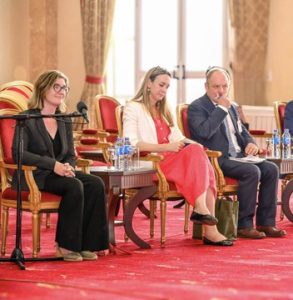
“Thank you for your leadership in fighting Ebola and ensuring the outbreak came to an end. We are also great admirers of Uganda’s commitment to supporting refugees and vulnerable communities,” she said.
Cooper said the United Kingdom was keen to deepen cooperation with Uganda in healthcare and would engage British pharmaceutical companies interested in investing in medicine and vaccine production.
“There are companies in the UK that would be interested in collaborating with Uganda, particularly in pharmaceutical manufacturing and vaccine production. We will look for opportunities and bring them here and work together with your scientists,” she said.
She added that Britain’s health sector could also learn from Uganda’s preventive healthcare model.
“We have much to learn from Uganda’s approach to public health, particularly the emphasis on prevention and community mobilisation. Your willingness to share these experiences demonstrates strong leadership,” she said.
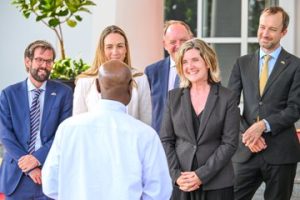
Representing the Ugandan diaspora, Mr Moses Bulimira said many Ugandan health professionals working in the United Kingdom are eager to contribute their expertise to Uganda’s development.
“We have accomplished a lot while working in the UK, but we also want to come back and contribute to our country,” he said.
Meanwhile, the Minister of State for Health in charge of Primary Health Care, Dr Charles Ayume, revealed that nearly 970 Ugandan nursing professionals are currently employed in the United Kingdom, underscoring the growing contribution of Uganda’s healthcare workforce to Britain’s National Health Service while highlighting the strong people-to-people ties between the two countries.