


KAMPALA, Uganda — Growing demand for mobile internet services across East Africa has helped drive Airtel Africa’s Mobile Services revenue to US$607 million for the quarter ended June 30, 2026, up from US$498 million recorded during the same period last year.
The company attributed the growth to increasing digital adoption, rising smartphone usage and higher data consumption among customers across its markets, with data services emerging as the fastest-growing segment of the business.
Airtel Africa said Mobile Services revenue increased by 21.9 percent in reported currency and 14.4 percent in constant currency, supported by a 9.3 percent increase in its customer base to 86.5 million and a 5.3 percent rise in average revenue per user (ARPU).
The company noted that reported growth was also boosted by the appreciation of the Zambian kwacha during the period.
Although voice services remained the largest contributor to Mobile Services revenue, generating US$285 million, growth was slower compared to data services. Voice revenue increased by 8 percent in constant currency, reflecting continued demand for traditional voice communication.
Data services recorded stronger momentum, with revenue rising to US$269 million, representing 22.5 percent growth in constant currency.
The increase was driven by a 16.8 percent rise in data customers, which reached 37.8 million, alongside increased smartphone adoption and higher mobile internet usage.
Airtel Africa said smartphone penetration among its customers reached 48.1 percent, while average monthly data consumption per smartphone customer increased to 11.9GB, up from 8.8GB a year earlier.
The company said the figures reflect the accelerating digital transformation taking place across its African markets as more customers adopt online services, digital platforms and mobile-based solutions.
Beyond mobile connectivity, Airtel Money continued to record growth, with revenue increasing by 21.1 percent in constant currency to US$247 million.
The growth was driven by increased use of digital financial services, mobile payments and expansion of the Airtel Money customer base across the continent.
Across its 14 African markets, Airtel Africa reported total group revenue of US$1.85 billion, representing a 31 percent increase during the quarter.
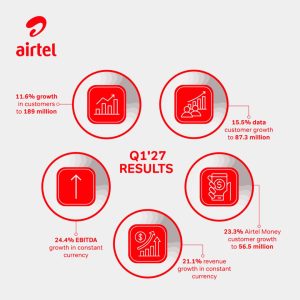
The company’s overall customer base grew by 11.6 percent to 189 million, while data customers increased by 15.5 percent to 87.3 million. Airtel Money customers also rose by 17.3 percent to 56.5 million.
Operational profitability also improved, with Earnings Before Interest, Taxes, Depreciation and Amortisation (EBITDA) increasing by 12 percent to US$895 million.
Profit after tax more than doubled to US$156 million, which Airtel Africa attributed to continued operational improvements and business growth across its markets.
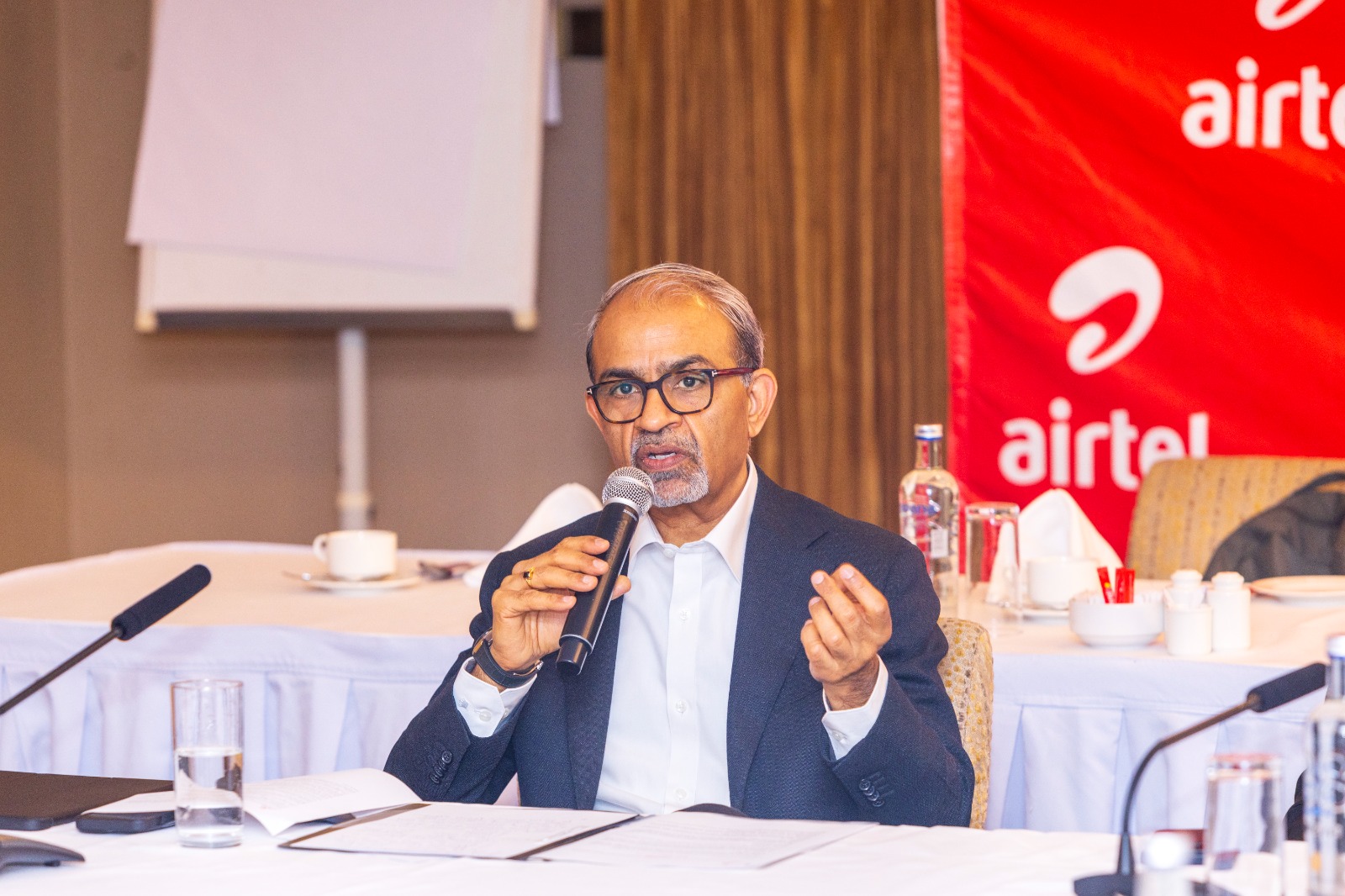
Commenting on the performance, Airtel Africa Chief Executive Officer Sunil Taldar said the company began the financial year with strong results driven by investments in customer experience and network expansion.
“We have started this year with another pleasing performance. Our continued focus on the customer experience translated into accelerating customer base growth across all business segments,” Taldar said.
He said increased investment in network infrastructure had supported higher smartphone adoption and growing data usage.
“Supported by sustained investment in our network, smartphone penetration reached 51%, driving significant growth in data traffic as customers continue to embrace digital solutions across our markets,” he added.
Taldar also highlighted Airtel Africa’s proposed listing on the London Stock Exchange as an important strategic step expected to expand the company’s investor base, improve market liquidity and support its long-term growth plans.
Airtel Africa provides telecommunications and mobile money services across 14 African countries, offering mobile voice, data and digital financial solutions to millions of customers.
The company said it remains focused on improving customer experience through simplified services, expanded connectivity and increased access to digital solutions across its markets.