




KAMPALA — The Uganda Securities Exchange (USE) has received its first independent credit rating from ICRA Rating Agency Limited, a milestone leaders say demonstrates the Exchange’s financial strength, institutional resilience and commitment to strengthening Uganda’s capital markets.
The rating was officially unveiled during a ceremony attended by representatives from the Capital Markets Authority (CMA), ICRA, stockbrokers, listed companies, investors and other stakeholders.
USE Chief Executive Officer Paul William Bwiso described the rating as more than a certificate, saying it represents an independent assessment of the Exchange’s institutional stability, financial discipline and role as a critical player in Uganda’s financial market infrastructure.
“This is more than a certificate on a wall. It is an independent, external validation of everything we have built at this Exchange over time: our institutional stability, our financial discipline, and our role as a capital markets intermediary,” Bwiso said.
He said the rating was significant because, despite the Exchange’s 28 years of operation as Uganda’s principal licensed stock exchange, modern markets require institutions to demonstrate their strength through independent and standardised assessments.
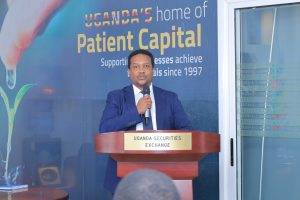
“Trust built on reputation alone is not enough in today’s markets. Issuers, investors, brokers and regional partners increasingly demand independent, standardised evidence of institutional soundness. This rating gives them exactly that,” he said.
According to Bwiso, ICRA’s assessment recognised several strengths of the Exchange, including its debt-free capital structure, strong liquidity position and diversified revenue streams.
He said the Exchange’s equity base had continued to grow through reinvestment of profits, recording a compound annual growth rate of 13 percent during the review period.
The rating also recognised revenue sources including listing fees, trading commissions, depository services, market data services and registry services.
“ICRA also affirmed that there are no going-concern issues whatsoever regarding this institution. We are, and remain, a strategically important piece of Uganda’s financial market infrastructure,” Bwiso said.
Promoting Credit Culture in Uganda
The USE CEO said the rating would contribute to developing a stronger culture of independent credit assessment in Uganda’s capital markets.

He explained that mature markets globally rely on credit ratings to provide investors with independent information about the strength and risks associated with institutions and investment opportunities.
“A rating closes the gap between what an institution or issuer knows about itself and what an outside investor can verify. It translates complex financial statements, governance structures and risk exposures into a single, credible signal,” he said.
Bwiso said credit ratings are particularly important for a developing market like Uganda as they help attract institutional investors, improve access to capital and encourage stronger corporate governance.
He added that by becoming a rated entity, USE was encouraging other companies to embrace transparency and independent assessment. “If the Exchange itself is willing to be measured, assessed and held to independent account, then so too can you,” he said.
Rating Reflects Governance Commitment
Representing the USE Board, Director Dan Tumuramye said the rating marked an important moment in the Exchange’s evolution and demonstrated its commitment to transparency, sound governance and prudent financial management.

“Every enduring institution reaches defining moments that affirm not only how far it has come, but also the direction in which it is headed. Today is one such moment for the Uganda Securities Exchange,” Tumuramye said.
He said the rating reflected years of deliberate efforts to strengthen the institutional foundations of the Exchange.
“It reflects an independent and objective assessment of the Exchange’s creditworthiness, governance framework, financial strength and capacity to meet its financial obligations,” he said.
Tumuramye said the Board remains focused on positioning USE as Uganda’s preferred institution for investments and sourcing capital.
He added that the Exchange’s purpose of “Inspiring Growth” continues to guide efforts to expand access to capital, improve investor confidence and create a transparent and efficient marketplace.
CMA Applauds Milestone
Capital Markets Authority (CMA) Chief Executive Officer Josephine Okui Ossiya congratulated USE, describing the rating as evidence of the continued maturity of Uganda’s capital markets.
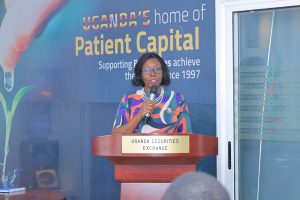
She compared the development of capital markets to planting a tree, saying institutions are built through consistent reforms, investments and courageous decisions.
“Capital markets are built in exactly the same way. We build one institution at a time, one reform at a time, one investment at a time, and one courageous decision at a time,” Ossiya said.
She noted that ICRA’s rating was the first issued by a credit rating agency licensed in Uganda and commended the agency for entering the local market.
“This milestone is more than the announcement of a rating. It is a statement that Uganda’s capital markets continue to mature and that transparency, accountability and good governance remain at the centre of sustainable market development,” she said.
Ossiya emphasised that credit ratings are not guarantees or investment recommendations but tools that provide investors with objective information to support decision-making.
She said strong capital markets are essential for mobilising long-term savings into productive investments.
ICRA Highlights USE Strengths
ICRA Uganda Operations Director Jeremiah Karugaba said the rating assessment focused on three broad areas: baseline assessment, credit assessment and overall assessment.

He said the agency examined the Exchange’s business profile, capital structure, liquidity position, earnings quality, governance, management and the broader macroeconomic environment.
“The assessment highlighted several key strengths of the Uganda Securities Exchange. First was its debt-free position. Secondly, we noted its strong liquidity position. Thirdly, we recognised its diversified revenue base,” Karugaba said.
He explained that these factors contributed significantly to the rating assigned to the Exchange.
Karugaba said ICRA’s broader objective is to promote a credit rating culture in Uganda by encouraging stronger corporate governance, proper financial reporting and accountability among businesses.
“Through milestones such as this, we hope to encourage more companies and corporates to embrace credit ratings and create a stronger, more transparent and accessible capital market environment,” he said.
The unveiling of USE’s inaugural credit rating marks a new phase in Uganda’s capital markets development, with stakeholders saying it could encourage more institutions to seek independent assessments and deepen investor confidence in the country’s financial ecosystem.