



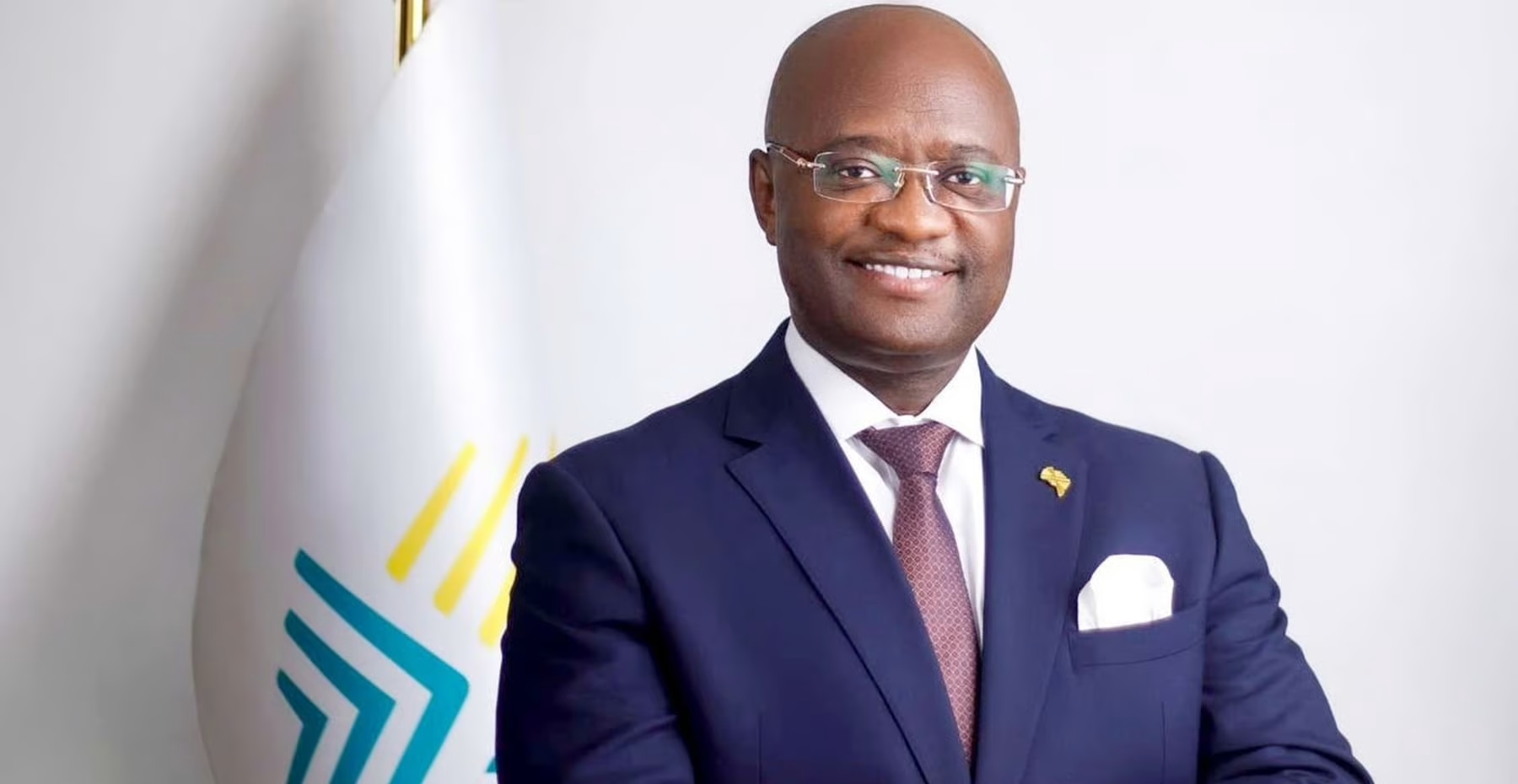
The industrial expansion of Dangote Group represents a strategic shield for Africa against global economic disruptions by reducing the continent’s dependence on imports, according to the President and Chairman of the Board of Directors of the African Export-Import Bank (Afreximbank), Dr. George Elombi.
Elombi said Africa needed strong indigenous industrial capacity capable of producing essential goods locally and protecting economies from external shocks affecting energy, food and manufacturing supply chains.
His remarks come as Afreximbank deepens its partnership with Dangote Industries Limited, supporting the group’s expansion plans across key sectors including petroleum refining, cement, fertiliser and manufacturing.
According to Afreximbank, Dangote Group has presented a long-term growth strategy aimed at expanding its industrial platforms and increasing annual revenue to US$100 billion by 2030.
“The future of Africa’s economic resilience depends on the ability to manufacture what we consume and build value chains within the continent,” Elombi said, highlighting the role of large-scale African enterprises in strengthening economic independence.
Refinery Seen as Strategic Asset
A key part of Dangote’s industrial drive is the Dangote Petroleum Refinery, which Afreximbank describes as Africa’s largest refinery and one of the continent’s most significant industrial projects.
Afreximbank recently underwrote US$2.5 billion of a US$4 billion syndicated term loan for Dangote Petroleum Refinery and Petrochemicals, aimed at strengthening the company’s financial structure and supporting long-term operations.
The refinery, with a capacity of 650,000 barrels per day, is expected to reduce Africa’s dependence on imported refined petroleum products while creating opportunities for regional energy security.
For decades, many African countries have exported raw materials while importing finished products, exposing economies to international price fluctuations and supply disruptions.
Building African Manufacturing Capacity
Dangote Group, founded and led by Nigerian businessman Aliko Dangote, has built operations spanning cement, petroleum refining, fertiliser, food processing and other industries across more than a dozen African countries.
Afreximbank said the partnership aligns with efforts to promote intra-African trade and industrialisation by supporting companies capable of creating regional supply chains.
The bank has previously supported Dangote’s industrial projects, including financing arrangements linked to the development of the refinery complex.
Africa’s Response to Global Uncertainty
The Afreximbank chief argued that Africa’s vulnerability to global crises is partly linked to insufficient domestic production capacity.
Recent disruptions in global energy markets have highlighted the risks of relying heavily on imported fuel and manufactured goods. Analysts have pointed to Dangote’s refinery as an example of how local industrial investment could help African economies withstand international shocks.
Beyond energy, Dangote’s fertiliser investments are also positioned as part of efforts to strengthen Africa’s agricultural independence by reducing reliance on imported agricultural inputs.
Elombi said large African industrial companies would be critical in transforming the continent from a consumer of global products into a major producer and exporter.
“The continent’s future lies in building industries that serve African markets while competing globally,” he said.
The partnership between Afreximbank and Dangote Group reflects a broader push by African financial institutions to support homegrown companies capable of driving industrialisation, employment and economic resilience across the continent.